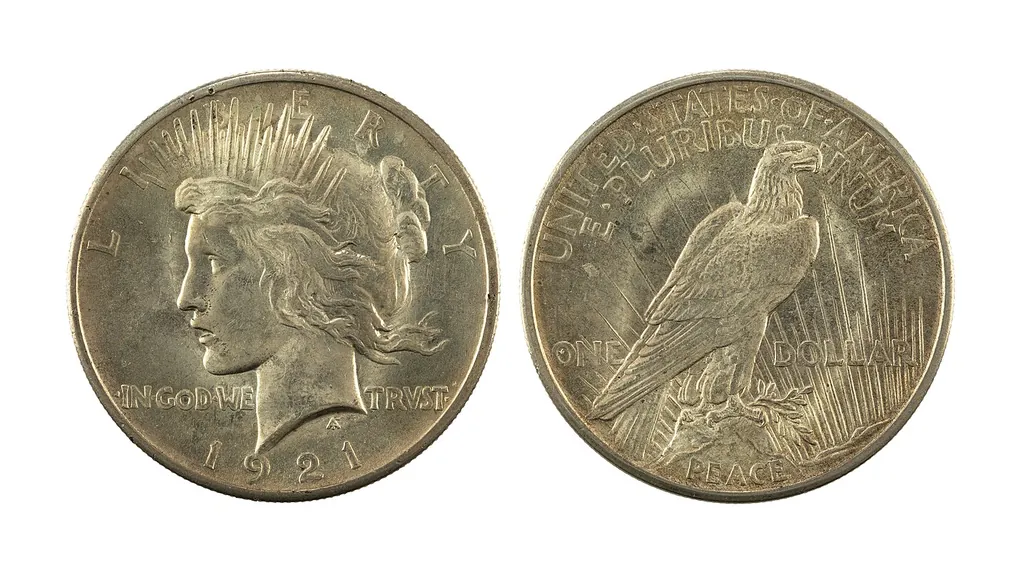
Short answer: The Peace dollar is a United States silver dollar struck from 1921 to 1928 and again in 1934 and 1935 to mark the peace that followed the First World War. Designed by the sculptor Anthony de Francisci, it shows Liberty wearing a crown of rays on the front and a bald eagle at rest, clutching an olive branch above the word PEACE, on the back. Each coin is 90% silver and contains 0.7734 troy ounces of pure silver.
Most Peace dollars are common and trade for a modest premium over their silver (melt) value. Value rises sharply with condition and for key dates such as the 1921 high-relief issue, the low-mintage 1928 from Philadelphia and the 1934-S in uncirculated grades. To value yours, check the date and mint mark, judge the condition honestly, and compare recent sales or ask a reputable dealer or grading service.
Pick up a Peace dollar and you are holding a small piece of the optimism of the early 1920s. After the horrors of the First World War, Americans wanted a coin that celebrated peace rather than victory, and the result is one of the most elegant designs the US Mint ever produced. Today the Peace dollar is a favourite with collectors and silver buyers alike: heavy, beautiful, historic and, in most dates, affordable. This guide tells the story of the coin, explains its design and specifications, lists the dates and mint marks, identifies the key dates, and shows you how to value, grade, store and buy Peace dollars without being caught out by fakes.

The story behind the Peace dollar
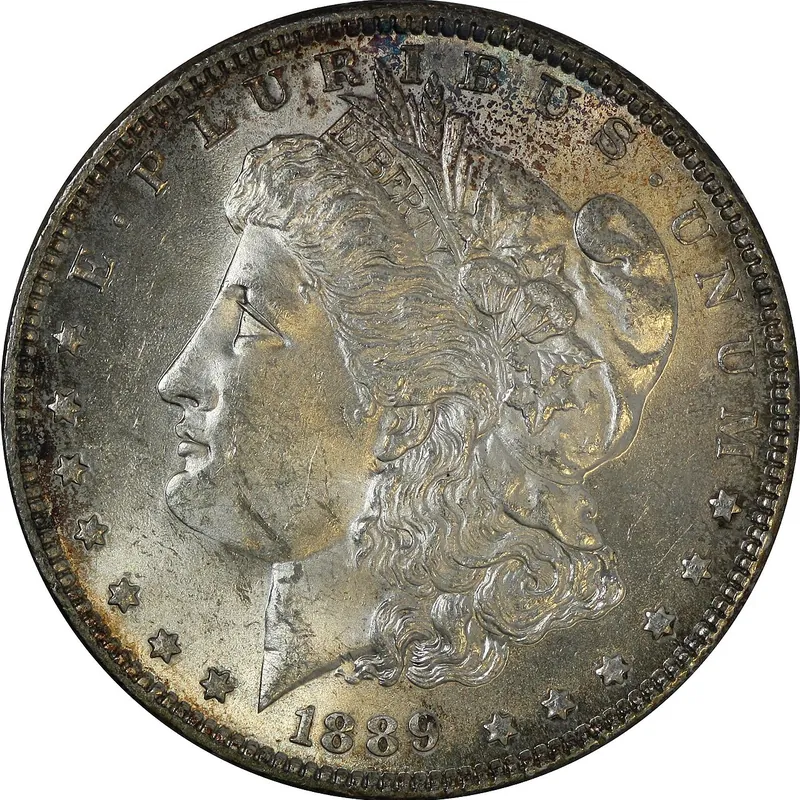
The coin’s origins lie partly in the Pittman Act of 1918. During the First World War, the United States melted down more than 270 million silver dollars, much of the silver going to Britain to support its currency in India. The Act required the government to buy domestic silver afterwards and strike new dollars to replace those melted. Morgan dollars were struck again in 1921 to begin that replacement, but numismatists and artists had been campaigning for a new design to commemorate the peace.
In 1921 the Commission of Fine Arts held a competition among leading sculptors. The winner was Anthony de Francisci, a 33-year-old Italian-born sculptor based in New York. The first Peace dollars were struck at the Philadelphia Mint in the last days of December 1921 and released in January 1922.
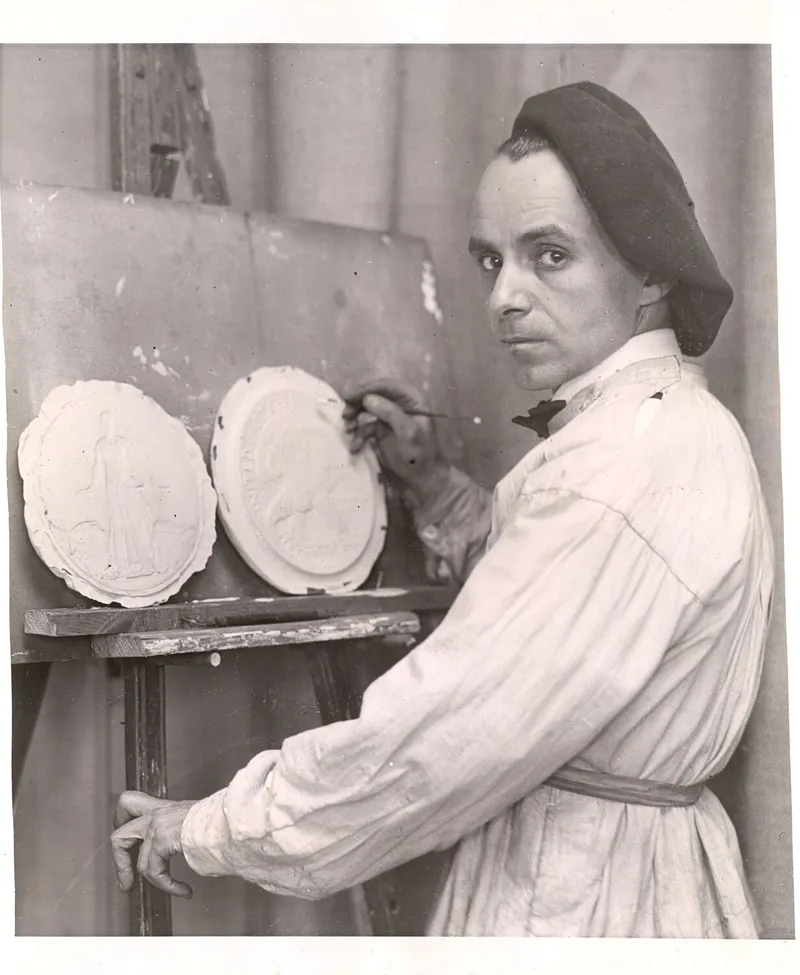
- 1918The Pittman Act authorises melting more than 270 million silver dollars and later replacing them.
- 1921Morgan dollars are struck again; a design competition is held and Anthony de Francisci wins. The first Peace dollars are struck in December in high relief.
- 1922The relief is lowered to make striking easier; more than 51 million are struck at Philadelphia alone.
- 1928Pittman Act requirements are met; Philadelphia strikes only 360,649 coins.
- 1929–33No silver dollars are struck.
- 1934–35Production resumes briefly, then ends in 1935.
- 1965Coins dated 1964 are struck at Denver but are melted before release.
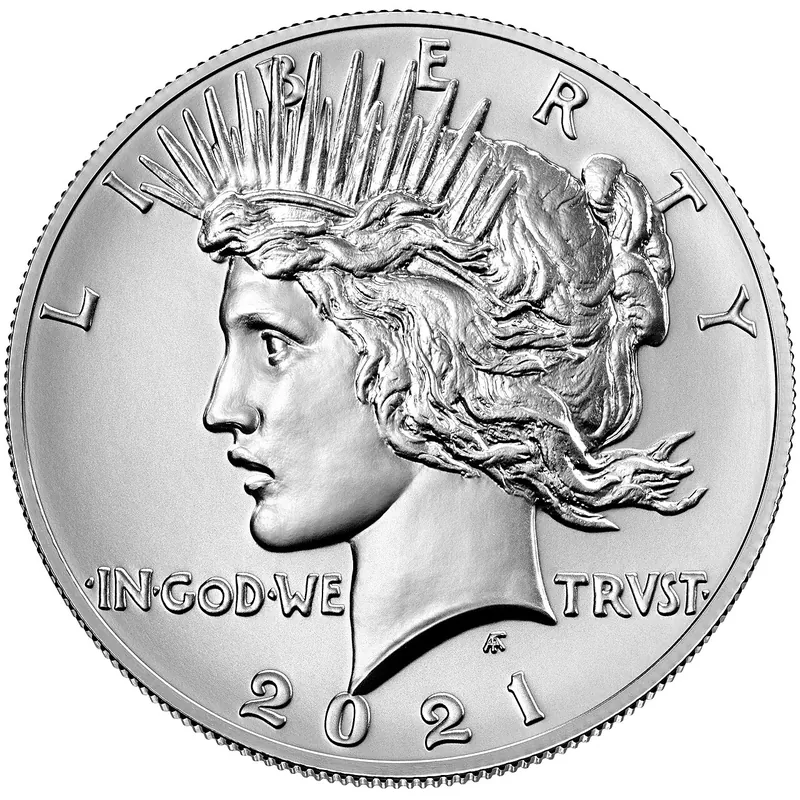
- 2021The US Mint issues a centennial Peace dollar in .999 fine silver.
The design
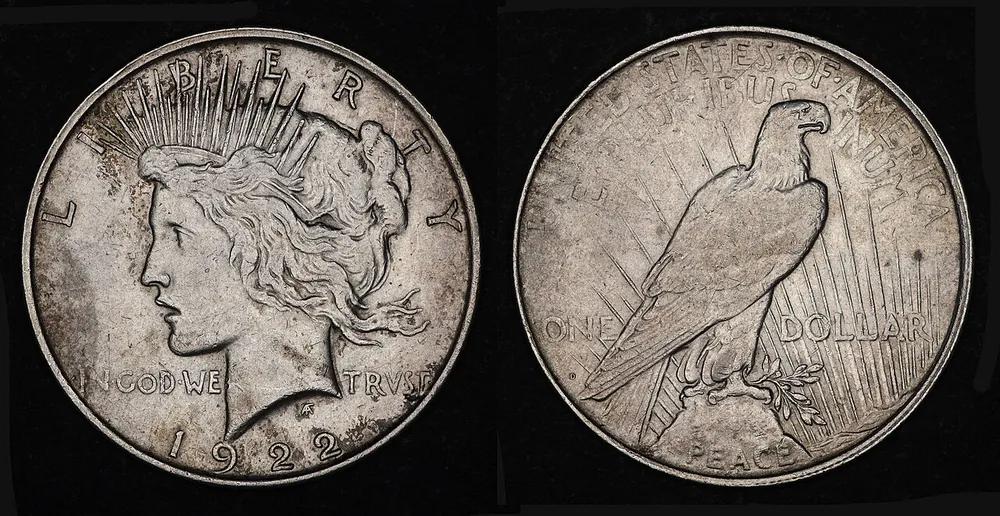
On the obverse (front), Liberty faces left, wearing a crown of rays similar to that of the Statue of Liberty, with her hair flowing behind her. The model was de Francisci’s wife, Teresa, whose features he adapted for the portrait. The word LIBERTY runs around the top, the date sits below, and the motto reads IN GOD WE TRVST, using the classical V in place of a U.
On the reverse (back), a bald eagle perches on a mountaintop, wings folded, clutching an olive branch, as the rays of the rising sun spread behind it. The word PEACE appears on the rock. The original design showed the eagle holding a broken sword, but this was removed before release after newspaper criticism that a broken sword suggested defeat rather than peace.
| Side | Main features | Look out for |
|---|---|---|
| Obverse | Liberty with radiate crown, LIBERTY, date, IN GOD WE TRVST | Designer’s monogram (AF) below the neck |
| Reverse | Eagle on a rock, olive branch, sun rays, PEACE, ONE DOLLAR | Mint mark (D or S) below the word ONE |
| Edge | Reeded | Smooth edges suggest a fake or altered coin |
Specifications
| Specification | Peace dollar (1921–1935) |
|---|---|
| Composition | 90% silver, 10% copper |
| Weight | 26.73 grams |
| Diameter | 38.1 mm |
| Pure silver content | 0.7734 troy ounces |
| Edge | Reeded |
| Designer | Anthony de Francisci |
| Mints | Philadelphia (no mark), Denver (D), San Francisco (S) |
The specifications are the same as the Morgan dollar it replaced, so the two series are often collected together and both are widely traded as “pre-1936 silver dollars”.
Dates and mint marks
The Peace dollar series is short, with 24 regular date and mint combinations. That makes it a popular set to complete. Here are the issues and their official mintages.
| Date | Mints struck | Notes |
|---|---|---|
| 1921 | Philadelphia | High relief; one-year type; 1,006,473 struck |
| 1922 | P, D, S | Most common date; over 51 million at Philadelphia |
| 1923 | P, D, S | Common; 1923-P is plentiful |
| 1924 | P, S | 1924-S scarcer in high grades |
| 1925 | P, S | 1925-S scarcer in high grades |
| 1926 | P, D, S | Moderate mintages |
| 1927 | P, D, S | Lower mintages; scarcer |
| 1928 | P, S | 1928-P is the lowest-mintage regular issue |
| 1934 | P, D, S | 1934-S is a key date in mint state |
| 1935 | P, S | Final year of the original series |
To find the mint mark, turn the coin over and look on the reverse below the word ONE, near the tip of the eagle’s wing. A small D means Denver, an S means San Francisco, and no letter means Philadelphia.
Key dates and rarities
| Coin | Why it is sought after |
|---|---|
| 1921 high relief | One-year design in high relief; strong collector demand |
| 1928 (Philadelphia) | Lowest regular-issue mintage at 360,649 |
| 1934-S | Common in worn grades but scarce and valuable in uncirculated condition |
| 1924-S, 1925-S, 1927-D, 1927-S | Scarce in high grades; often poorly struck |
| 1922 high relief and matte proofs | Extremely rare experimental and proof pieces |
| Varieties (e.g. doubled dies, repunched mint marks) | Specialist interest; confirm with a grading service |
The 1964-D Peace dollar deserves a mention. In 1965 the Denver Mint struck 316,076 Peace dollars dated 1964, but the coins were never released and the Mint reported that all were melted. None is known to exist legally, so any coin offered as a genuine 1964-D Peace dollar should be treated with extreme suspicion. Privately made “restrikes” and replicas bearing the 1964 date do exist; they are not Mint issues.
How much is a Peace dollar worth?
Every Peace dollar has a floor value set by its silver content. To work out the melt value, multiply the silver spot price per troy ounce by 0.7734. Common dates in worn condition usually sell for that melt value plus a modest premium. Better condition, scarcer dates and certified coins sell for more, sometimes very much more.
| Silver spot price (per troy oz) | Approximate melt value of one Peace dollar |
|---|---|
| $25 | About $19.34 |
| $30 | About $23.20 |
| $40 | About $30.94 |
| $50 | About $38.67 |
| What raises value | What lowers value |
|---|---|
| Uncirculated or high-grade condition | Heavy wear, scratches and dents |
| Key or scarce date and mint mark | Common date |
| Strong strike and original lustre | Weak strike, dull surfaces |
| Attractive natural toning | Cleaning, polishing or harsh chemical treatment |
| Certification by a respected grading service | Questionable authenticity |
| Recognised varieties | Damage, holes or jewellery use |
To check current values, compare recent sold prices (not asking prices) from reputable auction houses and dealers, and look at price guides published by the major grading services. For potentially valuable coins, an expert opinion is worth far more than a guess from an online listing.
Grading a Peace dollar
Coin grading in the US uses the 70-point Sheldon scale. Grades from 1 to 58 describe circulated coins, from heavily worn to almost uncirculated. Grades from 60 to 70 (“MS”, for mint state) describe uncirculated coins, judged on marks, lustre, strike and eye appeal.
| Grade range | What it looks like |
|---|---|
| Good to Very Good (G–VG) | Heavily worn; main design visible but much detail gone |
| Fine to Very Fine (F–VF) | Moderate wear; some hair and feather detail remains |
| Extremely Fine (XF/EF) | Light wear on the high points |
| About Uncirculated (AU) | Traces of wear on the highest points only |
| Mint State (MS 60–70) | No wear; graded on marks, lustre and strike |
Peace dollars were often weakly struck, especially in the centre of Liberty’s hair and on the eagle’s feathers, so a lack of detail does not always mean wear. Lustre is a better guide: look for the cartwheel effect of light rotating across the surface as you tilt an uncirculated coin.
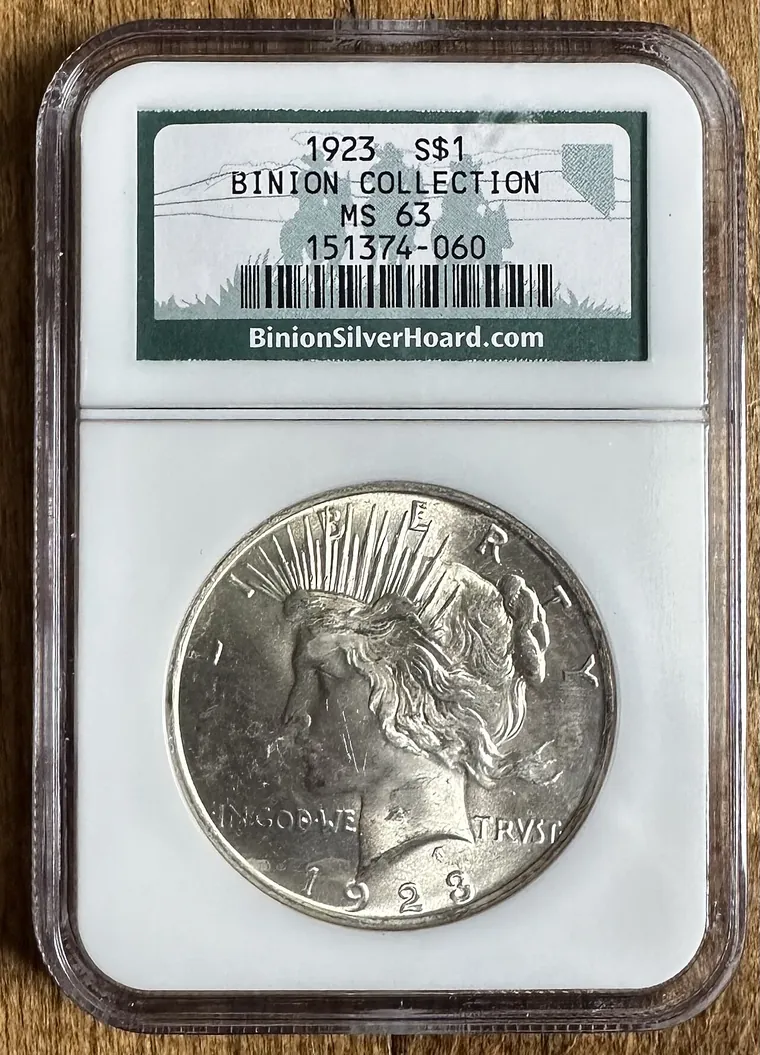
For valuable coins, third-party grading by a respected service such as PCGS or NGC gives an independent opinion on authenticity and grade and seals the coin in a tamper-evident holder. Grading costs money, so it makes most sense for key dates and high-grade coins.
Spotting fakes
Because Peace dollars are popular and valuable, counterfeits are common, including many made overseas and sold online. Some fakes are crude; others are convincing at first glance.
Be careful with graded coins too: fake grading holders exist. Check the certification number on the grading company’s website and compare the photograph with the coin in your hand.
The modern Peace dollar
In 2021, to mark the 100th anniversary of the transition from the Morgan dollar to the Peace dollar, the US Mint issued new Morgan and Peace dollars. The modern Peace dollars are struck in .999 fine silver rather than the original 90% alloy, and they have been issued again in later years. They are collectors’ coins sold by the Mint, not circulating money.
| Original (1921–1935) | Modern (2021 onwards) | |
|---|---|---|
| Silver | 90% silver | .999 fine silver |
| Purpose | Circulating coin | Collector coin |
| Where to buy | Dealers, auctions, collectors | US Mint (when available) and the secondary market |
Caring for and storing Peace dollars
- Never clean coins. Cleaning, polishing or dipping leaves fine scratches and can sharply reduce value.
- Hold coins by the edges, ideally wearing cotton or nitrile gloves, so fingerprints do not mark the surfaces.
- Use inert holders. Choose archival-quality flips, capsules or albums free of PVC, which can damage coins over time.
- Store somewhere cool and dry. Humidity and air pollution cause unwanted toning and spots.
- Keep a record. Note dates, grades, purchase prices and sources for insurance and future sale.
Buying Peace dollars
| Where | Pros | Cautions |
|---|---|---|
| Established coin dealers | Expertise and guarantees of authenticity | Compare prices between dealers |
| Major auction houses | Wide choice of graded coins | Buyer’s premiums add to the cost |
| Coin shows | See coins in person | Know your prices before you go |
| Online marketplaces | Convenience and choice | High risk of fakes; check seller history |
| Bullion dealers | Good for common dates bought for silver | Coins may be well worn |
My advice for beginners: start with a few common dates in attractive circulated or lower uncirculated grades from a reputable dealer, learn what genuine coins look and feel like, and then move up to scarcer dates or certified coins once you are confident.
Building a Peace dollar collection
There are several ways to collect Peace dollars, and the right one depends on your budget and how much of a challenge you want. Many collectors begin with a type coin: one attractive example, often a common 1922 or 1923, simply to own the design. Others add a 1921 high-relief coin alongside it, because the two reliefs look noticeably different side by side.
| Collecting approach | What it involves | Difficulty |
|---|---|---|
| Type set | One 1921 high relief and one later low-relief coin | Easy |
| Date set | One coin of each year, any mint | Moderate; 1928 is the hurdle |
| Complete date and mint set | All 24 regular issues | Challenging in high grades |
| Registry set | Certified coins competing on grade in a grading-service registry | Demanding and costly |
My advice for anyone attempting the full set is to buy the key dates first, because their prices tend to rise faster than the common dates, and to choose a consistent grade so the collection looks balanced in an album. Keep a checklist of dates, mint marks, grades and prices paid, and be patient: the right coin at a fair price usually turns up if you wait.
Selling and tax
If you are selling, get offers from more than one reputable dealer, and know the melt value before you start. Dealers buying for silver content will pay close to melt for common worn coins; collectors and specialist dealers may pay more for better coins. In the US, profits on coins are treated as gains on collectibles for federal tax purposes, which can be taxed at a higher maximum rate than many other investments; in the UK, gains on non-sterling coins may be subject to Capital Gains Tax depending on your circumstances. Check current tax guidance or speak to an adviser.
Why the Peace dollar still matters
The Peace dollar is more than silver. It captures a moment when a nation, emerging from a terrible war, chose to celebrate peace on its coinage, and it was the last silver dollar struck for circulation in the US. Its Art Deco-influenced design still looks modern a century later. For collectors, it offers a short, achievable series with genuine rarities; for history lovers, it is a tangible link to the 1920s.
More from our History section: Genghis Khan, José Martí, Thomas Jefferson, Elie Wiesel, fascism in Scandinavia.
Frequently asked questions
When were Peace dollars made?
From 1921 to 1928 and in 1934 and 1935. No silver dollars were struck from 1929 to 1933.
How much silver is in a Peace dollar?
Each coin is 90% silver and contains 0.7734 troy ounces of pure silver.
Who designed the Peace dollar?
The sculptor Anthony de Francisci, who won a 1921 design competition. His wife Teresa was the model for Liberty.
Where is the mint mark on a Peace dollar?
On the reverse, below the word ONE near the eagle’s wing tip. Philadelphia coins have no mint mark.
What is the rarest Peace dollar?
Among regular issues, the 1928 Philadelphia has the lowest mintage, while the 1934-S is scarce in uncirculated grades. Experimental and proof pieces are far rarer.
How much is a 1922 Peace dollar worth?
Most 1922 coins are common and worth around their silver value plus a premium; high-grade examples and varieties sell for more.
How do I work out melt value?
Multiply the current silver spot price per troy ounce by 0.7734.
Should I clean my Peace dollar?
No. Cleaning damages the surface and usually lowers the value significantly.
Is the 1964-D Peace dollar real?
The Mint struck 316,076 but reported all were melted. None is known to exist legally; coins offered as genuine should be treated as suspect.
How can I tell if a Peace dollar is fake?
Check weight (26.73 g), diameter (38.1 mm), magnetism and detail, and buy from reputable sellers or certified holders.
Final thoughts
The Peace dollar combines history, beauty and silver in one coin. Learn the dates and mint marks, judge condition honestly, know the melt value, and buy from reputable sources. Whether you want a single coin as a keepsake or a complete set, the Peace dollar rewards patience and a careful eye.
Sources: US Mint information on the Peace dollar and the 2021 centennial coins; Smithsonian National Museum of American History, National Numismatic Collection; A Guide Book of United States Coins (the Red Book); Professional Coin Grading Service (PCGS) and Numismatic Guaranty Company (NGC) reference material; Pittman Act of 1918; IRS guidance on collectibles; HMRC Capital Gains Tax guidance. Images: Wikimedia Commons, credited in each caption.