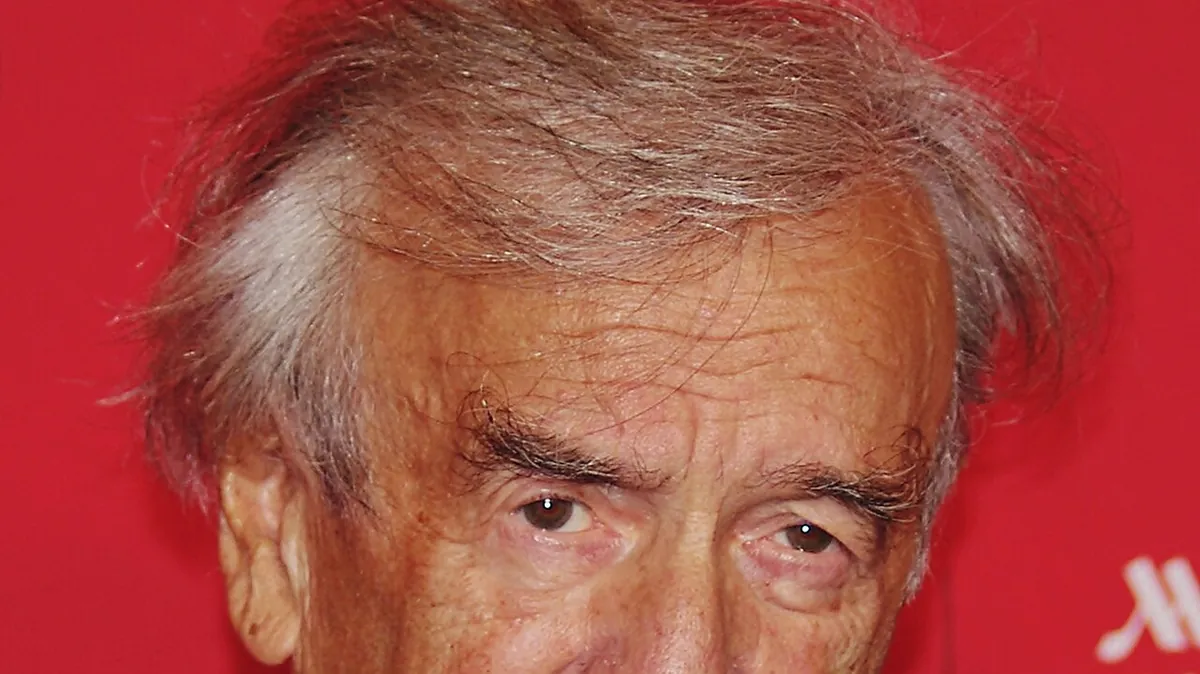
Short answer: Elie Wiesel (Eliezer Wiesel, 30 September 1928 – 2 July 2016) was a Romanian-born American writer, professor and activist, and a survivor of Auschwitz and Buchenwald. His memoir Night, about his experiences in the camps as a teenager, became one of the most widely read books about the Holocaust. He wrote 57 books, taught at Boston University, led the effort to create the United States Holocaust Memorial Museum, and received the Nobel Peace Prize in 1986.
The Nobel committee called him a “messenger to mankind”. His core message, that indifference to suffering is itself a moral failure, shaped how the world remembers the Holocaust and responds to genocide.
I will be honest with you: Elie Wiesel is not an easy subject to write about lightly, and he should not be. He survived the worst crime of the twentieth century, lost his mother, father and youngest sister to it, and spent the rest of his life making sure the world would not forget. His short book Night is read in schools around the world, often as a young person’s first encounter with the Holocaust. This guide sets out his life, his work and his legacy, carefully and in order.

Elie Wiesel: quick facts
| Details | |
|---|---|
| Full name | Eliezer Wiesel |
| Born | 30 September 1928, Sighet, Romania (now Sighetu Marmației) |
| Died | 2 July 2016, Manhattan, New York (aged 87) |
| Parents | Shlomo Wiesel and Sarah Feig |
| Siblings | Older sisters Beatrice and Hilda (survived); younger sister Tzipora (murdered in the Holocaust) |
| Camps | Auschwitz and Buchenwald (liberated 11 April 1945) |
| Best-known book | Night (La Nuit, 1958; English 1960) |
| Nationality | American citizen from 1963 |
| Wife | Marion Erster Rose (married 1969), who translated many of his books |
| Son | Shlomo Elisha Wiesel |
| Major honours | Nobel Peace Prize (1986); Congressional Gold Medal (1985); Presidential Medal of Freedom |
Childhood in Sighet
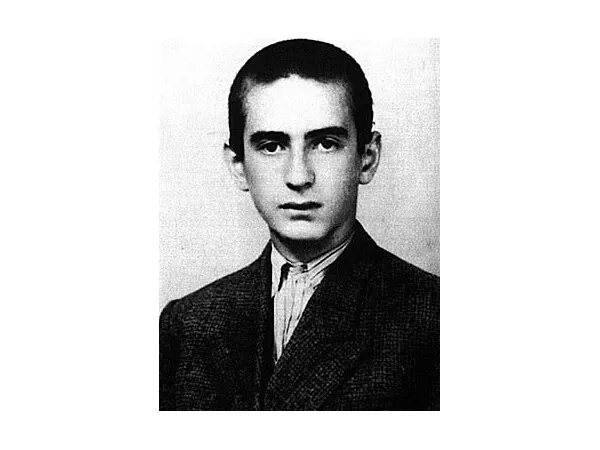
Wiesel was born in Sighet, a town in the Carpathian Mountains, in a region that changed hands between Romania and Hungary. His family spoke mainly Yiddish at home, along with German, Hungarian and Romanian. His father, Shlomo, a shopkeeper, encouraged him to learn modern Hebrew and read literature; his mother, Sarah, the daughter of a Hasidic farmer, encouraged him to study the Torah. Wiesel later described his father as representing reason and his mother as representing faith.
He was a deeply religious boy, absorbed in Jewish study and mysticism. He had three sisters: Beatrice and Hilda, who were older, and Tzipora, the youngest. In 1940, Sighet became part of Hungary, which introduced its own antisemitic laws, but the Jewish community was not deported until Germany occupied Hungary in 1944.
Auschwitz and Buchenwald (1944-1945)
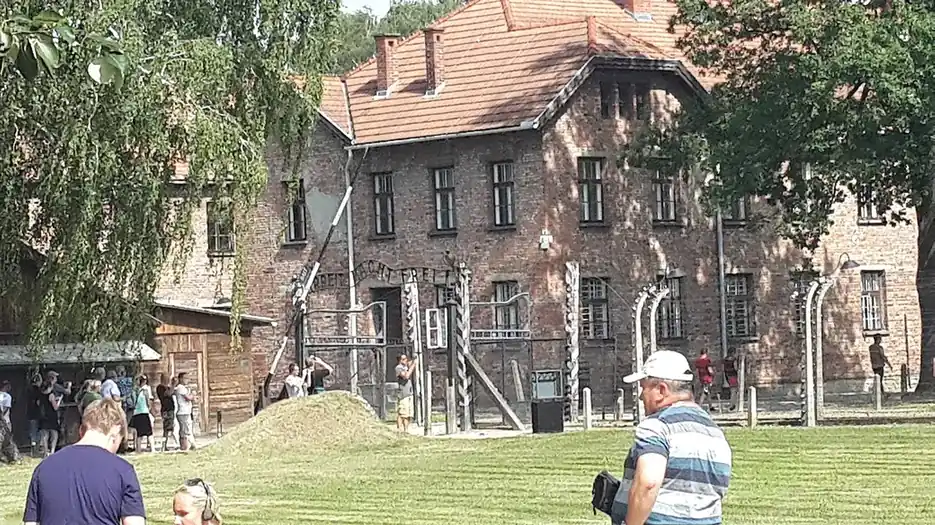
In March 1944, Germany occupied Hungary, bringing the Holocaust to Northern Transylvania. Wiesel, then 15, and his family were forced into one of two ghettos in Sighet. In May 1944, Hungarian authorities, under German pressure, began deporting the town’s Jews to Auschwitz-Birkenau, where most deportees were murdered on arrival.
Wiesel’s mother, Sarah, and his little sister, Tzipora, were murdered in the gas chambers soon after they arrived. Wiesel and his father were selected for forced labour. He was tattooed with the number A-7713 on his left arm. Later, as the Nazis evacuated camps ahead of advancing Allied armies, father and son were moved to Buchenwald in Germany. Wiesel later said that what kept him alive in Auschwitz was knowing his father was alive: “I knew that if I died, he would die.” His father died in Buchenwald shortly before liberation; in Night, Wiesel describes his shame at being unable to help when his father was beaten.
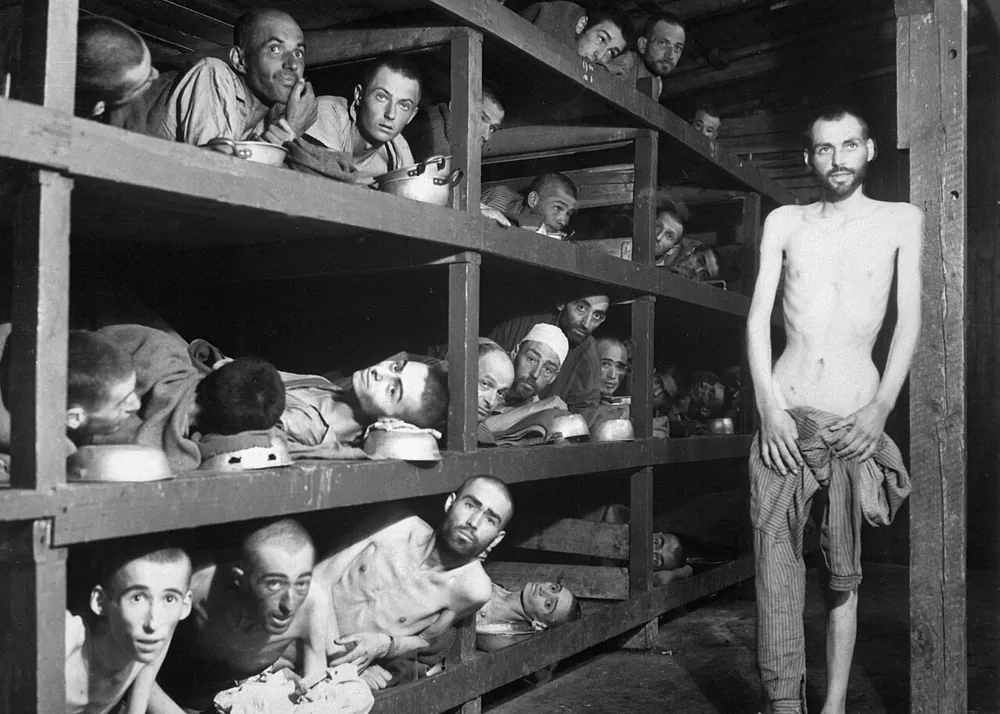
Buchenwald was liberated by the US Third Army on 11 April 1945. A famous photograph taken days later shows emaciated prisoners in wooden bunks; Wiesel is widely identified as one of the men in it. His two older sisters, Beatrice and Hilda, also survived, and they were later reunited in France.
- 30 Sep 1928Born in Sighet.
- March 1944Germany occupies Hungary; Sighet’s Jews are forced into ghettos.
- May 1944Deported to Auschwitz; his mother and youngest sister are murdered.
- Early 1945Moved with his father to Buchenwald, where his father dies.
- 11 April 1945Buchenwald liberated by US forces.
- 1945-1947Cared for in homes for child survivors in France.
After the war: France and journalism
After liberation, Wiesel was among about 1,000 child survivors of Buchenwald taken to France by the Jewish children’s aid organisation OSE. He lived in children’s homes, learned French, and went on to study literature, philosophy and psychology at the Sorbonne in Paris, attending lectures by Martin Buber and Jean-Paul Sartre. By 19 he was working as a journalist, writing in French and Yiddish, and later became a correspondent for the Israeli newspaper Yedioth Ahronoth.
For ten years he refused to write or speak about what had happened to him. That changed after he met the French Catholic writer François Mauriac, winner of the 1952 Nobel Prize in Literature, who became a close friend and urged him to tell his story.
Night: the book that bore witness
Wiesel first wrote a long memoir in Yiddish, Un di velt hot geshvign (And the World Remained Silent), published in abridged form in Buenos Aires. He then rewrote and shortened it in French as La Nuit, with a foreword by Mauriac, and it was translated into English as Night in 1960. At first it sold few copies, but its reputation grew steadily, especially as public interest in the Holocaust deepened from the late 1960s.
Night has since been translated into some 30 languages and has sold around 10 million copies in the United States alone. Oprah Winfrey chose it for her book club in 2006, introducing it to millions more readers. Wiesel turned down an offer from Orson Welles to make it into a film, feeling that its meaning lay in the silences between the words.
| Book | Year (English) | What it is |
|---|---|---|
| Night | 1960 | Memoir of Auschwitz and Buchenwald |
| Dawn | 1961 | Novel about a young survivor in British-ruled Palestine |
| Day | 1962 | Novel about a survivor struggling to live after the camps |
| The Gates of the Forest | 1966 | Novel of faith and survival |
| The Jews of Silence | 1966 | Reportage on Jews in the Soviet Union |
| The Trial of God | 1979 | Play inspired by prisoners who “put God on trial” at Auschwitz |
| The Testament | 1981 | Novel about a Jewish poet in the Soviet Union |
| All Rivers Run to the Sea | 1995 | First volume of his memoirs |
My advice, if you have not read Night: it is short, about 120 pages in most editions, and can be read in an afternoon, but give yourself time afterwards. Many readers find it helps to read it alongside the United States Holocaust Memorial Museum’s online resources, which give historical context for the events it describes.
Faith after Auschwitz
At the heart of Night is a crisis of faith. The devout boy who had studied mysticism in Sighet describes how his belief in a just God was shattered by what he saw, in passages that begin “Never shall I forget that night, the first night in camp”. Yet Wiesel never simply abandoned religion. For the rest of his life he argued with God rather than turning away, a tension explored in works such as The Trial of God, and he held long private conversations about faith after the Holocaust with the Lubavitcher Rebbe, Menachem Mendel Schneerson. Readers of every belief have found in that struggle an honest response to unimaginable suffering.
Teaching Night today
Night is one of the most widely taught books in American high schools and is read in classrooms around the world. Teachers often pair it with survivor testimony, historical maps and timelines, and resources from Holocaust museums, so that students understand both the personal story and the history behind it. Because the book is short and written in plain language, it works for younger readers, but its content is harrowing, and good teaching gives students time and space to reflect and ask questions.
America: writer, teacher, witness
In 1955 Wiesel moved to New York as a foreign correspondent, and he became a US citizen in 1963. In 1969 he married Marion Erster Rose, an Austrian-born survivor of the Nazi era who translated many of his books; their son, Shlomo Elisha, was named after Wiesel’s father.
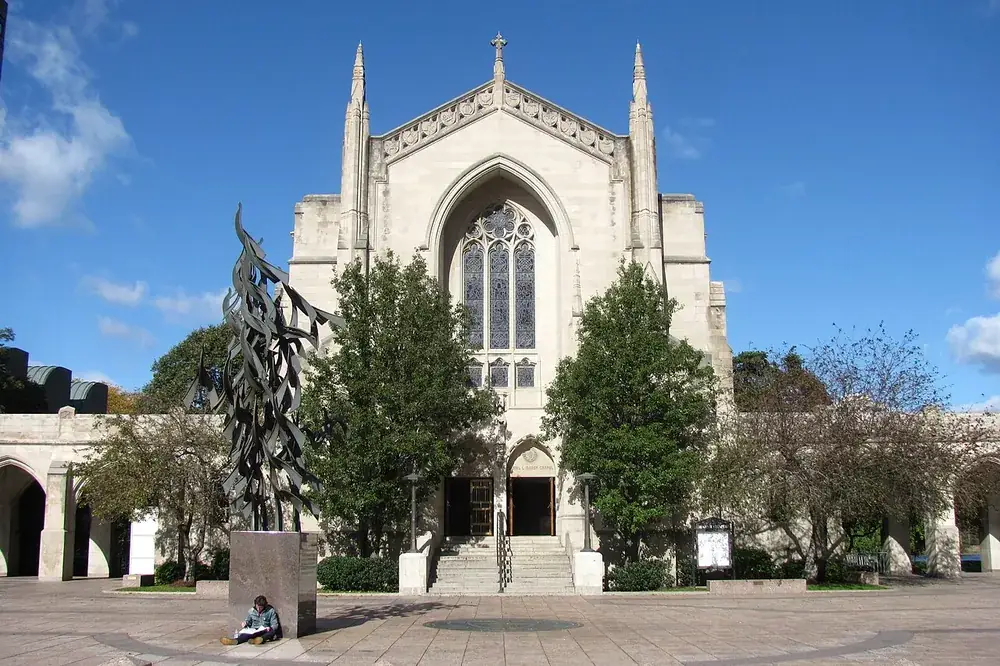
He taught at the City College of New York and, from 1976, at Boston University, where he was a professor of the humanities for decades; the university later created the Elie Wiesel Center for Jewish Studies in his honour. He also taught at Yale and Barnard College. He co-founded Moment magazine in 1975 and was elected to the American Academy of Arts and Letters in 1996.
Building the Holocaust Memorial Museum
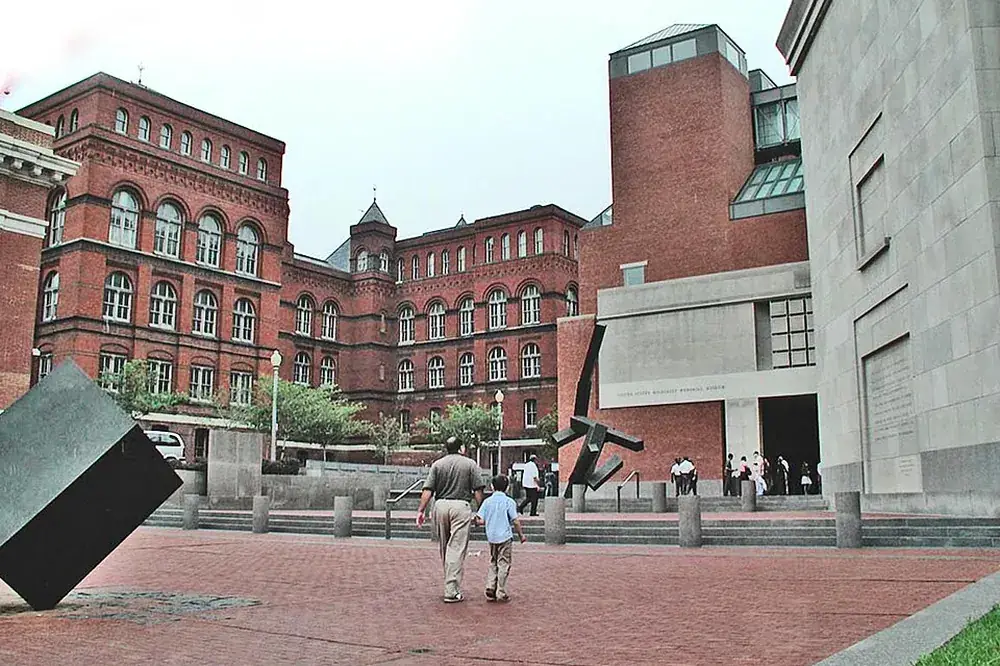
In 1978, President Jimmy Carter appointed Wiesel chairman of the President’s Commission on the Holocaust, later the US Holocaust Memorial Council, a role he held until 1986. He led the effort to create a national memorial, which became the United States Holocaust Memorial Museum in Washington, DC, opened in 1993. Its words “For the dead and the living, we must bear witness” are taken from Wiesel. The museum’s Elie Wiesel Award, its highest honour, recognises people whose actions have advanced its mission of confronting hatred and preventing genocide.
“That place, Mr. President, is not your place”
In April 1985, while receiving the Congressional Gold Medal at the White House, Wiesel publicly appealed to President Ronald Reagan not to visit the military cemetery at Bitburg in West Germany, where members of the Waffen-SS were buried. “That place, Mr. President, is not your place,” he said. “Your place is with the victims of the SS.” Reagan went ahead with the visit, but Wiesel’s respectful, direct words became one of the most famous moments of his public life.
The Nobel Peace Prize (1986)
In 1986 Wiesel was awarded the Nobel Peace Prize. The Norwegian Nobel Committee described him as “a messenger to mankind”, praising his message “of peace, atonement and human dignity”. In his acceptance speech he said: “We must take sides. Neutrality helps the oppressor, never the victim. Silence encourages the tormentor, never the tormented.” The same year, he and Marion founded the Elie Wiesel Foundation for Humanity to fight indifference, intolerance and injustice.
His most quoted idea came from a 1986 interview: “The opposite of love is not hate, it’s indifference.” It captures the heart of his life’s work: the conviction that the greatest danger is not only the perpetrators of evil, but the bystanders who look away.
Activism around the world
Wiesel spoke out for persecuted people across the globe, including Soviet Jews and Ethiopian Jews, opponents of apartheid in South Africa, victims of the genocides in Cambodia, Bosnia and Rwanda, the people of Darfur, the Kurds, Argentina’s “disappeared”, Nicaragua’s Miskito people and Sri Lanka’s Tamils, and he called for recognition of the Armenian genocide. He was a founding board member of the Human Rights Foundation.
He was also a strong and outspoken supporter of Israel. His positions on Israeli politics, including support for Jewish settlement in Jerusalem and his public backing of Prime Minister Benjamin Netanyahu, drew criticism from some who otherwise admired his human rights work. Any honest account of his life includes both his universal advocacy and these more contested political stances.
The Madoff loss
In 2008, Wiesel’s foundation lost its endowment of $15 million in Bernard Madoff’s Ponzi scheme, and Wiesel and his wife lost much of their personal savings. He spoke publicly about the betrayal, and the foundation continued its work.
Death and legacy
Elie Wiesel died at his home in Manhattan on 2 July 2016, aged 87. After a private funeral at the Fifth Avenue Synagogue, he was buried at Sharon Gardens Cemetery in Valhalla, New York. Tributes came from world leaders, survivors and readers around the world.
His legacy lives on in Night, in the classrooms where it is taught, in the Washington museum he helped create and in the idea that remembering is a moral duty. A 2025 documentary, Elie Wiesel: Soul on Fire, which premiered nationally on PBS in January 2026, revisited the story of how Night was written and how it came to be read by millions.
Sighet today
Wiesel returned to Sighet as an adult, and his childhood home there now serves as a memorial house dedicated to him and to the town’s murdered Jewish community, which before the war made up a large share of Sighet’s population. Visitors can see the street where he grew up, a reminder that the Holocaust destroyed real neighbourhoods, families and ways of life, not just abstract numbers.
How to learn more
If Wiesel’s story has moved you to learn more, several trusted institutions offer free resources online. The United States Holocaust Memorial Museum publishes an encyclopedia, survivor testimonies and teaching materials. Yad Vashem, Israel’s World Holocaust Remembrance Center, maintains a database of victims’ names and extensive educational resources. The USC Shoah Foundation holds tens of thousands of recorded interviews with survivors and witnesses. Reading Night alongside these resources, and listening to survivors in their own voices, is one of the most meaningful ways to honour the duty of remembrance Wiesel devoted his life to.
In his own words
| Quote | Context |
|---|---|
| “The opposite of love is not hate, it’s indifference.” | 1986 interview |
| “We must take sides. Neutrality helps the oppressor, never the victim.” | Nobel Peace Prize acceptance speech, 1986 |
| “For the dead and the living, we must bear witness.” | Words displayed at the US Holocaust Memorial Museum |
| “That place, Mr. President, is not your place. Your place is with the victims of the SS.” | To President Reagan about Bitburg, 1985 |
More from our History section: Genghis Khan, José Martí, Thomas Jefferson.
Frequently asked questions
Who was Elie Wiesel?
A Holocaust survivor, writer, professor and activist (1928-2016), author of Night and winner of the 1986 Nobel Peace Prize.
What is Night by Elie Wiesel about?
His experiences as a teenager in Auschwitz and Buchenwald, including the deaths of his family and his struggle with faith.
Which concentration camps was Elie Wiesel in?
Auschwitz and Buchenwald. He was liberated at Buchenwald on 11 April 1945.
What happened to Elie Wiesel’s family?
His mother and youngest sister were murdered at Auschwitz, and his father died in Buchenwald. His two older sisters survived.
Why did Elie Wiesel win the Nobel Peace Prize?
For his work as a “messenger to mankind”, bearing witness to the Holocaust and fighting indifference, violence and racism.
When did Elie Wiesel die?
On 2 July 2016, at his home in Manhattan, aged 87.
What is Elie Wiesel’s most famous quote?
“The opposite of love is not hate, it’s indifference.”
Where was Elie Wiesel born?
In Sighet, in what is now Romania.
Did Elie Wiesel have children?
Yes, a son, Shlomo Elisha Wiesel, with his wife, Marion.
What was Elie Wiesel’s role in the Holocaust Museum?
He chaired the presidential commission (1978-1986) that led to the creation of the United States Holocaust Memorial Museum, opened in 1993.
Final thoughts
Elie Wiesel survived Auschwitz and Buchenwald as a teenager, lost his family, and then spent seven decades refusing to let the world forget. Through Night, his teaching, the Holocaust Memorial Museum and his campaigning against indifference, he became one of the most important moral voices of his time. His words still ask every reader the same question: when others suffer, will you look away?
Sources: Elie Wiesel’s published biography and works, including Night (1960) and All Rivers Run to the Sea (1995); Norwegian Nobel Committee, Nobel Peace Prize 1986 announcement and acceptance speech; United States Holocaust Memorial Museum; reporting on the 1985 Bitburg controversy and the Madoff losses; PBS American Masters, Elie Wiesel: Soul on Fire (2026). Images: Wikimedia Commons, credited in each caption.