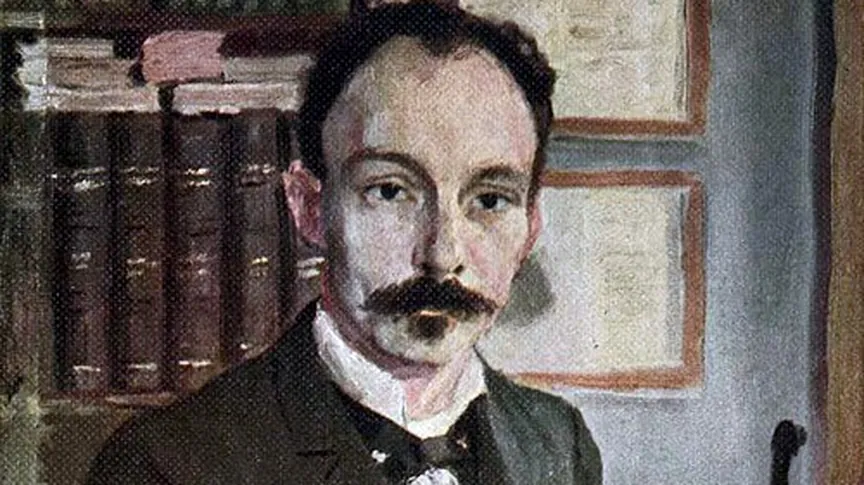
Short answer: José Martí (José Julián Martí Pérez, 28 January 1853 – 19 May 1895) was a Cuban poet, journalist, philosopher and revolutionary, and is Cuba’s national hero, known as the “Apostle of Cuban Independence”. Exiled as a teenager, he spent most of his life abroad, above all in New York, organising Cubans in exile and founding the Cuban Revolutionary Party, which launched the 1895 War of Independence against Spain.
He was killed in battle at Dos Ríos on 19 May 1895, weeks after returning to Cuba. His writings, including the essay “Nuestra América” and the poems of Versos Sencillos, whose lines became the song “Guantanamera”, make him one of the great figures of Latin American literature.
I will be honest with you: outside the Spanish-speaking world, José Martí is far less known than he deserves to be. In Cuba his face is everywhere, on banknotes, in every town square and at the entrance to Havana’s airport. In Miami, Tampa and New York he is honoured by Cuban Americans of every political view. He was a poet and journalist first, a revolutionary second, and his ideas about freedom, justice and the independence of Latin America still shape debates today. Here is his story.

José Martí: quick facts
| Details | |
|---|---|
| Full name | José Julián Martí Pérez |
| Born | 28 January 1853, Havana, Cuba (then a Spanish colony) |
| Died | 19 May 1895, Battle of Dos Ríos, Cuba (aged 42) |
| Parents | Mariano Martí Navarro (from Valencia) and Leonor Pérez Cabrera (from the Canary Islands) |
| Known as | “Apostle of Cuban Independence”; Cuba’s national hero |
| Occupations | Poet, essayist, journalist, translator, teacher, diplomat, revolutionary |
| Major works | Ismaelillo (1882), Versos Sencillos (1891), “Nuestra América” (1891), La Edad de Oro (1889) |
| Founded | The Cuban Revolutionary Party (1892) and the newspaper Patria |
| Wife | Carmen Zayas-Bazán |
| Son | José Francisco “Pepito” Martí (born 22 November 1878) |
| Buried | Santa Ifigenia Cemetery, Santiago de Cuba |
Early life in Havana
Martí was born at 41 Paula Street in Havana, the only son, with seven sisters, of Spanish parents: his father, Mariano Martí Navarro, came from Valencia, and his mother, Leonor Pérez Cabrera, from the Canary Islands. The family briefly lived in Spain when he was small, then returned to Cuba, where his father worked for a time as a prison guard.
The decisive influence of his youth was his teacher, the poet Rafael María de Mendive, who ran the school Martí attended from 1865, paid for his further studies and shaped his political ideals. When the Ten Years’ War, Cuba’s first major war of independence, broke out in 1868, the teenage Martí and his best friend, Fermín Valdés Domínguez, joined the nationalist cause. In 1869 he published his first political writings and the patriotic verse drama Abdala.
Prison and exile at 16
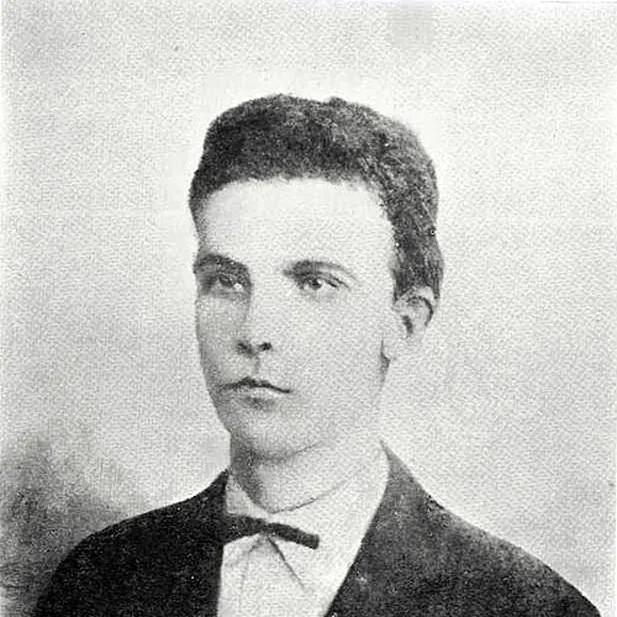
On 21 October 1869, aged just 16, Martí was arrested after the authorities found a letter he and Fermín had written criticising a friend who had joined the Spanish army. He was convicted of treason and sentenced to six years of hard labour. He worked in the stone quarries in chains that badly injured his legs, scars he carried for life. Despite his parents’ efforts, he was not freed; instead his sentence was commuted to confinement on the Isla de Pinos and then exile to Spain.
He described the horrors of the colonial prison in his pamphlet El presidio político en Cuba (Political Prison in Cuba), published in Madrid in 1871, one of his first major works.
Spain: law degrees and writing (1871-1874)
In Spain, Martí studied law and philosophy while writing for newspapers about Cuba. He graduated in civil and canon law from the University of Zaragoza in 1874, along with a degree in philosophy and letters. Before leaving Europe he visited Paris and met the novelist Victor Hugo.
Mexico, Guatemala and Venezuela
Barred from returning to Cuba, Martí went to Latin America, where he worked as a journalist and teacher. In Mexico (1875-1876) he wrote for newspapers and met Carmen Zayas-Bazán, whom he later married. In Guatemala he taught literature and philosophy and wrote a book about the country. His son, José Francisco, nicknamed “Pepito”, was born on 22 November 1878. After a brief, troubled return to Cuba, he was exiled again, and in 1881 he founded the Revista Venezolana in Caracas, until Venezuela’s dictator, Antonio Guzmán Blanco, forced him to leave.
- 1853Born in Havana.
- 1869Arrested at 16; sentenced to hard labour.
- 1871Exiled to Spain; publishes El presidio político en Cuba.
- 1874Graduates in law in Zaragoza.
- 1875-1878Mexico and Guatemala; marries Carmen Zayas-Bazán; son born 1878.
- 1881Founds a journal in Caracas, then settles in New York.
- 1882Publishes Ismaelillo.
- 1891Publishes “Nuestra América” and Versos Sencillos.
- 1892Founds the Cuban Revolutionary Party and the newspaper Patria.
- 1895Lands in Cuba on 11 April; killed at Dos Ríos on 19 May.
New York: writer, diplomat and organiser (1881-1895)
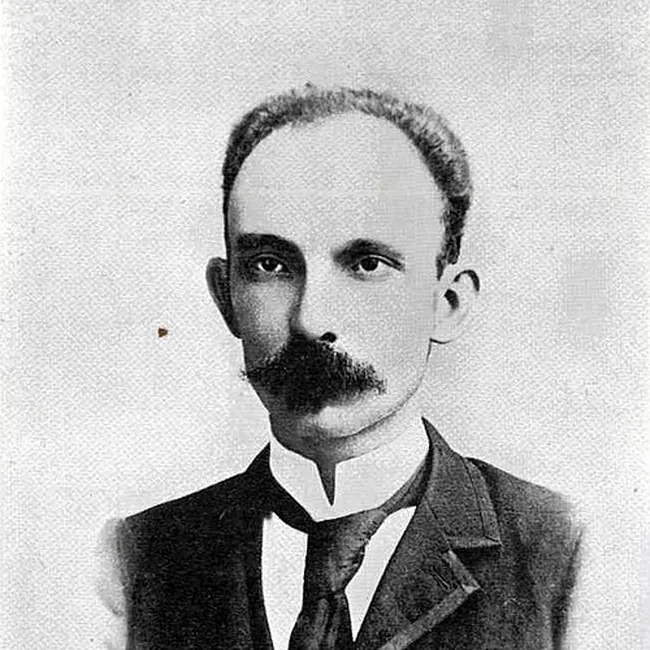
Martí spent most of his last 15 years in New York. He wrote for newspapers across Latin America, sending vivid chronicles of American life, from the opening of the Brooklyn Bridge to Coney Island crowds and US politics, that introduced the United States to Spanish-speaking readers. He translated books, worked for the publisher Appleton, and served as consul for Uruguay, Argentina and Paraguay.
He also produced La Edad de Oro (The Golden Age), a magazine for children of the Americas, and wrote poetry that helped launch the Latin American modernist movement. His collection Ismaelillo (1882) was dedicated to his young son.
A painful private life
His wife never shared his political commitment. After several separations, Carmen returned to Havana with their son in 1891, and Martí never saw them again. In New York he found support from Carmen Miyares de Mantilla, a Venezuelan who ran the boarding house where he lived. He is widely presumed to have been the father of her daughter, María Mantilla, whose son, the Hollywood actor Cesar Romero, proudly claimed Martí as his grandfather.
“Nuestra América” and his ideas
Martí’s best-known essay, “Nuestra América” (Our America), published in New York in January 1891, argued that the nations of Latin America should build their own institutions from their own realities, rather than copying Europe or the United States, and should unite to protect their independence. He warned of the growing power of the United States, which he knew well from inside, while admiring its democratic energy.
| Theme | What Martí argued |
|---|---|
| Independence | Cuba must be free from Spain, and Latin America free from any foreign domination |
| Racial equality | Rejected racism; “there are no races”, he wrote, insisting Cubans of all colours fight as equals |
| Democracy | A free Cuba should be a republic “with all and for the good of all” |
| Latin American identity | Nations should govern according to their own histories and peoples |
| Education | Knowledge and education were the foundation of freedom |
| Opposition to slavery | Formed in childhood, when slavery still existed in Cuba |
His phrase “Con todos, y para el bien de todos” (With all, and for the good of all) comes from a famous speech he gave to Cuban cigar workers in Tampa in November 1891. It remains one of the most quoted lines in Cuban politics.
Martí and the United States
Martí’s relationship with the United States was complicated. He admired American energy, democracy and writers such as Walt Whitman and Ralph Waldo Emerson, and his newspaper chronicles often celebrated American life. But he grew increasingly worried about US ambitions in the Caribbean and Latin America. In a famous unfinished letter to his Mexican friend Manuel Mercado, written the day before he died, he said that his life’s work was to prevent the United States from extending its power over the Antilles, and he wrote that he had lived inside “the monster” and knew its entrails. The letter is still quoted, by very different political camps, more than a century later.
Martí in Florida
Florida’s Cuban cigar-making communities were the financial heart of Martí’s movement. In Ybor City in Tampa and in Key West, thousands of tobacco workers, many of them Black and mixed-race Cubans, pledged a share of their wages to the independence cause after hearing him speak. Their support made the 1895 war possible. Today Ybor City has a small park, Parque Amigos de José Martí, on the site of a boarding house where he stayed, and Key West’s San Carlos Institute, a historic Cuban cultural centre, preserves the memory of his visits.
The Cuban Revolutionary Party and the 1895 war
Martí believed that the failure of earlier independence wars came from division and poor planning. He spent years uniting Cuban exiles, especially the tobacco workers of Tampa and Key West, whose donations funded the cause. In January 1892, representatives meeting in Key West approved the founding principles of the Cuban Revolutionary Party, which Martí led, and he launched the newspaper Patria as its voice.
He worked closely with the veteran generals of the Ten Years’ War, Máximo Gómez and Antonio Maceo, although they had clashed in the 1880s over the timing of a new war. In 1895, the uprising began. On 1 April, Martí and Gómez sailed from Montecristi in the Dominican Republic, and on 11 April they landed at Playitas on Cuba’s eastern coast to join the rebels.
Death at Dos Ríos
On 19 May 1895, near the confluence of the Contramaestre and Cauto rivers at Dos Ríos, rebel forces clashed with Spanish troops. Martí, who had no military training, rode forward on a white horse in a dark jacket, an easy target, after urging a young soldier to charge with him. He was shot and killed. Spanish forces took his body, buried it nearby and later exhumed it once they realised who he was. He was eventually buried in Santa Ifigenia Cemetery in Santiago de Cuba.
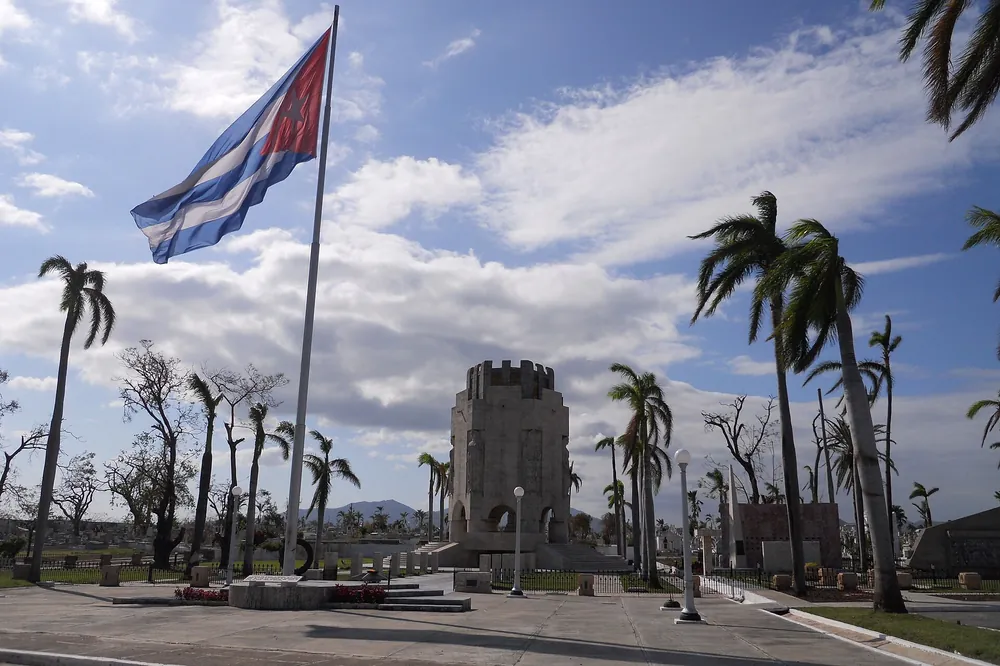
His death, only weeks into the war he had worked so long to start, made him a martyr. The fighting continued until the United States entered the conflict in 1898, after which Spain lost Cuba. Cuba became formally independent in 1902, a republic Martí did not live to see.
“Guantanamera” and his poetry
Martí’s collection Versos Sencillos (Simple Verses), published in 1891, contains some of the best-loved poems in Spanish. After his death, lines from it were set to the tune of “Guantanamera”, which became Cuba’s most famous song worldwide. The opening lines, “Yo soy un hombre sincero / de donde crece la palma” (I am a sincere man / from where the palm tree grows), are known across the Spanish-speaking world.
His poetry, with its clear, direct language and emotional honesty, influenced later Latin American writers such as the Nicaraguan poet Rubén Darío, whom Martí met in New York, and the Chilean Nobel laureate Gabriela Mistral.
| Work | Year | Type |
|---|---|---|
| Abdala | 1869 | Patriotic verse drama |
| El presidio político en Cuba | 1871 | Pamphlet on colonial prisons |
| Ismaelillo | 1882 | Poems dedicated to his son |
| Amistad funesta | 1885 | His only novel |
| La Edad de Oro | 1889 | Magazine for children |
| Versos Sencillos | 1891 | Poems; source of “Guantanamera” |
| Nuestra América | 1891 | Essay on Latin American identity |
One of the most famous poems in the collection, “La niña de Guatemala” (The Girl from Guatemala), grew out of his time in that country. It remembers María García Granados, the daughter of a former Guatemalan president, who had fallen for Martí; she died young in 1878, and the poem’s line about the girl who “died of love” became part of Latin American popular memory.
Martí’s son, José Francisco, the “Ismaelillo” of his first book of poems, later fought in the independence war his father had started and went on to serve as an officer in the army of the new Cuban republic, carrying the family name into the country Martí had imagined but never saw.
Lines Martí is remembered for
| In Spanish | In English | Source |
|---|---|---|
| “Yo soy un hombre sincero / de donde crece la palma” | “I am a sincere man / from where the palm tree grows” | Versos Sencillos (1891) |
| “Con todos, y para el bien de todos” | “With all, and for the good of all” | Speech in Tampa (1891) |
| “Patria es humanidad” | “Homeland is humanity” | Patria (1895) |
| “Cultivo una rosa blanca” | “I grow a white rose” | Versos Sencillos, a poem about forgiving even enemies |
“Cultivo una rosa blanca”, which promises a white rose both to the true friend and to the one who “tears out my heart”, is among the first poems many Cuban children learn, and it captures a generosity of spirit that admirers see as central to his character.
Legacy and memorials
Martí is claimed by Cubans across the political spectrum. After the 1959 revolution, Fidel Castro’s government made him the central symbol of the Cuban state. Cuban exiles in the United States also honour him as a champion of freedom and democracy, and critics of the Cuban government argue that his ideas have been selectively used to justify policies he would have opposed.
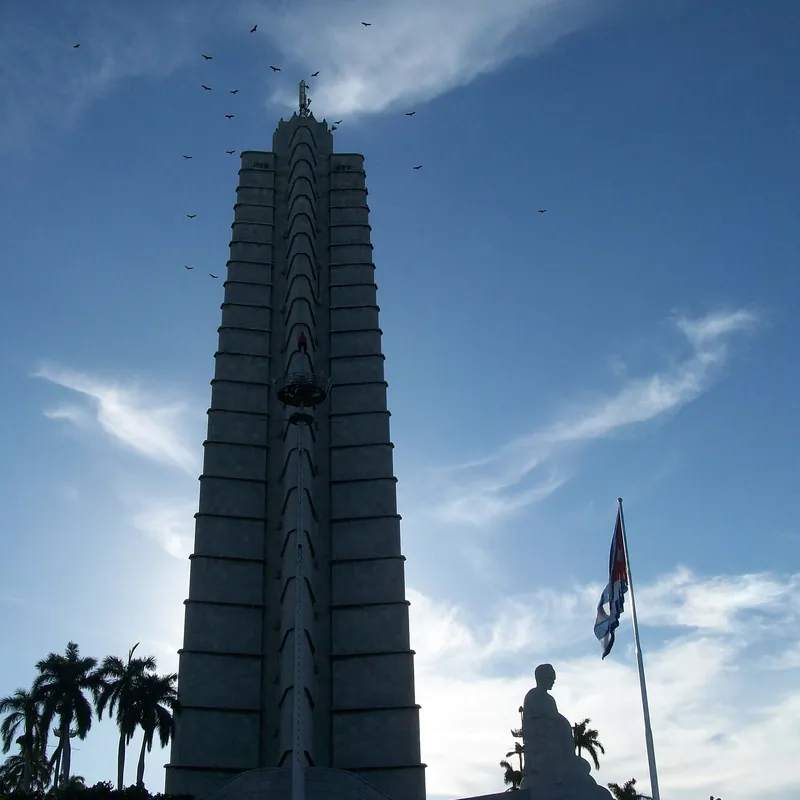
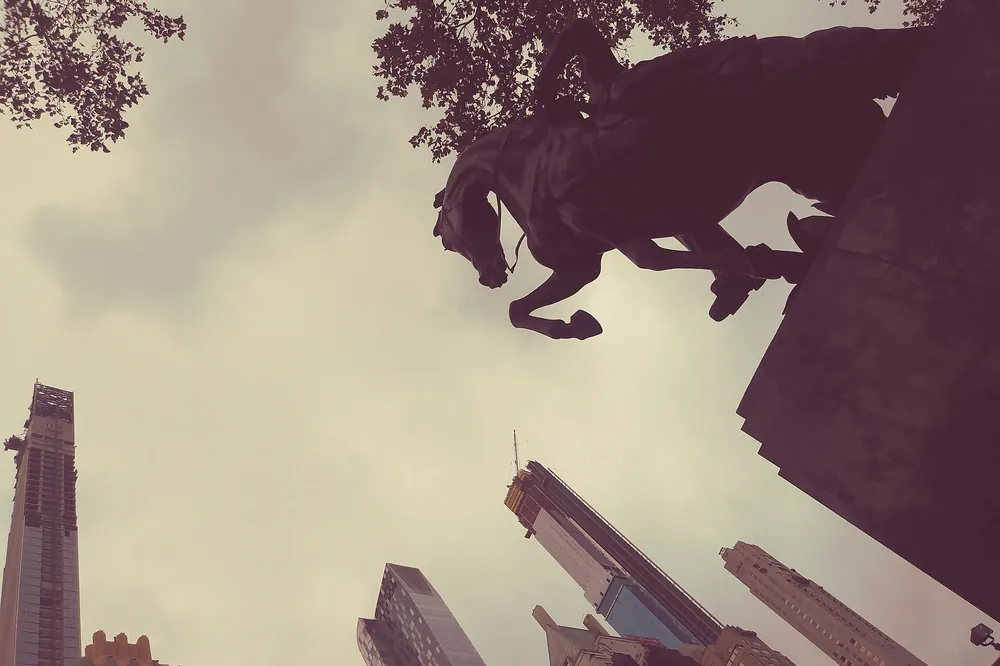
His memorials are everywhere. Havana’s international airport is named José Martí International Airport. The José Martí Memorial in Havana’s Plaza de la Revolución, with its 109-metre tower and giant statue, is described as the largest monument in the world dedicated to a writer. In New York, an equestrian statue of Martí by the sculptor Anna Hyatt Huntington stands at the southern edge of Central Park.
My advice, if you want to read Martí for yourself: start with “Nuestra América” and a handful of poems from Versos Sencillos. Both are short, widely translated and give you the heart of his thinking in an afternoon. If you are learning Spanish, his clear style makes him one of the best classic writers to try; our guide to learning Spanish fast can help you get there.
More from our History section: Genghis Khan, Thomas Jefferson, Elie Wiesel.
Frequently asked questions
Who was José Martí?
A Cuban poet, journalist and revolutionary (1853-1895), considered Cuba’s national hero and the “Apostle of Cuban Independence”.
Why is José Martí a Cuban national hero?
He united Cuban exiles, founded the Cuban Revolutionary Party, helped launch the 1895 War of Independence against Spain and died fighting in it.
How did José Martí die?
He was shot and killed at the Battle of Dos Ríos on 19 May 1895, weeks after landing in Cuba.
Where is José Martí buried?
In Santa Ifigenia Cemetery in Santiago de Cuba.
What nationality was José Martí?
Cuban. He was born in Havana when Cuba was a Spanish colony, to Spanish parents.
What is “Nuestra América”?
Martí’s 1891 essay urging Latin American nations to build institutions from their own realities and unite to protect their independence.
Did José Martí write “Guantanamera”?
The song’s best-known lyrics come from his poems in Versos Sencillos (1891), set to the melody after his death.
Where did José Martí live in the United States?
Mainly New York, from 1881 until 1895, with frequent visits to Cuban communities in Tampa and Key West.
Was José Martí imprisoned?
Yes. At 16 he was sentenced to six years of hard labour by the Spanish authorities, later commuted to exile in Spain.
What is named after José Martí?
Havana’s international airport, the José Martí Memorial in Havana, countless schools and squares, and statues including one in New York’s Central Park.
Final thoughts
José Martí was jailed at 16, exiled for most of his life and killed at 42, yet he became the defining figure of Cuban independence and a giant of Latin American literature. His poems are still sung, his essays still argued over, and his call for a republic “with all and for the good of all” still resonates far beyond Cuba.
Sources: Standard biographical and historical accounts of José Martí (life, imprisonment, exile, writings, the Cuban Revolutionary Party and his death at Dos Ríos); Martí’s own works, including Versos Sencillos and “Nuestra América” (1891); published information on the José Martí Memorial (Havana) and the Central Park statue by Anna Hyatt Huntington. Images: Wikimedia Commons, credited in each caption.