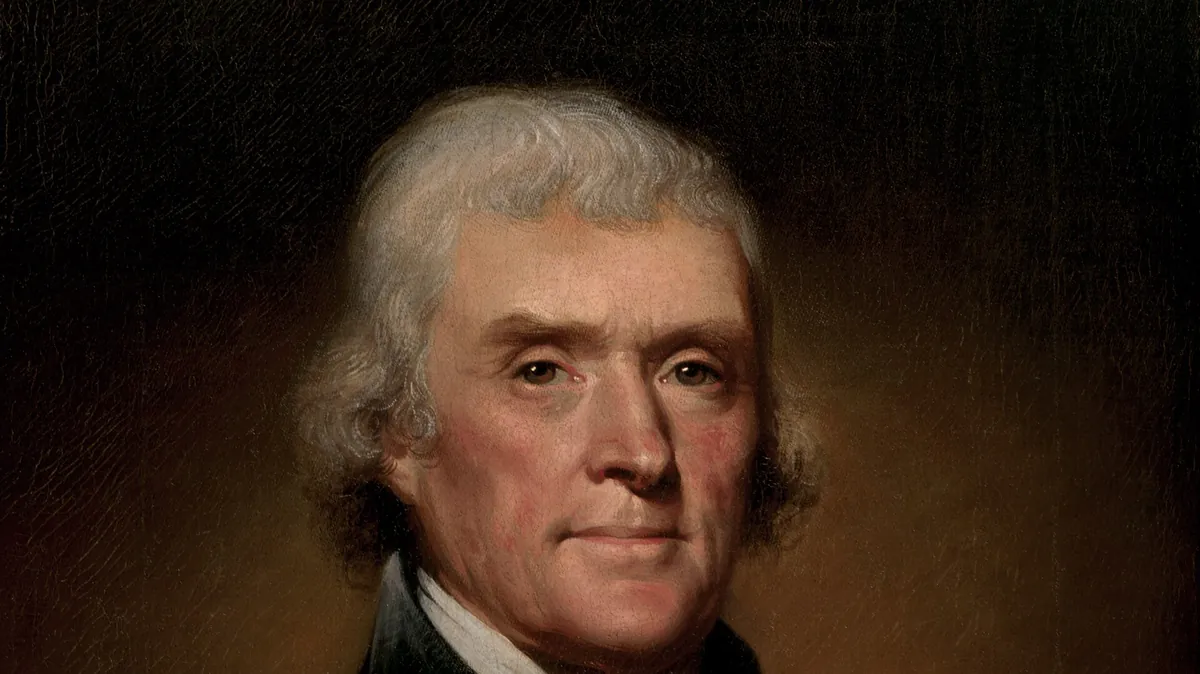
Short answer: Thomas Jefferson (1743-1826) was the principal author of the Declaration of Independence (1776) and the third President of the United States (1801-1809). As president he made the Louisiana Purchase (1803), doubling the size of the country, and sent the Lewis and Clark Expedition west. He also wrote the Virginia Statute for Religious Freedom, served as US minister to France, the first Secretary of State and Vice President, and founded the University of Virginia.
He is also one of the most contradictory figures in American history: the man who wrote that “all men are created equal” enslaved more than 600 people over his lifetime, and historians widely accept that he fathered children with Sally Hemings, an enslaved woman at Monticello.
I will be honest with you: “What did Thomas Jefferson do?” sounds like a simple school question, but the full answer is surprisingly long, and not entirely comfortable. Jefferson wrote some of the most powerful words about liberty ever put on paper, shaped the young American republic for half a century, and left a lasting mark on law, science, architecture and education. He also built his life on the labour of enslaved people. This guide covers what he did, why it mattered, and how historians see him today.

Thomas Jefferson: quick facts
| Details | |
|---|---|
| Born | 13 April 1743, Shadwell, Colony of Virginia |
| Died | 4 July 1826, Monticello, Virginia (aged 83) |
| Presidency | 3rd President, 4 March 1801 – 4 March 1809 |
| Party | Democratic-Republican |
| Vice President to | John Adams (1797-1801) |
| Other offices | Governor of Virginia; Minister to France; first US Secretary of State |
| Wife | Martha Wayles Skelton (married 1772; died 1782) |
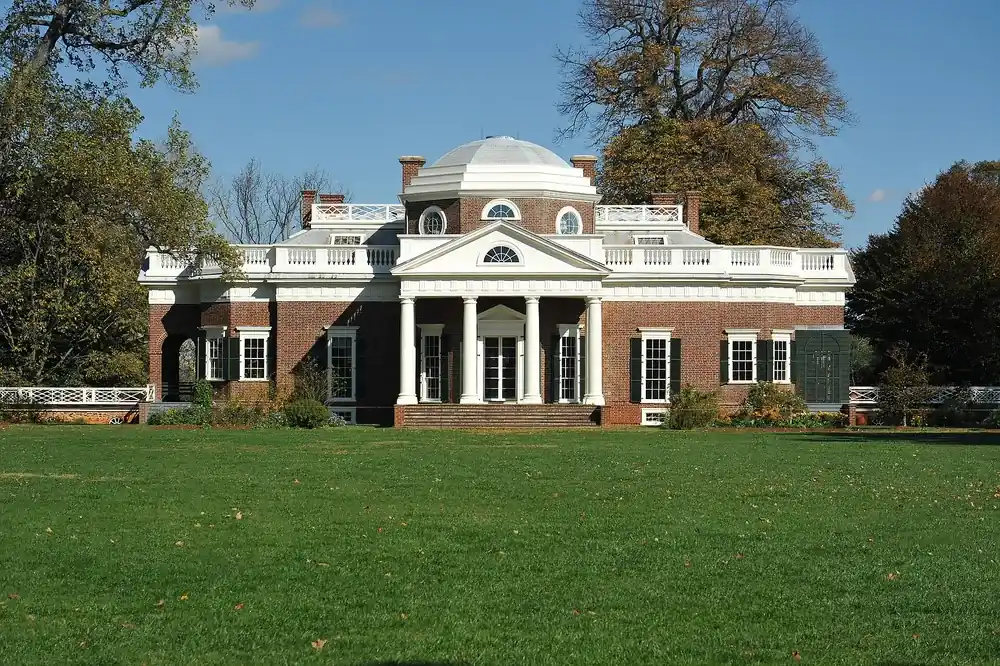
| Home | Monticello, near Charlottesville, Virginia |
| Best known for | Declaration of Independence; Louisiana Purchase; University of Virginia |
What did Thomas Jefferson do? The main achievements
| Achievement | Year | Why it matters |
|---|---|---|
| Drafted the Declaration of Independence | 1776 | Announced American independence and set out the ideal that “all men are created equal” |
| Wrote the Virginia Statute for Religious Freedom | 1777 (passed 1786) | Separated church and state in Virginia; influenced the First Amendment |
| US Minister to France | 1785-1789 | Represented the young nation in Paris on the eve of the French Revolution |
| First Secretary of State | 1790-1793 | Shaped early US foreign policy under George Washington |
| Co-founded the Democratic-Republican Party | 1790s | Created one of the first American political parties, with James Madison |
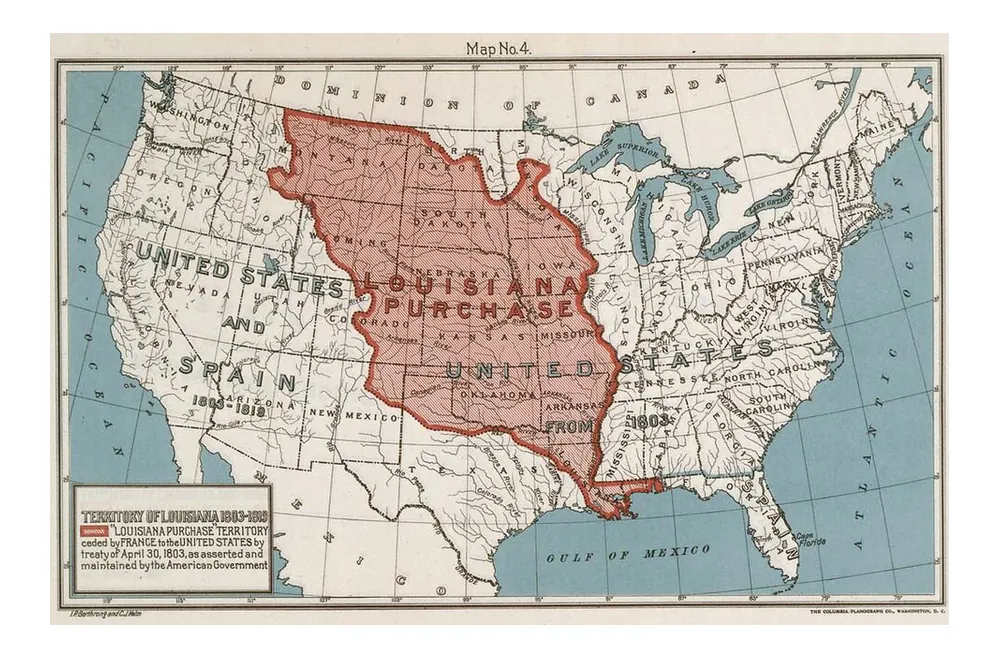
| Louisiana Purchase | 1803 | Bought about 828,000 square miles from France, roughly doubling the US |
| Lewis and Clark Expedition | 1804-1806 | Explored the new territory to the Pacific |
| Ended the transatlantic slave trade to the US | 1807 (law signed) | Banned the import of enslaved people from 1808 |
| Founded the University of Virginia | 1819 | Designed its buildings and curriculum himself |
| Sold his library to Congress | 1815 | Rebuilt the Library of Congress after the British burned it in 1814 |
Jefferson himself chose only three achievements for his gravestone, which he designed. The inscription reads that he was the author of the Declaration of American Independence, of the Statute of Virginia for religious freedom, and father of the University of Virginia. He left out the presidency entirely, a telling choice about what he valued most.
Early life and education
Jefferson was born on 13 April 1743 at Shadwell, his family’s plantation in the Virginia Piedmont, the son of Peter Jefferson, a planter and surveyor, and Jane Randolph, from one of Virginia’s most prominent families. He studied at the College of William & Mary in Williamsburg, then trained as a lawyer under George Wythe, a leading legal scholar. He read voraciously in law, philosophy, science and the classics, and became fluent in several languages.
In 1769 he was elected to Virginia’s House of Burgesses, and he began building Monticello, the hilltop house he would redesign for the rest of his life. In 1772 he married Martha Wayles Skelton, a young widow. Only two of their six children survived to adulthood, and Martha died in 1782, aged 33. Jefferson never remarried.
The Declaration of Independence (1776)
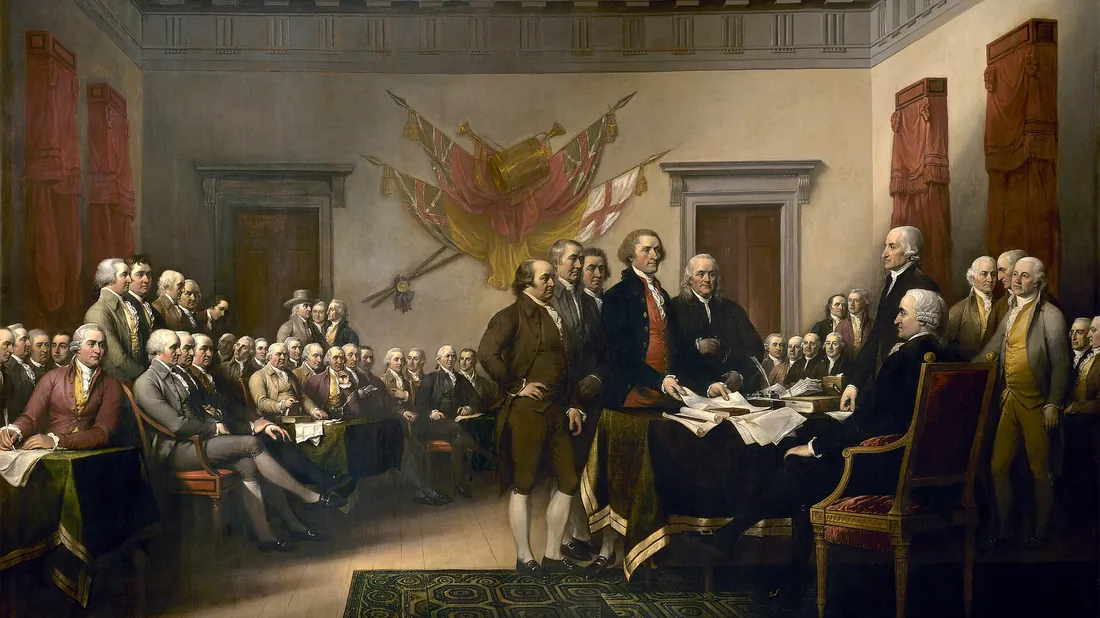
In June 1776 the Second Continental Congress in Philadelphia appointed a committee of five, John Adams, Benjamin Franklin, Roger Sherman, Robert Livingston and Jefferson, to draft a declaration of independence from Britain. The committee gave the writing to the 33-year-old Jefferson. His draft, revised by the committee and then by Congress, was adopted on 4 July 1776.
Its second paragraph contains the most famous sentence in American political writing: “We hold these truths to be self-evident, that all men are created equal, that they are endowed by their Creator with certain unalienable Rights, that among these are Life, Liberty and the pursuit of Happiness.” Congress cut a passage in which Jefferson had blamed the British king for the slave trade, a deletion that reflected the interests of slaveholding and slave-trading delegates.
Governor, diplomat and Secretary of State
Jefferson served as Governor of Virginia from 1779 to 1781, a difficult term during which British forces invaded the state and he narrowly avoided capture. His wartime record was criticised, and he briefly withdrew from public life. His only full-length book, Notes on the State of Virginia, written in this period, combined natural history, geography and political argument, including passages on slavery and race that are now widely quoted for their contradictions.
From 1785 to 1789 he was US Minister to France, succeeding Benjamin Franklin. He witnessed the beginning of the French Revolution, advised his friend the Marquis de Lafayette, and absorbed European architecture and ideas that later shaped Monticello and the University of Virginia.
Returning home, he became the first Secretary of State under George Washington. He clashed repeatedly with Treasury Secretary Alexander Hamilton over the power of the federal government, a national bank and relations with Britain and France. Their rivalry gave rise to the first American political parties: Hamilton’s Federalists and the Democratic-Republicans led by Jefferson and James Madison.
Vice President and the election of 1800
Jefferson came second to John Adams in the presidential election of 1796 and, under the rules of the time, became Vice President to his political rival. In 1800 he defeated Adams, but a tie in the Electoral College with his running mate, Aaron Burr, sent the election to the House of Representatives, which chose Jefferson after 36 ballots. The episode led to the Twelfth Amendment, which created separate votes for president and vice president. Jefferson called his victory “the revolution of 1800”: the first peaceful transfer of power between rival parties in the United States.
Thomas Jefferson as president (1801-1809)
- 1801Inaugurated as third President in the new capital, Washington.
- 1801-1805Sends the US Navy against the Barbary states of North Africa (First Barbary War).
- 1803Louisiana Purchase from France.
- 1804-1806Lewis and Clark Expedition explores the West to the Pacific.
- 1804Re-elected in a landslide.
- 1807Signs the law banning the import of enslaved people (effective 1808); Embargo Act restricts trade with Britain and France.
- 1809Leaves office after two terms.
The Louisiana Purchase
Jefferson’s greatest act as president was buying the vast Louisiana Territory from Napoleon’s France in 1803 for about $15 million. The roughly 828,000 square miles stretched from the Mississippi River to the Rocky Mountains, and the purchase roughly doubled the size of the United States. Jefferson worried that the Constitution did not explicitly allow such a purchase, but went ahead anyway, judging the opportunity too important to miss. Land from the purchase later formed all or part of 15 US states.
Lewis and Clark
To explore the new lands, Jefferson sent Meriwether Lewis and William Clark on the Corps of Discovery expedition (1804-1806). They travelled up the Missouri River, crossed the Rockies and reached the Pacific coast, mapping the land, recording plants and animals and making contact with dozens of Native American nations, with crucial help from guides including Sacagawea.
The Embargo and its failure
Jefferson’s second term was harder. Caught between Britain and France at war, he backed the Embargo Act of 1807, which banned American ships from trading with foreign ports. It was meant to pressure the European powers but badly hurt American merchants and farmers, especially in New England, and it was repealed in 1809. Most historians consider it the biggest failure of his presidency.
Jefferson and slavery
No account of Jefferson is complete without slavery. Over his lifetime he enslaved more than 600 people, many of whom built and ran Monticello. He called slavery a moral evil and a danger to the nation, and as president he signed the law ending the import of enslaved people. Yet he freed only a handful of people, and none of the wider reforms he sometimes proposed came to pass; at his death, most of the people he enslaved were sold to pay his debts.
He also wrote in Notes on the State of Virginia that Black people were inferior, views historians recognise as racist even by the standards of some of his contemporaries. For many readers today, the gap between the words of the Declaration and the realities of Monticello is the central tension of his life.
Sally Hemings
Sally Hemings was an enslaved woman at Monticello, and the half-sister of Jefferson’s late wife. Rumours that Jefferson fathered her children circulated during his presidency. A 1998 DNA study showed a genetic link between the Jefferson male line and a descendant of her youngest son, and in 2000 a research committee of the Thomas Jefferson Foundation concluded that Jefferson was very likely the father of her children. Most historians now accept this. Her children were freed, either during Jefferson’s lifetime or in his will. Because she was enslaved, the relationship cannot be understood as one between equals.
Scientist, architect and book collector
Jefferson’s curiosity was boundless. He was president of the American Philosophical Society, the young nation’s leading scientific body, studied fossils, kept detailed weather records and grew hundreds of varieties of plants at Monticello. He designed Monticello and the Virginia State Capitol, helping popularise neoclassical architecture in America. He also invented or improved devices such as a revolving bookstand and a portable copying desk.
He collected books all his life. After the British burned the Capitol and the Library of Congress in 1814, he sold Congress his personal library of 6,487 volumes in 1815, the core of the modern Library of Congress. Fittingly, the library’s main building in Washington is named the Thomas Jefferson Building.
The University of Virginia
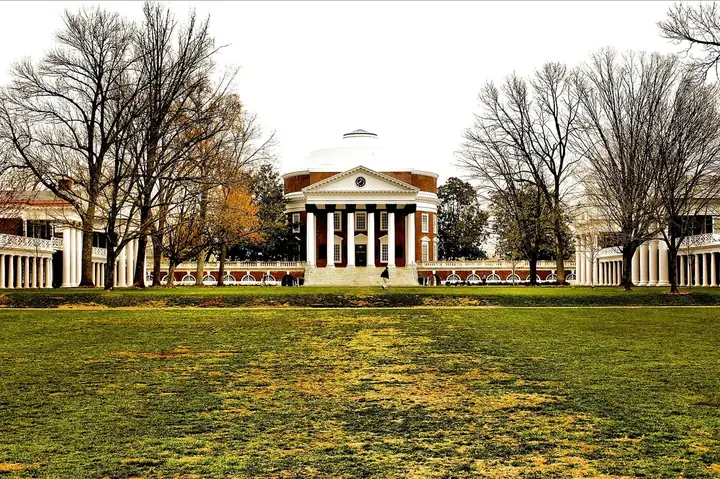
In retirement, Jefferson’s great project was a public university free of church control. He founded the University of Virginia in Charlottesville in 1819, designed its “Academical Village” around a central Lawn crowned by the Rotunda, chose its faculty and planned its curriculum. Students arrived in 1825, a year before his death. Monticello and the University of Virginia are now jointly listed as a UNESCO World Heritage Site.
Death on 4 July 1826
Jefferson died at Monticello on 4 July 1826, the 50th anniversary of the Declaration of Independence. Remarkably, his old friend and rival John Adams died the same day in Massachusetts; Adams’s reported last words were that Jefferson still survived, unaware that he had died hours earlier. The two had reconciled in old age and exchanged a famous correspondence of more than 150 letters. Jefferson left heavy debts, and Monticello and the people he enslaved were sold after his death.
Jefferson in his own words
| Quote | Source |
|---|---|
| “We hold these truths to be self-evident, that all men are created equal…” | Declaration of Independence, 1776 |
| “We are all Republicans, we are all Federalists.” | First inaugural address, 1801, calling for unity after a bitter election |
| “I have sworn upon the altar of God eternal hostility against every form of tyranny over the mind of man.” | Letter to Benjamin Rush, 1800 |
| “The tree of liberty must be refreshed from time to time with the blood of patriots and tyrants.” | Letter to William Stephens Smith, 1787 |
| “I cannot live without books.” | Letter to John Adams, 1815 |
That last point is worth remembering. Jefferson is one of the most misquoted figures in American history, and inspiring lines about government, banks and liberty are often wrongly attached to his name. If you plan to use a Jefferson quote, check it against a reliable source first.
Visiting Jefferson’s Virginia
Monticello, just outside Charlottesville, is open to visitors year-round and offers tours of the house, gardens and the plantation, including exhibits on the lives of the people Jefferson enslaved. A few miles away, the University of Virginia’s Lawn and Rotunda can be explored on foot. Combined with a visit to the Jefferson Memorial and the Thomas Jefferson Building of the Library of Congress in Washington, it makes a rewarding trip for anyone interested in early American history.
Legacy
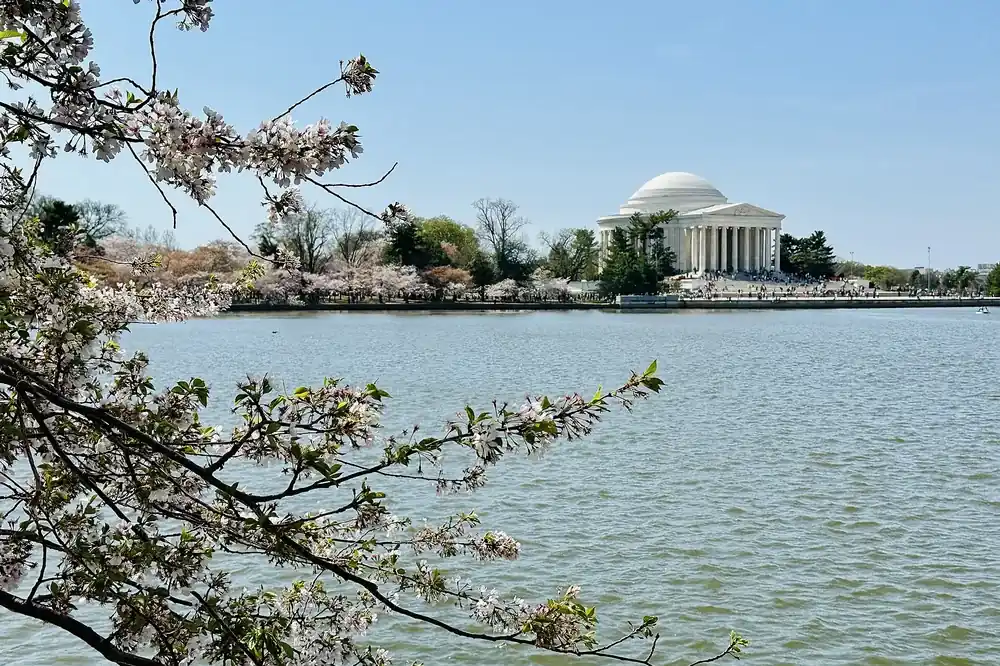
Jefferson appears on the US nickel and the $2 bill, his face is carved into Mount Rushmore, and the Jefferson Memorial in Washington, dedicated in 1943 on the 200th anniversary of his birth, displays passages from his writings. His ideas about liberty, democracy, religious freedom and education have influenced movements around the world, including people who used his words to challenge slavery and inequality.
Historians today try to hold his achievements and his failings together. My advice, if you want to go beyond the textbook: read the Declaration of Independence in full, then visit Monticello’s exhibits on slavery, or the Thomas Jefferson Foundation’s online resources. Seeing both side by side is the best way to understand why Jefferson still matters, and why he is still argued over.
More from our History section: Genghis Khan, José Martí, Elie Wiesel.
Frequently asked questions
What did Thomas Jefferson do?
He wrote the Declaration of Independence, served as the third US President, made the Louisiana Purchase, founded the University of Virginia and wrote the Virginia Statute for Religious Freedom.
What is Thomas Jefferson best known for?
Drafting the Declaration of Independence in 1776 and, as president, the Louisiana Purchase of 1803.
When was Thomas Jefferson president?
From 1801 to 1809, for two terms. He was the third President of the United States.
How did Thomas Jefferson die?
He died at Monticello on 4 July 1826, aged 83, after a long illness, on the 50th anniversary of the Declaration of Independence.
Did Thomas Jefferson own slaves?
Yes. He enslaved more than 600 people over his lifetime, despite calling slavery a moral evil.
Did Thomas Jefferson have children with Sally Hemings?
Most historians accept that he did, based on a 1998 DNA study and historical evidence reviewed by the Thomas Jefferson Foundation.
What was the Louisiana Purchase?
The 1803 purchase of about 828,000 square miles from France for about $15 million, roughly doubling the size of the US.
Who was Thomas Jefferson’s wife?
Martha Wayles Skelton, whom he married in 1772. She died in 1782 and he never remarried.
What did Jefferson put on his gravestone?
That he was author of the Declaration of Independence and the Virginia Statute for Religious Freedom, and father of the University of Virginia.
Did Jefferson and John Adams die on the same day?
Yes, both died on 4 July 1826, the 50th anniversary of the Declaration of Independence.
Final thoughts
Thomas Jefferson wrote the words that defined American ideals, doubled the size of the nation and built a university, a library and a home that still inspire visitors. He also enslaved hundreds of people and failed to live by his own principle of equality. Understanding what Jefferson did means understanding both, and that is why, two centuries after his death, Americans are still debating his legacy.
Sources: Standard historical accounts of Thomas Jefferson’s life and presidency; US National Archives (Declaration of Independence, Louisiana Purchase); Thomas Jefferson Foundation (Monticello) research on slavery and the 2000 report on Jefferson and Sally Hemings; Library of Congress (Jefferson’s library, 1815); UNESCO World Heritage listing for Monticello and the University of Virginia. Images: Wikimedia Commons, credited in each caption.