
Short answer: Most draughty windows can be fixed cheaply without replacing them. First find the leaks (a smoke test on a windy day works well), then seal the gaps that never move with caulk or sealant and fit weatherstripping or brush seals where the window opens. For extra warmth, add clear shrink film, secondary glazing or thermal curtains, and repair loose putty, broken sash cords or worn hinges.
Replacement is only worth it when frames are rotten beyond repair or the glazing has failed, and even then good repairs plus secondary glazing often get close to the comfort of new windows, especially in period homes. Whatever you do, keep trickle vents, airbricks and extractor fans working so the house can still breathe.
There is nothing quite like sitting by a window on a winter evening and feeling a thin, cold stream of air on the back of your neck. Draughty windows make rooms feel colder than the thermostat says, rattle in the wind, let in noise and dust, and push up heating bills. The good news is that most of the problems are small gaps rather than failed windows, and they can be fixed in an afternoon with inexpensive materials. This guide shows you how to find the leaks, which fix suits which gap, how to deal with sash, casement and modern uPVC windows, and when it really is time to call in a professional or replace.

Why windows get draughty
Air leaks happen wherever two parts of a window meet: where the frame meets the wall, where the opening part meets the frame, and where the glass meets the frame. Over the years timber shrinks and swells, paint builds up, putty dries and cracks, seals compress, and hinges and catches wear so the window no longer closes tightly. Houses also move slightly, opening hairline cracks around frames.
| Where the draught comes from | Typical cause | Usual fix |
|---|---|---|
| Between frame and wall | Cracked or missing sealant, gaps behind trims | Caulk or sealant, inside and out |
| Around the opening part | Worn or missing seals, warped sashes | Weatherstripping or brush seals |
| Between glass and frame | Dried, cracked or missing putty or glazing beads | Re-putty or replace glazing seals |
| Where sashes meet (sash windows) | Worn meeting rails and loose catches | Brush seals and a tighter fastener |
| Through loose hinges or catches | Wear, sagging, poorly adjusted hardware | Adjust or replace hardware |
| Through the glass itself (feels draughty) | Cold glass causing a downdraught, not a leak | Secondary glazing, film or curtains |
That last row is worth noticing. A single-glazed pane can feel draughty even when it is sealed, because room air cools against the cold glass, becomes denser and sinks, creating a gentle downdraught. Sealing gaps will not cure that; adding a second layer of glazing or a heavy curtain will.
Step one: find the leaks
Before you buy anything, spend 20 minutes finding exactly where the air gets in. Energy Saver suggests looking for daylight around frames and using a lit incense stick on a windy day: if the smoke wavers or streams sideways, you have found a leak. You can do the same with a damp hand, which is more sensitive to moving air than you might expect.
If you want to go further, a home energy assessor can carry out a blower-door test or a thermal-imaging survey, which shows cold spots and leaks as colours. Some energy-advice services and retailers lend or hire thermal cameras, and phone-mounted thermal cameras are increasingly affordable.
Caulk or weatherstrip? The basic rule
Energy Saver gives a simple rule that makes every decision easier: use caulk for cracks and gaps between parts that do not move, such as where the frame meets the wall, and use weatherstripping for parts that move, such as the edge of an opening sash or casement. Mixing these up is the most common mistake: caulking a window shut stops the draught but also stops you opening it, and can be dangerous if that window is a fire escape route.
| Material | Use it for | Notes |
|---|---|---|
| Flexible caulk or sealant | Fixed gaps between frame, trim and wall | Choose a paintable, flexible type suitable for indoor or outdoor use |
| Removable or peelable caulk | Temporary winter sealing of windows you do not open | Peels off in spring; check the label |
| Self-adhesive foam strip | Casement windows and loose-fitting frames | Cheap and easy, but compresses and wears out |
| Rubber (EPDM) profiles | Casements and doors that close against a stop | More durable than foam; comes in several profiles |
| Brush pile seals | Sliding parts such as sash windows | Allows the sash to slide while blocking air |
| V-strip (tension seal) | Sides of sashes and some casements | Springs open to fill the gap; discreet when fitted well |
| Draught excluder snakes | Window sills and door bottoms | Simple, removable, no fitting needed |

How to caulk around a window frame
- Choose a dry, mild day; most sealants need temperatures above freezing to cure properly.
- Remove old, cracked caulk with a scraper or utility knife, and clean away dust and loose paint.
- For gaps wider than about a quarter of an inch (6 mm), push in foam backer rod first so the sealant does not sink in.
- Cut the nozzle at an angle to match the width of the gap and run a steady, continuous bead.
- Smooth the bead with a wet finger or a smoothing tool so it sticks to both sides of the gap.
- Wipe away excess immediately and leave it to cure before painting.
- Check the outside too: exterior sealant keeps out rain as well as wind.
My advice is to buy a decent caulking gun rather than the cheapest one. A smooth, controlled bead is much easier with a gun that has a drip-free release, and it makes the finished job look professional rather than patchy.
Fixing draughty sash windows
Traditional timber sash windows are often the draughtiest windows in a house, but they are also very repairable. Sashes slide in channels formed by the frame, the staff bead on the inside and the parting bead in the middle, and gaps open up as these parts wear or are painted repeatedly.

| Problem | Fix |
|---|---|
| Gap between sash and staff bead | Fit brush seals in the staff bead, or move the bead closer to the sash |
| Gap at the meeting rails | Fit a brush or compression seal on the meeting rail and tighten the fastener |
| Gap at the top and bottom | Compression seals on the head and sill; a new draught bead on the bottom sash |
| Sash rattles in the wind | Wedges are a quick fix; a proper repair resets the beads |
| Sash will not stay up | Replace broken sash cords and check the weights are balanced |
| Painted shut | Carefully cut through paint layers; free and ease the sashes |
In the UK, specialist firms offer sash window draught-proofing that routes discreet brush seals into the beads and sashes, often combined with overhauling sash cords and pulleys. Historic England notes that traditional windows can be improved substantially by repair, draught-proofing and secondary glazing, and that this is usually preferable to replacement in historic buildings.
Fixing draughty casement windows
Casement windows are hinged at the side, top or bottom. They are easier to seal than sashes because the opening part closes against a fixed stop.
- Fit compressible seals around the rebate where the casement closes, using foam for quick fixes or rubber profiles for durability.
- Adjust the hinges and stays so the casement closes evenly. Sagging hinges often leave a gap at the top corner.
- Tighten or replace the catch so it pulls the window firmly against the seal.
- Ease sticking casements by cleaning and lubricating hinges, and planing only as a last resort, sealing bare timber afterwards.
Do not overdo it. If the new seal is too thick, the window will not close, or the catch will strain and wear out. Check the gap with a piece of paper: if it slides out easily when the window is shut, the seal is too thin there.
Fixing draughty uPVC and aluminium windows
Modern double-glazed windows should not be draughty, but seals and mechanisms wear. Common causes include compressed or perished rubber gaskets, hinges that have dropped, and the locking cams (the small adjustable rollers on the edge of the sash) being set too loosely.
| Symptom | Likely cause | What to try |
|---|---|---|
| Draught around the opening sash | Worn gasket or loose locking cams | Adjust the cams for a tighter closure; replace the gasket |
| Window catches when closing | Dropped hinge | Adjust or replace the friction hinges |
| Handle stiff or loose | Worn gearbox or handle | Replace the handle or mechanism |
| Misting between the panes | Failed sealed unit | Replace the glass unit, not the whole window |
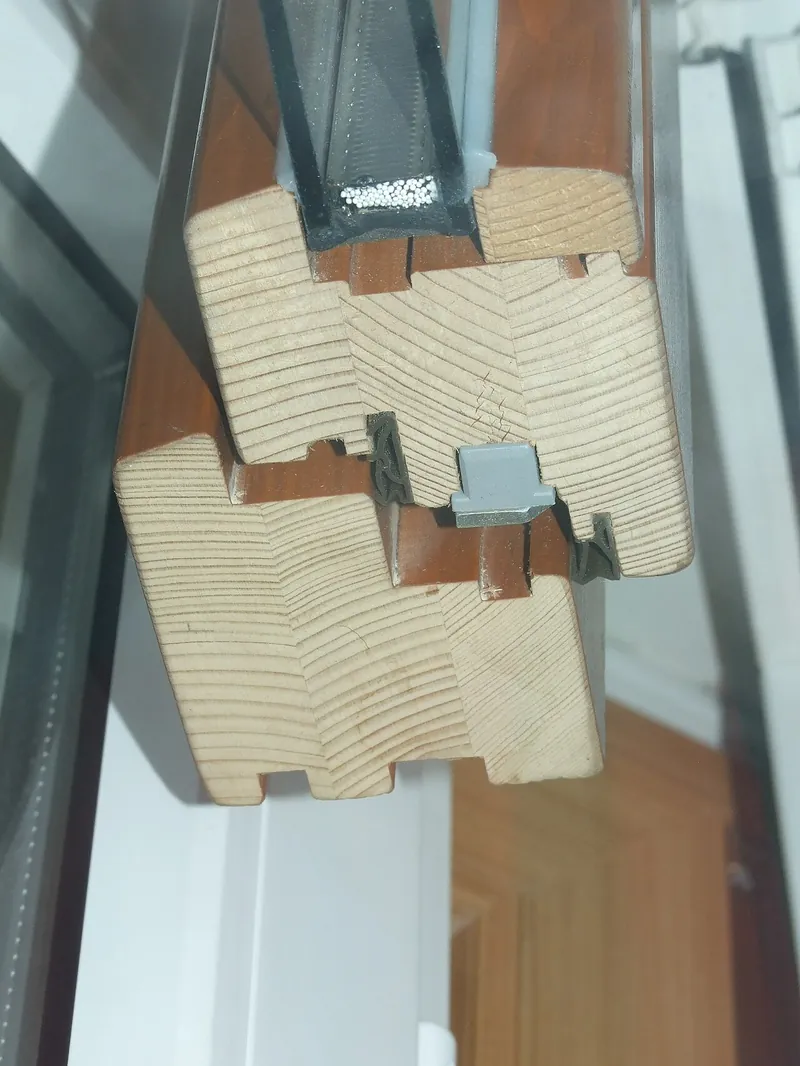
A misted double-glazed unit is not a draught problem as such, but it shows the seal around the glass has failed and the unit has lost much of its insulating value. A glazier can usually replace the sealed unit in the existing frame for far less than a new window.
Re-puttying loose glass
In older timber windows, the glass is held in with linseed oil putty. When putty dries out and cracks, air and water get in, and the glass may rattle. Re-puttying is a satisfying job if you take your time.
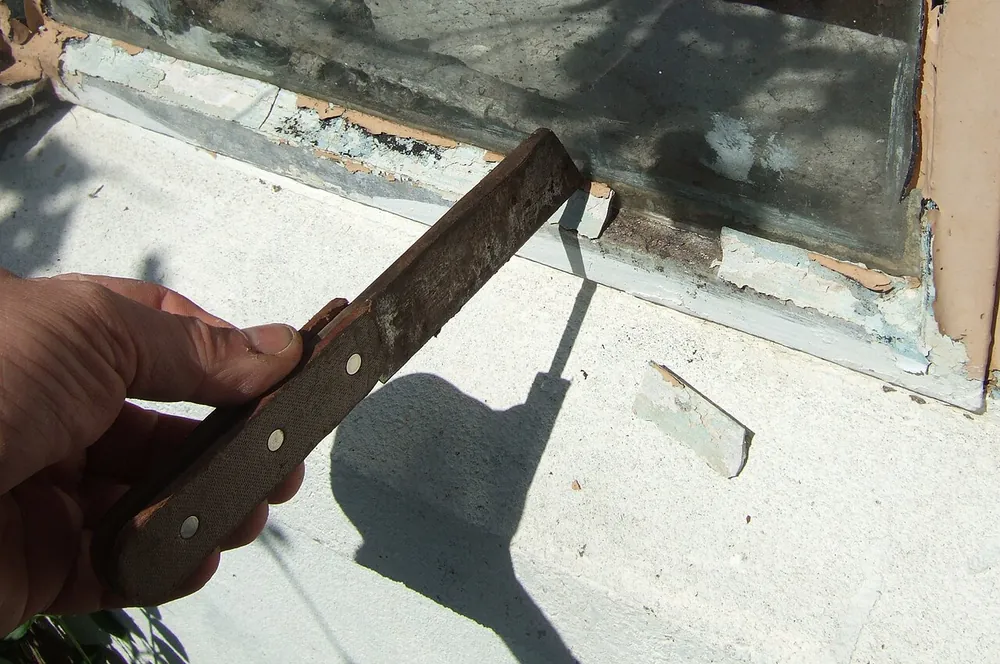
- Carefully remove loose and cracked putty with a hacking knife or putty knife. Leave sound putty in place.
- Brush out debris and prime bare timber so it does not suck the oil out of the new putty.
- Knead fresh linseed oil putty until it is soft and workable.
- Press it into the rebate, then smooth it to a neat bevel with a putty knife.
- Leave it to skin over, typically for a couple of weeks, before painting. Lap the paint slightly onto the glass to seal it.
Extra warmth: film, secondary glazing and curtains
Once the gaps are sealed, the next step is to tackle heat loss through the glass itself, which is high on single-glazed windows.
| Option | How it works | Best for |
|---|---|---|
| Clear shrink film | Plastic film on double-sided tape, tightened with a hairdryer | Cheap winter fix for rented homes and single glazing |
| Magnetic or clip-in secondary glazing | A removable acrylic or glass panel fitted inside the window | Renters and period homes; can be removed in summer |
| Fixed secondary glazing | A second slim window installed inside the existing one | Listed buildings and noise reduction |
| Thermal or lined curtains | Heavy curtains trap a layer of air at night | Every home; close them at dusk |
| Cellular (honeycomb) blinds | Air pockets in the blind add insulation | Windows where curtains do not suit |
| Low-emissivity window film | A thin coating reflects some heat back into the room | Year-round improvement; check it suits your glass |
Energy Saver notes that window coverings such as cellular shades and well-fitted, closed curtains can reduce heat loss through windows in winter. The key is to close them at dusk and open them on sunny days to let in free solar warmth.
Condensation: the other side of draught-proofing
Draughts are not all bad: they also carry away moisture from cooking, washing, showers and breathing. Seal a house tightly without keeping enough ventilation, and you may find more condensation on windows and, over time, mould. The Energy Saving Trust is clear that draught-proofing should not block intentional ventilation.

| Keep | Why |
|---|---|
| Trickle vents in window frames | Provide steady background ventilation |
| Airbricks and wall vents | Ventilate floors, rooms and fuel-burning appliances |
| Kitchen and bathroom extractor fans | Remove moisture where it is produced |
| Air supply to boilers, stoves and fires | Essential for safe combustion |
If you see heavy condensation every morning, wipe windows dry, open trickle vents, use extractor fans when cooking and showering, and dry washing outdoors or in a ventilated room where possible.
Repair or replace?
| Lean towards repairing | Lean towards replacing |
|---|---|
| Frames are sound or have small areas of rot | Rot is widespread and structural |
| Draughts come from gaps, seals and hardware | The frame is warped beyond adjustment |
| Period or listed building with original windows | Windows are poor-quality later replacements |
| Single glazing that can take secondary glazing | Double-glazed units and frames have both failed |
| Budget is limited | You are renovating anyway and can budget properly |
Replacement windows can be a major investment, and in the UK replacement windows must meet Building Regulations, usually shown by an installer registered with a competent person scheme such as FENSA or CERTASS. In listed buildings, replacing windows normally needs listed building consent, and conservation areas may have restrictions too. Repairing and upgrading is often the cheaper, greener and more attractive choice.
What it costs
| Fix | Typical cost level | DIY? |
|---|---|---|
| Caulk and sealant | Low | Yes |
| Foam or rubber weatherstripping | Low | Yes |
| Shrink film kits | Low | Yes |
| Thermal curtains | Low to moderate | Yes |
| Magnetic secondary glazing | Moderate | Often |
| Professional sash draught-proofing | Moderate per window | No |
| Fixed secondary glazing | Moderate to high | Usually professional |
| Full replacement windows | High | No |
A weekend plan for draughty windows
- Sat a.m.Find leaks with a smoke or hand test, mark them with tape, and check the outside of each window.
- Sat p.m.Buy sealant, weatherstripping, shrink film and a caulking gun. Clean and prepare surfaces.
- Sun a.m.Caulk fixed gaps inside and out. Adjust hinges, catches and uPVC locking cams.
- Sun p.m.Fit weatherstripping or brush seals, add shrink film to the worst single-glazed windows, and hang thermal curtains.
- Next weekCheck for remaining draughts and condensation. Book a joiner for rot or broken sash cords.
Draught-proofing and your heating and cooling
Sealing windows is one of the cheapest ways to make any heating or cooling system work better. A tighter home needs less heat in winter and holds cool air in summer, which means smaller bills and less wear on equipment. If you are planning a heat pump or mini-split, sealing draughts first may let you choose a smaller, cheaper system; see our guide to ductless mini splits in older homes. And if your air conditioner seems to run constantly in summer, leaky windows could be part of the reason; our guide to how long AC units last explains how load affects lifespan.
More home and garden guides: how to preserve roses, fun hobbies for outdoorsy people, what dreams mean, how long AC units last, mini splits in older homes, 9 vs 10 foot Christmas trees, Damascus knives.
Frequently asked questions
How do I find where my window is draughty?
On a windy day, move a lit incense stick or a damp hand slowly around the frame, sashes and glass edges. Smoke that wavers shows a leak.
Should I use caulk or weatherstripping?
Use caulk for gaps between parts that do not move, and weatherstripping for parts that open and close.
How do I stop a sash window rattling?
Wedges are a quick fix. For a lasting cure, reset the beads and fit brush seals, or use a specialist draught-proofing service.
Does window shrink film really work?
Yes, it is an inexpensive way to add an insulating air layer to single-glazed windows in winter, and it removes in spring.
Can I draught-proof windows in a rented home?
Yes, using removable options such as peelable caulk, shrink film, magnetic secondary glazing, draught snakes and thermal curtains.
Will draught-proofing cause condensation?
It can if you also block ventilation. Keep trickle vents, airbricks and extractor fans working.
Why is my window cold even though it is sealed?
Single glazing cools room air, which sinks as a downdraught. Secondary glazing, film or heavy curtains help.
How do I fix a draughty uPVC window?
Adjust the locking cams for a tighter closure, adjust dropped hinges, and replace worn gaskets.
Is secondary glazing allowed in listed buildings?
It is often the preferred option, but check with your local conservation officer as consent may still be needed.
When should I replace windows instead?
When frames are rotten or warped beyond repair, or both the frame and glazing have failed. Otherwise, repair is usually better value.
Final thoughts
Draughty windows are one of the most fixable problems in any home. Find the leaks first, use caulk for fixed gaps and weatherstripping for moving parts, repair putty, cords and hinges, and then add film, secondary glazing or curtains for extra warmth. Keep your vents working, and you will have a warmer, quieter, cheaper-to-run home without the cost of new windows.
Sources: US Department of Energy, Energy Saver guidance on air sealing, caulking, weatherstripping, window treatments and energy-efficient windows; UK Energy Saving Trust draught-proofing advice; Historic England guidance on traditional windows, draught-proofing and secondary glazing; US EPA Renovation, Repair and Painting rule; UK Building Regulations guidance on replacement windows and competent person schemes. Images: Wikimedia Commons, credited in each caption.