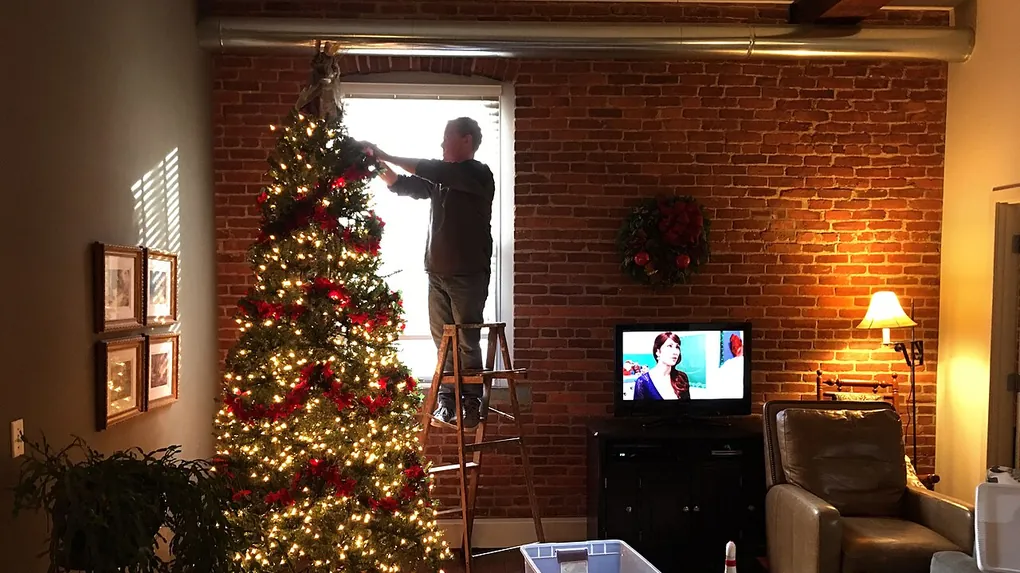
Short answer: Choose a 9-foot tree for a 10-foot ceiling and a 10-foot tree for a ceiling of about 11 to 12 feet. The usual rule is to leave roughly 6 to 12 inches between the top of the tree (including the stand and topper) and the ceiling, so the star or angel has room and the tree does not look squashed.
The extra foot matters more than you might think. A 10-foot tree is usually noticeably wider, heavier and harder to carry, stand and decorate, needs more lights and ornaments, and costs more, whether real or artificial. If your ceiling is exactly 10 feet, the 9-foot tree is almost always the right choice. If you have 11 feet or more and the floor space, the 10-foot tree gives a grander, more dramatic look.
Tall ceilings are one of the great pleasures of older houses, new open-plan homes and converted barns, and at Christmas they practically demand a big tree. The question is how big. A 9-foot and a 10-foot tree sound almost the same, but in a real room the difference can be the gap between a tree that looks perfectly proportioned and one that bends its top against the ceiling or crowds out the sofa. This guide helps you measure properly, compare the two sizes side by side, choose between real and artificial, and plan lights, ornaments, stands and safety for a tall tree.

The quick sizing rule
Measure from the floor to the ceiling where the tree will stand, then subtract about a foot. That leaves room for the stand, which raises the tree a few inches, and for a topper, which can add anything from a few inches to well over a foot. Many retailers suggest leaving 6 to 12 inches of clear space above the topper so the tree does not look jammed in.
| Ceiling height | Recommended tree height | Notes |
|---|---|---|
| 8 ft (common US and UK standard) | 6.5–7.5 ft | A 7 ft tree is the classic choice |
| 9 ft | 7.5–8 ft | An 8 ft tree with a slim topper |
| 10 ft | 9 ft | The sweet spot for a 9-foot tree |
| 11 ft | 9.5–10 ft | A 10 ft tree fits with a modest topper |
| 12 ft | 10–11 ft | A 10 ft tree leaves generous headroom |
| 14 ft and above | 12 ft or more | Usually specialist or commercial sizes |
In metric terms, 9 feet is about 2.74 metres and 10 feet is about 3.05 metres. A typical modern UK ceiling is around 2.4 metres, which suits a 7-foot tree; a 9-foot tree generally needs a room of at least 3 metres, and a 10-foot tree around 3.3 to 3.6 metres.
How to measure your room properly
My advice: mark the footprint on the floor with masking tape before you buy. A circle 5 feet across looks much bigger in a living room than it does on a website, and it quickly shows whether a full-width tree will crowd the room or whether you need a slimmer shape.
9-foot vs 10-foot: side by side
| 9-foot tree | 10-foot tree | |
|---|---|---|
| Best ceiling height | About 10 ft | About 11–12 ft |
| Typical full-shape width | Often around 50–65 in | Often around 60–70 in or more |
| Lights (common rule) | Around 900 or more | Around 1,000 or more |
| Handling | Two people recommended | Two people needed; heavier and bulkier |
| Decorating | Tall stepladder needed | Taller ladder; harder to reach the top |
| Cost | Expensive | Usually noticeably more |
| Storage (artificial) | Large box or bag | Larger, heavier box or bag |
| Look | Impressive, balanced in most tall rooms | Dramatic statement in very tall rooms |
The biggest surprise for most people is the width. Trees grow wider as they get taller, and a full-shaped 10-foot tree can be well over 5 feet across at the base. In a room with a 10-foot ceiling, that extra width often matters more than the extra height.
Tree shapes: full, slim and pencil
If you want height without the width, choose a slimmer shape. Artificial trees are usually sold in three or four widths, and real trees vary by species.
| Shape | Typical width at 9–10 ft | Best for |
|---|---|---|
| Full | Widest; often 5 ft or more | Large rooms and a classic, abundant look |
| Slim | Roughly two-thirds the width of full | Average-sized rooms with tall ceilings |
| Pencil | Narrowest; often under 3 ft | Corners, hallways and tight spaces |
A 10-foot slim tree can actually take up less floor space than a 9-foot full one, while giving you the extra height. If your ceiling is 11 feet or more but the room is narrow, that combination is often the best of both worlds.
Real or artificial at 9 and 10 feet?
| Factor | Real tree | Artificial tree |
|---|---|---|
| Look and scent | Natural shape and fragrance | Uniform shape; no scent |
| Availability at 9–10 ft | Limited at many sellers; farms and specialists stock tall trees | Widely available in tall sizes |
| Handling | Heavy, especially when freshly cut | Comes in sections; easier to carry |
| Water and care | Needs daily watering | No watering |
| Cost over time | Buy each year | Higher upfront, reused for years |
| Disposal | Recycled or chipped through local schemes | Long-lived but hard to recycle |
| Fire risk | Dry trees burn quickly; keep watered | Look for flame-retardant labels |
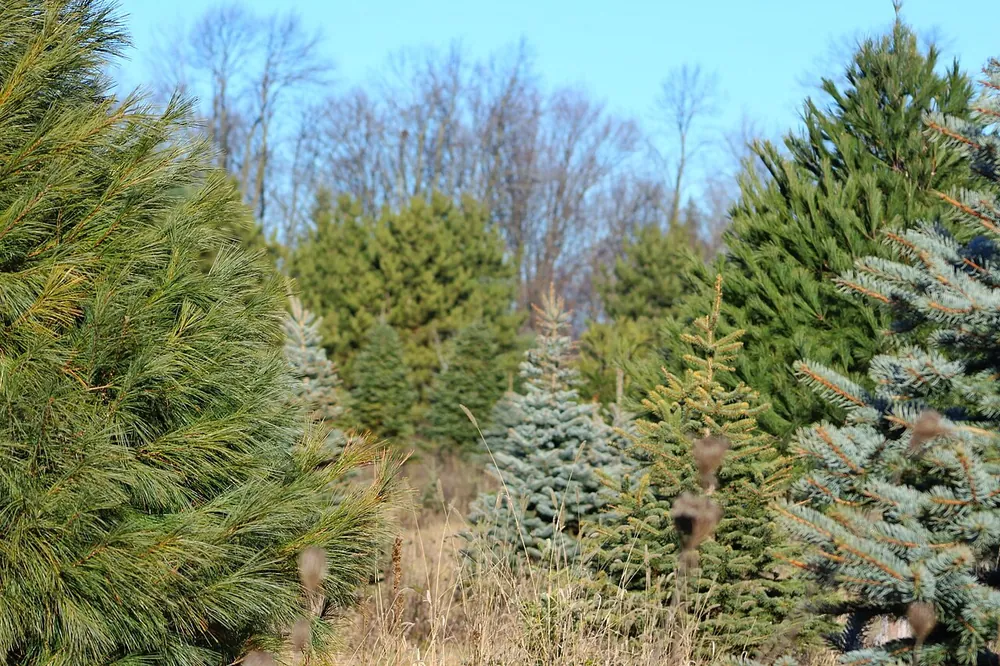
The National Christmas Tree Association says it takes, on average, around seven years to grow a tree of typical retail height of 6 to 7 feet. Taller trees take longer still, which is one reason 9- and 10-foot real trees cost noticeably more and can sell out early. If you want a tall real tree, buy early in the season or visit a choose-and-cut farm that grows larger sizes.
Buying a tall real tree
- Check freshness: needles should bend rather than snap, and few should fall when you gently tap the tree on the ground.
- Know the height you are buying: ask whether the quoted height includes the trunk below the lowest branches, which will go into the stand.
- Ask for a fresh cut: have the seller cut a thin slice off the base just before you leave, or do it yourself at home.
- Netting: netted trees are much easier to get through doors; cut the netting once the tree is in its stand.
- Transport: a 10-foot tree will overhang most car roofs; tie it securely and check local rules on loads.

Popular species for tall trees include Nordmann fir, prized in the UK for needle retention, and Fraser fir and Douglas fir in the US. Norway spruce has the classic look and scent but tends to drop needles sooner in a warm room.
Buying a tall artificial tree
| Feature | What to look for |
|---|---|
| Height as listed | Check whether it includes the stand; most listings measure from the bottom of the stand to the tip |
| Tip count and shape | More tips give a fuller look; check the stated width |
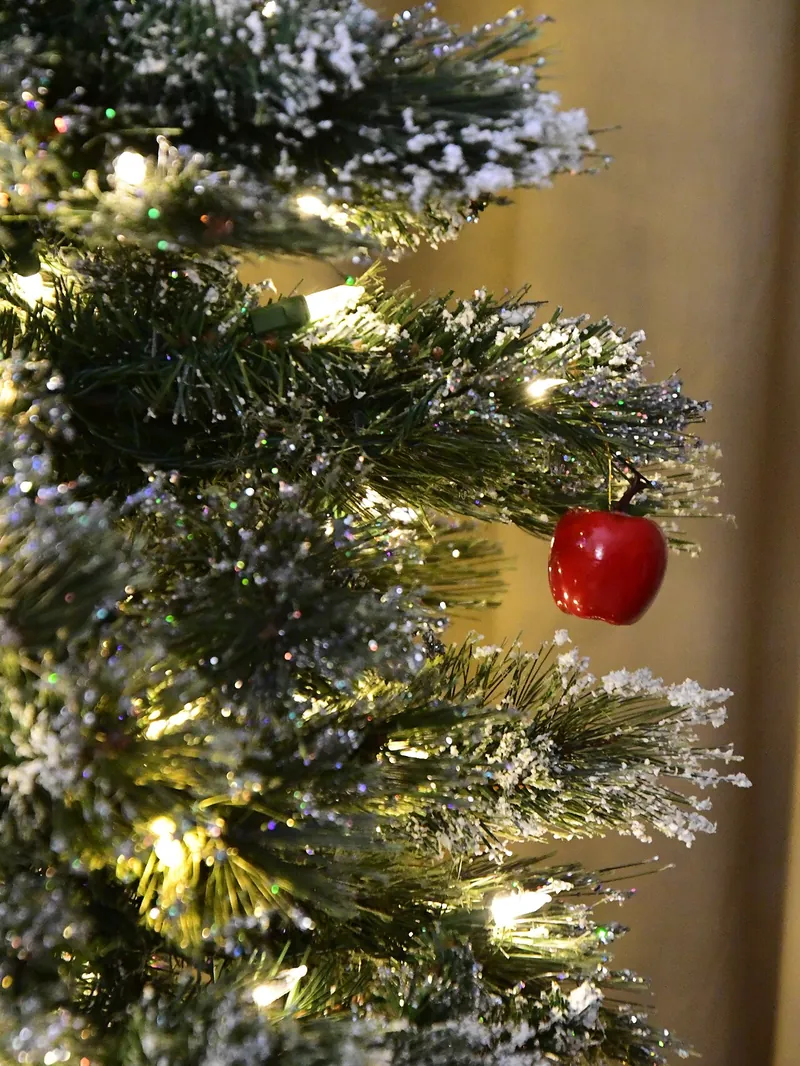
| Pre-lit or unlit | Pre-lit saves time on a tall tree; check the bulb count and whether one failed bulb affects others |
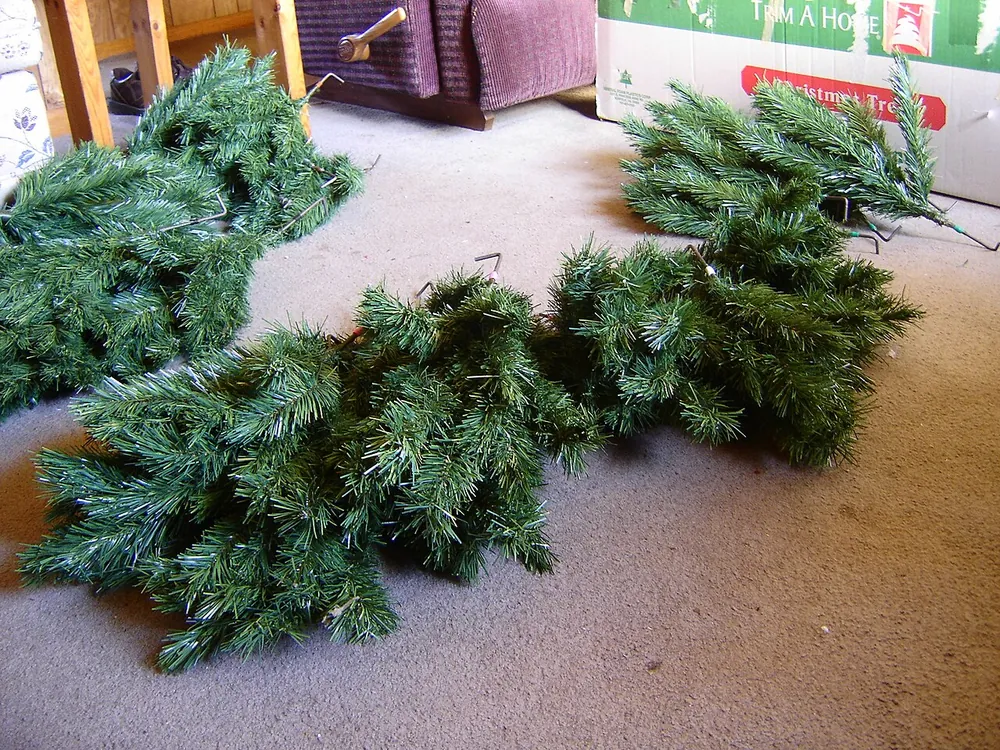
| Hinged branches | Hinged branches set up much faster than hook-in ones |
| Number of sections | Usually three or four sections for 9–10 ft trees |
| Stand | Metal stands are sturdier for tall trees |
| Flame-retardant label | Look for trees labelled fire-resistant or flame-retardant |
Stands and stability for tall trees
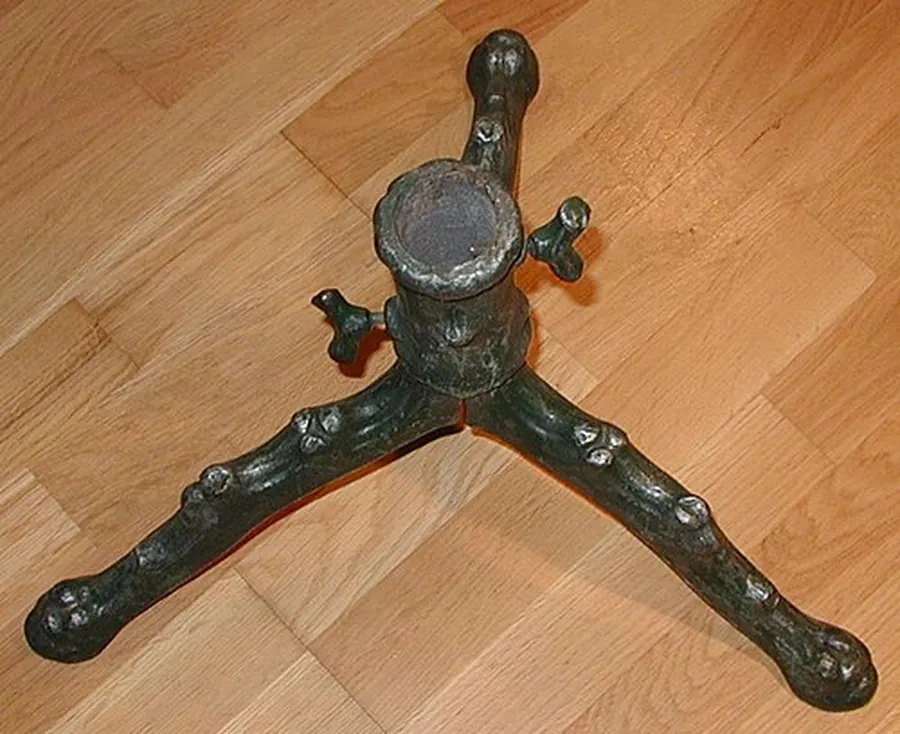
A tall tree puts a lot of leverage on its stand, especially when it is heavily decorated. For a real tree, choose a stand rated for the height and trunk diameter, with a water reservoir big enough to keep it drinking. The National Christmas Tree Association notes that a fresh tree can drink up to a quart of water a day for every inch of trunk diameter, so a tall tree with a thick trunk needs a large reservoir and daily topping up.
| Tip | Why |
|---|---|
| Use a stand rated for your tree height | Small stands can tip under a tall, decorated tree |
| Check the trunk diameter fits | Do not whittle the bark off a real tree to make it fit; it reduces water uptake |
| Secure tall trees to the wall | A discreet line from the trunk to a hook helps stop tipping, especially with children or pets |
| Stand on a level surface | Use a tray or mat to protect floors from water |
| Straighten before tightening | Have one person hold the tree while another tightens the screws |
How many lights and ornaments?
A widely used rule of thumb is about 100 mini lights for every foot of tree height for a moderate look, with up to double that for a dense, glowing effect. Ornament counts vary hugely with style, but tall trees need more than people expect because the lower branches are so wide.
| Item | 9-foot tree | 10-foot tree |
|---|---|---|
| Mini lights (moderate) | About 900 | About 1,000 |
| Mini lights (bright) | About 1,350–1,800 | About 1,500–2,000 |
| Ornaments (rough guide) | Often 100–150 or more | Often 120–180 or more |
| Garland or ribbon | Roughly 25–35 ft | Roughly 30–40 ft |
Start with the lights, working from the trunk outward along each branch and from the bottom up. Then add garland, then the largest ornaments deep in the tree to create depth, then smaller ones toward the tips. Save the topper until last, and fit it from a stable ladder with someone holding it.
Decorating a tall tree safely
- Use a sturdy stepladder of the right height and keep three points of contact.
- Have a second person hand you decorations rather than reaching down.
- Decorate the top first while the ladder can get close, then work down.
- Use lights marked as tested to safety standards (in the US, listed by a recognised lab such as UL or ETL; in the UK, CE or UKCA marked from a reputable seller).
- Do not overload sockets or daisy-chain too many light strings; follow the manufacturer’s limits.
- Turn lights off when you go to bed or leave the house.
Real tree care: keeping a tall tree fresh
- Day 0Make a fresh straight cut about half an inch off the base, then put the tree in water as soon as possible.
- Day 1Check the water: a fresh tree can drink a lot on the first day. Top up so the base never dries out.
- DailyCheck and refill the reservoir. If the base dries, sap can seal it and stop water uptake.
- WeeklyLook for dry, brittle needles; keep the room cool and the tree away from heat.
- After ChristmasTake the tree down once it starts to dry and use your local recycling or collection scheme.
Cost: what the extra foot adds
Prices vary widely by species, region and brand, but as a general rule each extra foot of height adds noticeably to the price, and the jump is often larger above 9 feet because fewer tall trees are grown or sold. For artificial trees, a 10-foot model often costs significantly more than the 9-foot version of the same design, and you will also spend more on lights (unless pre-lit), ornaments and a larger storage bag. Compare the total cost, not just the tree.
Storing a tall artificial tree
A 10-foot artificial tree can take up a surprising amount of storage space, even when broken down. Upright storage bags let you store sections with branches still fluffed, saving setup time, but need tall space. Flat boxes or duffel-style bags save space but mean re-shaping every branch each year. Label sections, keep the stand and any spare bulbs together, and store somewhere dry and away from extreme heat.
Which should you choose?
| Choose a 9-foot tree if | Choose a 10-foot tree if |
|---|---|
| Your ceiling is about 10 ft | Your ceiling is 11 ft or more |
| Your floor space is limited | You have a large room with space around the tree |
| You want easier setup and decorating | You want a dramatic statement piece |
| You are budget-conscious | You are happy to spend more on the tree and trimmings |
| You have a large topper | Your topper is modest or you have extra headroom |
One last tip: if you love the look of a taller tree but the ceiling is only 10 feet, consider a 9-foot slim tree on a low platform, or pair a 9-foot tree with tall floor lanterns or garlands that carry the eye upward. It gives a sense of height without risking a bent tip against the ceiling.
More home and garden guides: how to preserve roses, fun hobbies for outdoorsy people, what dreams mean, how long AC units last, mini splits in older homes, fixing drafty windows, Damascus knives.
Frequently asked questions
What size tree fits a 10-foot ceiling?
A 9-foot tree is ideal, leaving about a foot for the stand and topper.
Will a 10-foot tree fit under a 10-foot ceiling?
No. Once you add the stand and a topper, it will touch or bend against the ceiling.
What ceiling height do I need for a 10-foot tree?
Around 11 to 12 feet, so there is room for the stand and topper.
How much space should I leave above the tree?
About 6 to 12 inches between the top of the topper and the ceiling.
How wide is a 9-foot Christmas tree?
Full-shaped 9-foot trees are often around 50 to 65 inches wide; slim and pencil versions are narrower.
How many lights does a 9-foot tree need?
A common rule is about 100 per foot, so around 900 for a moderate look, and more for a bright one.
Does the listed height include the stand?
For most artificial trees, yes. For real trees, ask the seller; the stand adds a few inches.
How much water does a real tree need?
The NCTA says a fresh tree can drink up to a quart a day per inch of trunk diameter. Check it daily.
Are tall real trees harder to find?
Yes. They take longer to grow, so stock is limited and prices are higher. Buy early.
How do I stop a tall tree tipping over?
Use a heavy, correctly rated stand and secure the trunk discreetly to the wall.
Final thoughts
For most tall rooms the choice is simple: a 9-foot tree for a 10-foot ceiling, a 10-foot tree for 11 feet or more. Measure the height and the floor space, allow for the stand and topper, think about width as much as height, and plan for the extra lights, ornaments and effort a big tree needs. Get those right and your tree will look as if it were made for the room.
Sources: Retailer and manufacturer sizing guidance for artificial Christmas trees; US National Christmas Tree Association care and growing information; National Fire Protection Association (NFPA) Christmas tree safety guidance; British Christmas Tree Growers Association advice on choosing and caring for real trees. Images: Wikimedia Commons, credited in each caption.