
Short answer: behavioural therapy (behavioral therapy in US spelling) is a group of talking therapies that focus on changing what you do, on the principle that behaviours are learned and can be unlearned or replaced. The best-known forms are cognitive behavioural therapy (CBT), exposure therapy, behavioural activation and dialectical behaviour therapy (DBT). They are among the most researched psychological treatments, with strong evidence for anxiety, depression, phobias, OCD and PTSD.
A typical course of CBT on the NHS lasts about 5 to 20 weekly sessions of 30 to 60 minutes. In England you can refer yourself to NHS Talking Therapies without seeing a GP first; in the US, therapy is available through licensed psychologists, counsellors and social workers, often covered by health insurance.
I will be honest with you: the word “therapy” can conjure images of years spent on a couch talking about your childhood. Behavioural therapies are different. They tend to be structured, practical and time-limited, focused on the problems you are facing now, with homework between sessions and clear goals. That does not make them easy, since facing fears or changing habits is hard work, but it does make them understandable. This guide explains what behavioural therapy is, the main types, what it can help with, what to expect, and how to get it.

What is behavioural therapy?
Behavioural therapy is based on the idea that many of our behaviours, including unhelpful ones such as avoidance, compulsions or withdrawal, are learned through experience, and that new, healthier patterns can be learned in their place. Rather than focusing mainly on the past, it looks at what keeps a problem going today, and uses specific techniques to change it.
| Principle | What it means in practice |
|---|---|
| Behaviour is learned | Unhelpful patterns can be unlearned and replaced |
| Focus on the present | Work on what keeps the problem going now |
| Structured and goal-based | Agreed goals, a plan for each session, and tracking progress |
| Active, not passive | Practising new skills between sessions (“homework”) |
| Time-limited | Often weeks or months rather than years |
| Evidence-based | Techniques tested in research trials |
A short history: from Pavlov’s dogs to CBT
Behavioural therapy grew out of early 20th-century research into learning. The Russian physiologist Ivan Pavlov, who won the 1904 Nobel Prize for his work on digestion, showed that dogs could learn to salivate at a sound that had been paired with food, a process now called classical conditioning. In the United States, John B. Watson argued that psychology should study observable behaviour, and B. F. Skinner developed the theory of operant conditioning: behaviour that is rewarded tends to be repeated, and behaviour that is not tends to fade.
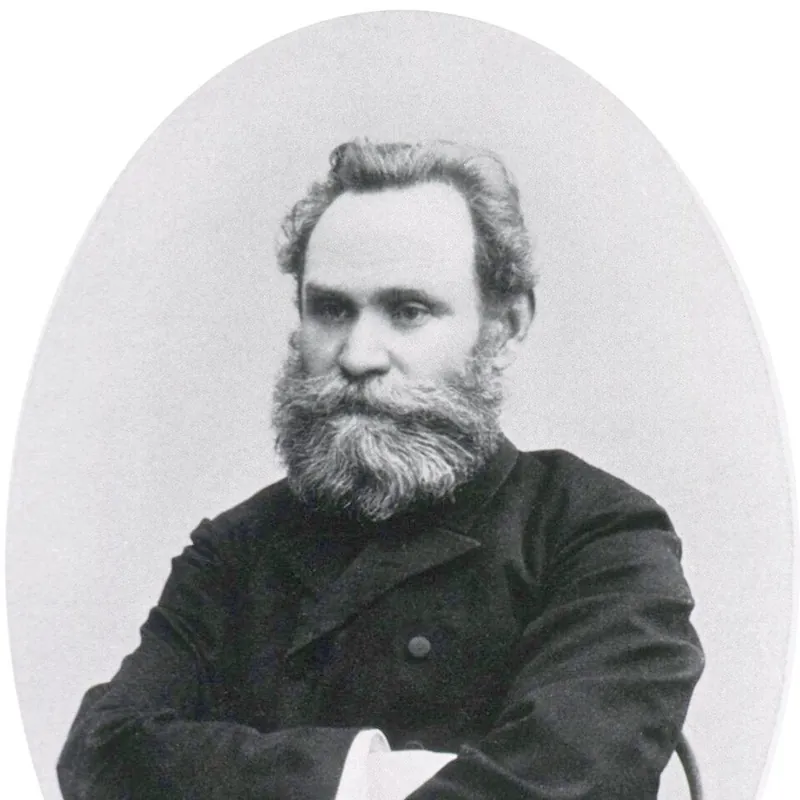

In the 1950s, therapists began applying these ideas to human problems. Joseph Wolpe developed systematic desensitisation for phobias, gradually exposing people to feared situations while staying relaxed. In the 1960s, psychiatrist Aaron T. Beck developed cognitive therapy, and psychologist Albert Ellis developed rational emotive behaviour therapy, adding a focus on thoughts. Combined with behavioural techniques, these became cognitive behavioural therapy (CBT), now the most widely used talking therapy in the world. Later, Marsha Linehan developed dialectical behaviour therapy (DBT), and “third wave” approaches such as acceptance and commitment therapy (ACT) followed.
- 1890s-1900sPavlov’s research on conditioned reflexes.
- 1913-1920John B. Watson launches behaviourism.
- 1930s-1950sB. F. Skinner develops operant conditioning.
- 1950sJoseph Wolpe’s systematic desensitisation for phobias.
- 1960sAaron Beck’s cognitive therapy; CBT takes shape.
- Late 1980s-1990sMarsha Linehan develops DBT.
- 2000s-todayThird-wave therapies such as ACT; CBT becomes first-line treatment in many guidelines.

The main types of behavioural therapy
| Therapy | How it works | Often used for |
|---|---|---|
| Cognitive behavioural therapy (CBT) | Changes unhelpful thoughts and behaviours together | Depression, anxiety, panic, insomnia, many others |
| Exposure therapy | Gradual, safe contact with feared situations until fear reduces | Phobias, panic disorder, PTSD |
| Exposure and response prevention (ERP) | Facing obsessions without performing compulsions | Obsessive-compulsive disorder (OCD) |
| Behavioural activation | Scheduling rewarding, meaningful activities | Depression |
| Dialectical behaviour therapy (DBT) | Skills for emotions, distress, relationships and mindfulness | Borderline personality disorder, self-harm |
| Acceptance and commitment therapy (ACT) | Accepting difficult thoughts while acting on your values | Anxiety, chronic pain, stress |
| Applied behaviour analysis (ABA) | Reinforcement-based teaching of skills | Used with some autistic children (debated) |
| Contingency management | Rewards for meeting goals, such as negative drug tests | Substance use problems |
| Parent training programmes | Teaching parents consistent rewards and boundaries | Children’s behaviour problems |
Cognitive behavioural therapy (CBT)
CBT is built on the idea that thoughts, feelings, physical sensations and actions are connected, and that unhelpful patterns in one area feed the others. A person with depression might think “nothing I do matters”, feel low, stay in bed, and then feel worse, reinforcing the original thought. CBT helps you notice these cycles, test your thoughts against evidence, and try different behaviours to break them. It is the most widely recommended psychological treatment for depression and anxiety disorders in NHS and NICE guidance.

Exposure therapy and ERP
Avoiding what we fear brings short-term relief but keeps fear alive in the long run. Exposure therapy reverses this by helping you face feared situations gradually and safely, usually starting with something mildly uncomfortable and working up a “fear ladder”. Over time, anxiety reduces as the brain learns that the feared outcome does not happen, or is manageable. For OCD, exposure is combined with response prevention: facing an obsessive fear without carrying out the compulsion, such as touching a doorknob without washing your hands.
That example fear ladder for a spider phobia shows how exposure works: each step is repeated until anxiety drops, before moving to the next. A trained therapist designs the steps with you; you are always in control of the pace.
Behavioural activation
Depression often leads people to withdraw from activities, which removes sources of pleasure and achievement and deepens low mood. Behavioural activation breaks this cycle by planning small, achievable activities, a walk, calling a friend, a hobby, even when motivation is low. Mood often follows action rather than the other way round. It is recommended in NICE guidance as a treatment option for depression.

Dialectical behaviour therapy (DBT)
Developed by psychologist Marsha Linehan, DBT combines CBT techniques with mindfulness and acceptance. It teaches four sets of skills: mindfulness, distress tolerance, emotion regulation and interpersonal effectiveness, usually through individual therapy plus group skills training. It was designed for people with intense emotions and self-harm, and is recommended by NICE for some people with borderline personality disorder.
A note on ABA
Applied behaviour analysis, based on reinforcement principles, is widely used in some countries to teach skills to autistic children. It is also controversial: many autistic adults and advocates criticise some forms of ABA for trying to suppress natural autistic behaviours, and practice varies widely. Families considering it should ask detailed questions about goals and methods and look for approaches that respect the child’s wellbeing and autonomy.
What can behavioural therapy help with?
| Condition | Commonly used approach |
|---|---|
| Depression | CBT, behavioural activation |
| Generalised anxiety disorder | CBT |
| Panic disorder | CBT with exposure |
| Phobias | Exposure therapy |
| Social anxiety | CBT |
| OCD | CBT with exposure and response prevention |
| PTSD | Trauma-focused CBT (and other trauma therapies such as EMDR) |
| Insomnia | CBT for insomnia (CBT-I) |
| Eating disorders | Specialist forms of CBT |
| Borderline personality disorder | DBT |
| Substance use | CBT, contingency management |
What to expect in sessions
- Assessment: the therapist asks about your difficulties, history and goals.
- Shared plan: together you agree what to work on and how you will measure progress.
- Learning the model: you explore how your thoughts, feelings and behaviours connect.
- Skills and techniques: such as thought records, exposure exercises or activity scheduling.
- Homework: practising between sessions, which is where much of the change happens.
- Review: checking progress regularly and adjusting the plan.
- Relapse prevention: planning how to keep going after therapy ends.
Sessions can be one-to-one, in groups, by video or phone, or through guided self-help, such as online CBT programmes with support from a practitioner. Many people find the structure reassuring: you know what to expect, and you can see your progress.
My advice: be honest with your therapist about what is and is not working, including homework you found hard. Behavioural therapy is collaborative; the more open you are, the better it can be tailored to you.
Behavioural techniques you can try today
Therapy is the best route for significant difficulties, but several behavioural techniques are simple enough to try on your own:
| Technique | How to do it | Helps with |
|---|---|---|
| Activity scheduling | Plan one small enjoyable and one small useful activity each day, and tick them off | Low mood, low motivation |
| Graded steps | Break a daunting task or fear into small steps and start with the easiest | Avoidance, procrastination, mild fears |
| Worry time | Postpone worries to a set 15-minute slot each day | Persistent worrying |
| Thought record | Write down a situation, your thought, your feeling, and evidence for and against the thought | Anxiety, self-criticism |
| Stimulus control for sleep | Use bed only for sleep; if awake for a long time, get up and return when sleepy | Insomnia |
| Habit tracking | Record a habit you want to change and what triggers it | Unwanted habits |
These techniques work best with consistency rather than intensity: a small step every day beats an occasional big push. If you find yourself stuck, that is useful information to bring to a therapist rather than a sign of failure.
Behavioural therapy for children and teenagers
Behavioural approaches are widely used with young people, adapted to their age. For younger children with behaviour difficulties, parent training programmes teach parents to use praise, consistent routines and calm boundaries, which often improves behaviour at home and school. For older children and teenagers with anxiety or depression, CBT is adapted with more concrete examples, games and parental involvement. NICE recommends CBT-based approaches for many childhood anxiety problems. In the UK, child and adolescent mental health services (CAMHS) and school-based mental health teams can advise; in the US, start with your child’s paediatrician or school counsellor.
How to get behavioural therapy
| Where you are | How to access it |
|---|---|
| England | Refer yourself to NHS Talking Therapies online, or ask your GP |
| Scotland, Wales, Northern Ireland | Ask your GP about psychological therapies; some areas offer self-referral |
| United States | Licensed psychologists, counsellors or social workers; check insurance coverage and employee assistance programmes |
| Anywhere | Accredited private therapists; check their professional registration |
Waiting times for free services vary. While you wait, evidence-based self-help books and NHS-recommended apps based on CBT principles can be a useful start.
Questions to ask a therapist
- Are you accredited or licensed, and with which professional body?
- What experience do you have with my particular difficulty?
- Which approach do you use, and why do you think it suits me?
- How many sessions do you expect we will need, and how will we measure progress?
- What happens if I do not feel it is helping?
- What are your fees, and do you offer online sessions?
A good therapist will welcome these questions. Feeling comfortable with your therapist matters: research consistently finds that a strong working relationship is one of the best predictors of a good outcome in therapy.
If you need help urgently
Behavioural therapy is for ongoing difficulties; it is not an emergency service. If you are in crisis, feel unable to keep yourself safe, or are thinking about suicide, get help now. In the UK, call 999 in an emergency, NHS 111 for urgent advice, or Samaritans free on 116 123, any time of day or night. In the United States, call or text 988 to reach the 988 Suicide & Crisis Lifeline, or call 911 in an emergency. Elsewhere, contact local emergency services or a crisis line. Reaching out is a sign of strength, and support is available.
Does it work, and what are the limits?
CBT and related therapies are among the most studied psychological treatments, with strong evidence that they help many people with anxiety and depression, and benefits that often last after therapy ends. But no therapy works for everyone. Some people prefer or benefit more from other approaches, such as psychodynamic or interpersonal therapy, or need medication alongside therapy. For severe or complex problems, a combination of treatments is often best.
| Strengths | Limits |
|---|---|
| Strong research evidence | Requires effort and practice between sessions |
| Practical, skills-based | May feel too structured for some people |
| Time-limited and often cost-effective | Less focus on past experiences, which some people want to explore |
| Skills last after therapy | Exposure can be uncomfortable at first |
More health guides on Magazine Inside include mold exposure symptoms in kids and mucus in stool: when to see a doctor.
More health guides: full body scans in Turkey, full body MRI costs in the US, mold testing for children, mold exposure symptoms in kids, hair transplants in Turkey, dental implants in Turkey, mucus in stool.
Frequently asked questions
What is behavioural therapy?
A group of talking therapies that focus on changing unhelpful behaviours, based on the idea that behaviours are learned and can be changed.
What is the difference between behavioural therapy and CBT?
Behavioural therapy focuses on actions; CBT combines behavioural techniques with work on thoughts. CBT is the most common form.
What can behavioural therapy treat?
It has strong evidence for anxiety, depression, phobias, panic, OCD, PTSD and insomnia, among others.
How long does behavioural therapy take?
An NHS course of CBT usually lasts 5 to 20 weekly sessions of 30 to 60 minutes.
Can I refer myself for CBT on the NHS?
In England, yes: you can self-refer to NHS Talking Therapies online.
What is exposure therapy?
Gradually and safely facing feared situations so that anxiety reduces over time; often used for phobias, panic and OCD.
What is behavioural activation?
A therapy for depression that schedules meaningful, rewarding activities to break the cycle of withdrawal and low mood.
What is DBT?
Dialectical behaviour therapy, developed by Marsha Linehan, teaching skills for emotions, distress, relationships and mindfulness.
Is behavioural therapy effective?
CBT and related therapies are among the best-researched psychological treatments, though no therapy works for everyone.
Who developed behavioural therapy?
It grew from the work of Pavlov, Watson and Skinner, with therapists such as Joseph Wolpe, Aaron Beck and Albert Ellis shaping modern approaches.
Final thoughts
Behavioural therapy turns a simple idea, that what we do shapes how we feel, into practical, evidence-based treatments. Whether it is CBT for anxiety, exposure for a phobia or behavioural activation for depression, the common thread is learning new ways of responding, one step at a time. If you are struggling, reaching out for help is the first, and often hardest, step.
Sources: NHS guidance on cognitive behavioural therapy and NHS Talking Therapies; NICE guidelines on depression, anxiety disorders, OCD and borderline personality disorder; British Association for Behavioural and Cognitive Psychotherapies (BABCP); standard histories of behavioural psychology (Pavlov, Watson, Skinner, Wolpe, Beck, Ellis, Linehan). Images: Wikimedia Commons, credited in each caption.