
Short answer: “AI transformation is a problem of governance” means that most organisations struggle with AI not because the technology fails, but because they lack the rules, roles, data controls and accountability to use it well. Without governance, AI projects stall at the pilot stage, staff use unapproved tools (“shadow AI”), sensitive data leaks, and nobody owns the risks of biased or wrong outputs.
Good AI governance means a clear strategy, named owners, an inventory of AI uses, risk assessment, data and security controls, human oversight and ongoing monitoring, aligned with frameworks such as the NIST AI Risk Management Framework, ISO/IEC 42001 and, for anyone operating in Europe, the EU AI Act.
I will be honest with you: the phrase “AI transformation is a problem of governance” can sound like corporate jargon. But it captures something many organisations learn the hard way. Buying AI tools is easy; using them safely, legally and profitably across a whole organisation is not. The difference is governance: who decides, who is accountable, what data can be used, how risks are checked and how results are measured. This guide explains what AI governance is, why it decides whether AI succeeds, the main frameworks and laws, and a practical roadmap any organisation can follow.

Why AI transformation is really a governance problem
Many organisations follow a familiar pattern: enthusiastic pilots, impressive demos, and then little lasting impact. Research firm Gartner predicted in 2024 that at least 30% of generative AI projects would be abandoned after the proof-of-concept stage by the end of 2025, citing poor data quality, inadequate risk controls, escalating costs and unclear business value. Most of those causes are not technical failures; they are governance failures.
| Symptom | Underlying governance gap |
|---|---|
| Pilots never reach production | No clear owner, business case or decision process |
| Staff use public AI tools with company data | No approved tools or usage policy |
| Inconsistent or wrong AI outputs | No quality checks, testing or human review |
| Fears of bias or discrimination | No risk assessment or fairness testing |
| Legal and compliance uncertainty | No mapping of AI uses against regulations |
| Costs rising without results | No metrics or portfolio management |
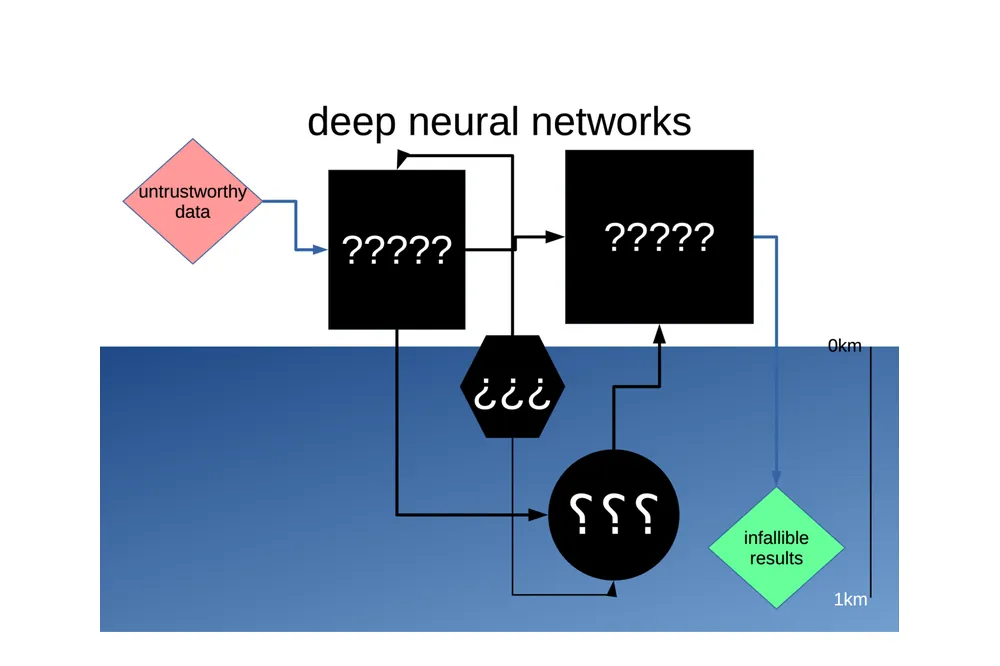
My advice: if your organisation’s AI conversation is mostly about which tools to buy, it is missing the bigger questions. Ask instead: what problems are we solving, who is accountable, what data may we use, and how will we know it is working and safe?
What AI governance actually covers
| Area | What it involves |
|---|---|
| Strategy and value | Which business problems AI should solve, and how success is measured |
| Roles and accountability | A senior owner, an AI governance group, and named owners for each AI system |
| Inventory | A register of every AI system and tool in use, including third-party tools |
| Risk assessment | Classifying uses by risk and applying proportionate controls |
| Data governance | Data quality, permissions, privacy, retention and intellectual property |
| Security | Protecting models, prompts and data; preventing leaks and misuse |
| Human oversight | Defining when people must review, approve or override AI decisions |
| Transparency | Telling users and customers when AI is involved |
| Monitoring | Tracking performance, drift, incidents and complaints over time |
| Training and culture | Helping staff use AI well and raise concerns |
The NIST AI Risk Management Framework
Published by the US National Institute of Standards and Technology in January 2023, the AI Risk Management Framework (AI RMF) is a voluntary, widely used guide for managing AI risks. It is built around four functions. Notably, “Govern” is treated as cross-cutting: it underpins the other three.
NIST later published a companion profile for generative AI, addressing risks such as confabulation (confident but false outputs), data privacy and harmful content.
ISO/IEC 42001: an AI management system standard
Published in December 2023, ISO/IEC 42001 is the first international standard for an AI management system. Like ISO 27001 for information security, it sets out how an organisation should establish, run and continually improve its management of AI, including policies, risk assessment, impact assessment and controls. Organisations can be certified against it, which is becoming a way to demonstrate responsible AI practice to customers and regulators.
The EU AI Act: a timeline
The EU AI Act (Regulation (EU) 2024/1689) is the world’s first comprehensive AI law. It takes a risk-based approach and applies not only to EU organisations but also to companies elsewhere whose AI systems are placed on the EU market or whose outputs are used in the EU.
- 1 August 2024The AI Act enters into force.
- 2 February 2025Bans on prohibited AI practices apply, along with AI literacy obligations.
- 2 August 2025Obligations for general-purpose AI models begin, along with governance provisions.
- 2 August 2026Most remaining obligations, including many for high-risk AI systems, apply.
- 2 August 2027Obligations apply for high-risk AI embedded in certain regulated products.
| Risk level | Examples | What applies |
|---|---|---|
| Unacceptable | Social scoring, certain manipulative or exploitative practices | Prohibited |
| High risk | AI in hiring, credit scoring, education, critical infrastructure | Strict requirements: risk management, data quality, documentation, human oversight |
| Limited risk | Chatbots, AI-generated content | Transparency obligations, such as telling people they are interacting with AI |
| Minimal risk | Spam filters, AI in video games | No specific obligations |
Timelines and guidance continue to evolve as the European Commission publishes implementing guidance, so organisations should check the latest official information and take legal advice for their specific situation.
The UK and international picture
The UK has taken a principles-based approach, set out in a 2023 white paper, asking existing regulators to apply principles such as safety, transparency, fairness, accountability and contestability within their sectors. In November 2023 the UK hosted the first AI Safety Summit at Bletchley Park, where countries signed the Bletchley Declaration on frontier AI risks. Internationally, the OECD AI Principles, first adopted in 2019 and updated in 2024, have been endorsed by dozens of countries.


Shadow AI: the governance gap hiding in plain sight
“Shadow AI” is the use of AI tools by staff without approval or oversight, such as pasting customer data, code or confidential documents into public chatbots. It usually happens because people want to work faster and the organisation has not provided approved alternatives. Banning AI rarely works; it drives use underground. Effective governance offers approved tools with appropriate data protections, clear guidance on what may and may not be shared, and training.
| Do | Do not |
|---|---|
| Provide approved AI tools with enterprise data protections | Pretend staff are not using AI |
| Publish a short, clear acceptable-use policy | Write a 50-page policy no one reads |
| Classify data: what can go into which tools | Leave staff to guess |
| Train people and share good examples | Rely on bans alone |
A practical AI governance roadmap
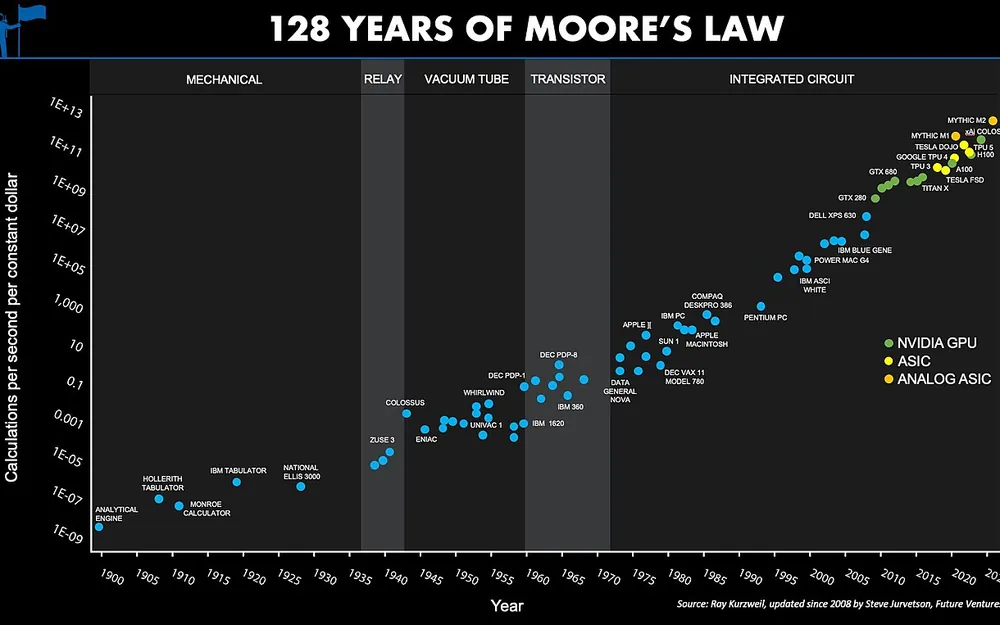
Governance enables speed, not just safety
A common misconception is that governance slows innovation. In practice, the opposite is often true. When teams know which tools are approved, what data they can use and how to get a new use case reviewed, they can move faster and with more confidence. Governance turns AI from scattered experiments into a managed portfolio, where successful pilots scale and unpromising ones stop early. That is why many leaders argue that AI transformation succeeds or fails on governance.
The main AI risks governance has to manage
Every AI use case carries a different mix of risks. A chatbot answering customer questions, a model screening job applications and a tool summarising internal documents need very different controls. The table below sets out the risks that come up most often, and the kind of control that usually addresses each one.
| Risk | What can go wrong | Typical control |
|---|---|---|
| Hallucination | Confident but false answers, invented citations or figures | Human review for important outputs; grounding answers in approved sources |
| Bias and unfairness | Systematically worse outcomes for some groups, for example in hiring or lending | Fairness testing before and after launch; diverse test data |
| Privacy | Personal data used without a lawful basis or exposed through prompts and outputs | Data protection impact assessments; data minimisation; approved tools |
| Intellectual property | Uncertainty over training data, copyright in outputs, or leaking trade secrets | Legal review of tools and terms; rules on what may be shared |
| Security | Prompt injection, data exfiltration, or manipulated models | Security testing; access controls; monitoring of AI integrations |
| Over-reliance | People stop checking AI outputs and errors slip through | Training; clear review steps; spot checks |
| Vendor risk | A supplier changes its model, terms or data handling | Contract terms; due diligence; an exit plan |
A useful rule of thumb: the more an AI output affects a person’s rights, money, health, job or safety, the stronger the oversight should be. A tool that drafts a first version of an internal email needs light controls. A system that helps decide who gets a loan or an interview needs testing, documentation, human review and a way for people to challenge the result.
Data governance: the foundation AI depends on
AI systems are only as good as the data behind them. The satirical diagram below makes the point: feed questionable data into an opaque model and you get outputs that look authoritative but may not be. This is the old computing principle of “garbage in, garbage out”, and it matters even more when the outputs sound fluent and confident.
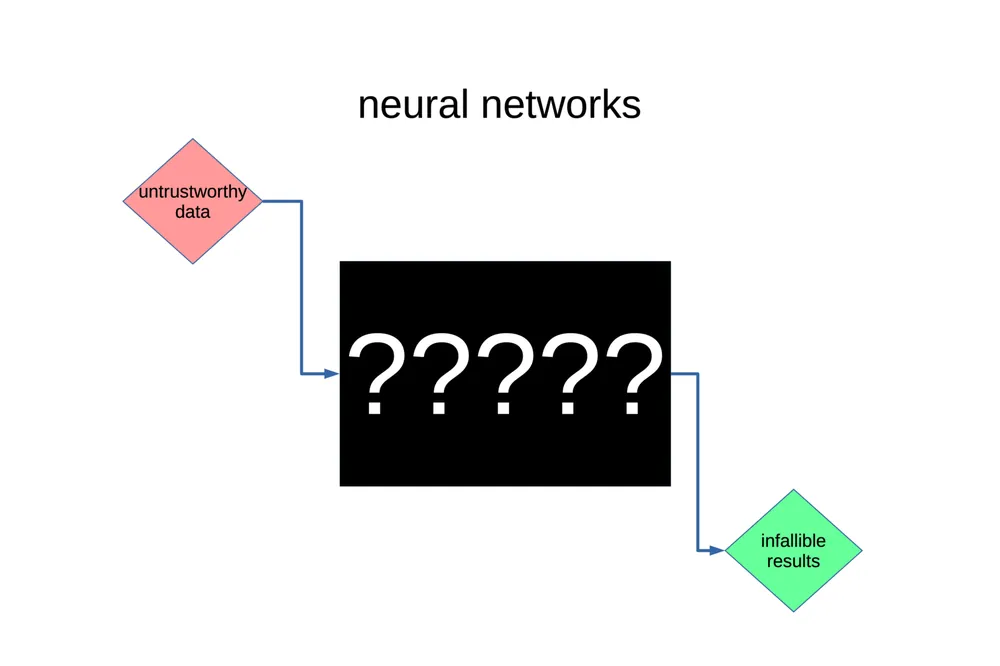
Good data governance for AI usually covers five questions:
- Quality: is the data accurate, complete, current and representative of the people or situations the AI will deal with?
- Permission: do we have the right, legally and contractually, to use this data for this purpose?
- Privacy: does it include personal data, and if so, what protections and lawful basis apply?
- Lineage: can we trace where the data came from and how it was changed?
- Retention: how long is data, including prompts and outputs, kept, and who can access it?
Organisations that already have mature data governance, with data owners, catalogues and quality checks, tend to find AI governance easier, because much of the groundwork is in place.
Who does what: roles in AI governance
| Role | Typical responsibilities |
|---|---|
| Board | Sets risk appetite, oversees strategy, asks the hard questions |
| Senior sponsor (often a C-level executive) | Owns the AI strategy and is accountable for results and risks |
| AI governance group or committee | Approves policies, reviews higher-risk use cases, resolves conflicts |
| Use-case or system owner | Accountable for a specific AI system: performance, controls, incidents |
| Legal, privacy and compliance | Regulatory mapping, contracts, data protection assessments |
| Security | Threat modelling, testing, access control, monitoring |
| Data and technical teams | Building, testing, documenting and monitoring models and integrations |
| All staff | Following the acceptable-use policy and reporting problems |
The most common gap is the use-case owner. When an AI tool is bought by one team, configured by another and used by a third, nobody may feel responsible when something goes wrong. Naming one accountable owner for each system closes that gap.
Change management: the human side of governance
Governance is not only policies and committees. AI changes how people work, and people need help to adapt. Staff may worry about their jobs, distrust AI outputs or, at the other extreme, trust them too much. Successful organisations explain why they are adopting AI, involve the people who will use it in designing new ways of working, and invest in practical training. The EU AI Act itself recognises this: since February 2025 it has required providers and deployers of AI systems to take measures to ensure a sufficient level of AI literacy among their staff.
| Stage | What helps |
|---|---|
| Awareness | Clear explanation of what AI will and will not be used for |
| Skills | Hands-on training with the approved tools and real tasks |
| Adoption | Champions in each team; sharing examples that worked |
| Feedback | An easy way to report problems, errors and ideas |
Measuring whether AI governance is working
What gets measured gets managed. A governance programme should track both value and risk, so leaders can see whether AI is delivering and whether controls are holding. Useful measures include:
| Measure | Why it matters |
|---|---|
| Share of AI systems in the inventory with a named owner | Shows whether accountability is real |
| Share of higher-risk use cases with a completed risk assessment | Shows whether controls are applied before launch |
| Time from idea to approved pilot | Shows whether governance is enabling or blocking |
| Pilots scaled versus stopped | Shows portfolio discipline |
| Measured business outcomes per use case | Shows whether AI is creating value |
| AI incidents and near misses reported | A healthy reporting culture surfaces problems early |
| Staff trained on the acceptable-use policy | Shows reach of AI literacy efforts |
Questions boards and leaders should ask
- Who is accountable for AI across the organisation?
- Do we have an up-to-date inventory of AI systems and their risk levels?
- Which AI uses fall under the EU AI Act or other regulations?
- How do we protect customer and confidential data when using AI?
- Where is human review required, and is it happening?
- How do we measure value and stop projects that do not deliver?
- How would we detect and respond to an AI incident?
For more on how organisations manage technology risks, see our guides to network configuration management and configuration management in telecom.
More business explainers: how ATM processing works, how to start an ATM business, the ISO 8583 message format, machine shop cost estimating, CNC machining cost per hour, configuration management in telecom, network configuration management tools.
Frequently asked questions
What does “AI transformation is a problem of governance” mean?
That AI success depends mainly on rules, roles, data controls and accountability, not just on technology.
What is AI governance?
The policies, processes, roles and controls an organisation uses to make sure AI is used safely, legally, ethically and effectively.
Why do AI projects fail?
Common reasons include poor data quality, weak risk controls, rising costs and unclear business value, according to Gartner’s 2024 analysis.
What is the NIST AI Risk Management Framework?
A voluntary US framework (2023) for managing AI risks, built around four functions: Govern, Map, Measure and Manage.
What is ISO/IEC 42001?
An international standard, published in December 2023, for AI management systems, against which organisations can be certified.
When does the EU AI Act apply?
It entered into force on 1 August 2024, with obligations phasing in from February 2025 to August 2027.
Does the EU AI Act apply outside the EU?
It can, if AI systems are placed on the EU market or their outputs are used in the EU.
What is shadow AI?
Staff using AI tools without approval or oversight, often putting sensitive data at risk.
How do I start AI governance?
Appoint ownership, inventory AI uses, set a short policy, assess risk, add controls, measure value and train staff.
Does governance slow down AI adoption?
Done well, it speeds adoption by giving teams clear rules, approved tools and a fast review process.
Final thoughts
AI transformation is a problem of governance because the hardest parts of using AI well are organisational: ownership, data, risk, oversight and measurement. Frameworks like the NIST AI RMF and ISO/IEC 42001, and laws like the EU AI Act, provide the structure. Organisations that put governance in place early are the ones most likely to turn AI pilots into lasting value.
Sources: Regulation (EU) 2024/1689 (EU AI Act) and European Commission implementation timeline; NIST AI Risk Management Framework 1.0 (January 2023) and Generative AI Profile; ISO/IEC 42001:2023; OECD AI Principles (2019, updated 2024); UK government AI regulation white paper (2023) and Bletchley Declaration (November 2023); Gartner press release on generative AI projects (July 2024). Images: Wikimedia Commons, credited in each caption.