
Short answer: the fastest way to learn Spanish is to study every day, focus on the most frequent 1,000-3,000 words (the 3,000 most common cover roughly 90-94% of everyday Spanish), review them with spaced repetition, listen to Spanish you can mostly understand for at least 30 minutes a day, and speak from the first week with a tutor or exchange partner. Learn pronunciation first, then just enough grammar to build sentences, and add the rest as you go.
How fast is fast? The US Foreign Service Institute puts Spanish in its easiest group for English speakers: about 600-750 class hours to reach professional working proficiency. At two focused hours a day, a confident conversational level in six to twelve months is realistic; at 15 minutes a day, it takes years.
I will be honest with you: there is no secret trick that makes Spanish appear in your head in a fortnight, whatever the adverts say. What there is, is a set of methods that make each hour count two or three times as much as passive study, and a clear order to learn things in. People who learn Spanish fast are rarely more gifted; they simply spend their time on high-frequency words, real listening and real speaking, every day, instead of re-reading notes and doing the same easy app lessons. This guide shows you exactly how to do that.

How long does it really take to learn Spanish?
The FSI, which trains US diplomats, ranks languages by how long English speakers need to reach “professional working proficiency” (able to work and discuss complex topics). Spanish sits in Category I, the easiest group, at about 24-30 weeks or 600-750 class hours. FSI students study full-time in small classes and do homework on top, so treat those hours as a solid benchmark of focused effort rather than casual app time.
| Daily focused study | Roughly 300 hours (confident conversation) | Roughly 700 hours (FSI professional level) |
|---|---|---|
| 15 minutes | About 3+ years | About 7+ years |
| 30 minutes | About 1.5 years | About 4 years |
| 1 hour | About 10 months | About 2 years |
| 2 hours | About 5 months | About 1 year |
| 4 hours (intensive) | About 2.5 months | About 6 months |
My advice: the single biggest factor in “fast” is hours per day, not the app or course you pick. If you want results in months rather than years, find a way to get one to two hours of Spanish into every day, split across listening on your commute, a short review session and some speaking.
Why Spanish is easier than you think
| Advantage | What it means for you |
|---|---|
| Spelling matches sound | Once you know the rules, you can pronounce almost any word you read |
| Thousands of cognates | Words like información, hospital, animal and possible are instantly recognisable |
| Five pure vowels | A, e, i, o, u always sound the same, unlike English |
| Familiar alphabet | Only ñ is new; accents simply show stress |
| Huge amount of content | Films, music, podcasts and news from many countries |
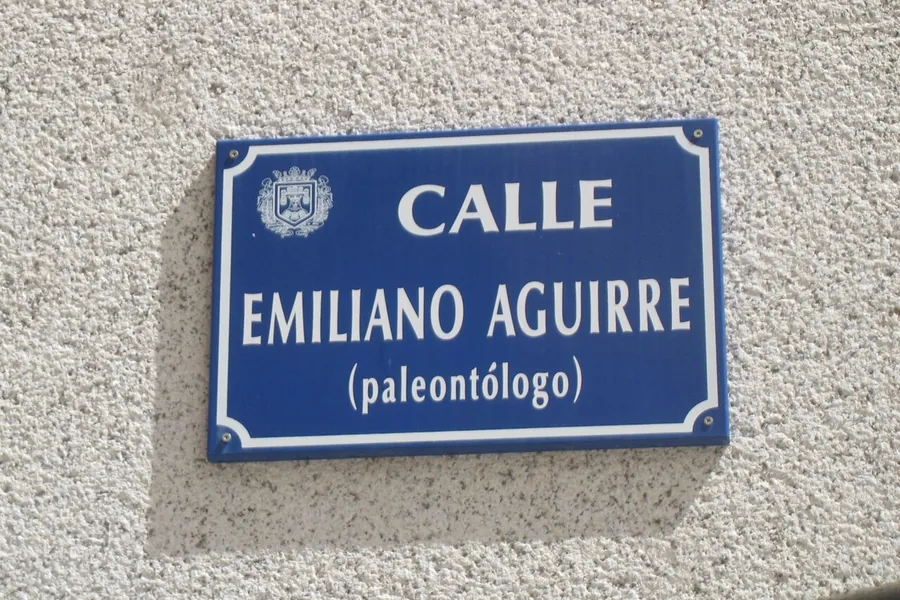
Use cognate patterns to unlock vocabulary
| English ending | Spanish ending | Examples |
|---|---|---|
| -tion | -ción | nation → nación, information → información |
| -ty | -dad / -tad | city → ciudad, liberty → libertad |
| -ly | -mente | rapidly → rápidamente, totally → totalmente |
| -ous | -oso | famous → famoso, delicious → delicioso |
| -ic | -ico | public → público, electric → eléctrico |
| -ence / -ance | -encia / -ancia | difference → diferencia, distance → distancia |
Watch out for false friends
| Spanish | Looks like | Actually means |
|---|---|---|
| embarazada | embarrassed | pregnant |
| constipado | constipated | having a cold (in Spain) |
| éxito | exit | success |
| librería | library | bookshop (library is biblioteca) |
| actual | actual | current |
| carpeta | carpet | folder |
The fast method: eight steps in the right order
Step 2: get the pronunciation right early
| Sound | How it works | Example |
|---|---|---|
| Vowels a, e, i, o, u | Short and pure, always the same | casa, mesa, piso, foto, luna |
| ñ | Like “ny” in canyon | año, España |
| rr (and r at the start) | A rolled or trilled r | perro, rojo |
| j (and g before e, i) | A breathy sound like a strong h | jamón, gente |
| h | Always silent | hola, hablar |
| ll and y | Usually like English y (varies by region) | llamar, yo |
| c before e, i and z | “th” in most of Spain; “s” in Latin America and parts of southern Spain | cinco, zapato |
Listen and repeat short phrases from native speakers, and record yourself. It feels awkward at first, but good pronunciation from the start means people understand you, which makes every conversation more rewarding and keeps you motivated.
Steps 3-4: learn the right words, and stop forgetting them
Not all words are equally useful. In Mark Davies’s frequency research on Spanish, the 3,000 most common words cover about 94% of the words in spoken texts and about 90% in written texts. That means a few thousand carefully chosen words, plus their common phrases, let you understand most of everyday Spanish. Start with the most frequent verbs (ser, estar, tener, hacer, ir, poder, decir, querer), question words, numbers, days and the vocabulary of your own life: your job, family and hobbies.
Then make sure they stick. Decades of memory research show that spreading reviews out over time (spaced practice) and testing yourself rather than re-reading (retrieval practice) produce much stronger long-term memory. A large 2006 review led by Nicholas Cepeda found clear benefits from spacing study sessions, and a well-known 2006 study by Henry Roediger and Jeffrey Karpicke showed that practising recall beat extra re-reading for long-term retention. Spaced-repetition flashcard apps such as Anki do the scheduling for you: put a word in once and the app shows it again just before you would forget it.
My advice: put whole phrases on your cards, not single words. “¿Me pone un café, por favor?” teaches you vocabulary, grammar and a usable sentence at once, and it is far easier to remember than a list of isolated nouns.
Step 5: learn grammar in the order you need it
| Priority | Grammar point | Why |
|---|---|---|
| 1 | Present tense of regular verbs and key irregulars | Most conversation happens in the present |
| 2 | Ser vs estar (“to be”) | Essential, and a classic stumbling block |
| 3 | Gender and agreement (el/la, -o/-a) | Affects almost every sentence |
| 4 | Ir a + infinitive (near future) | An easy way to talk about plans: voy a comer |
| 5 | Preterite and imperfect (past tenses) | Telling stories and talking about yesterday |
| 6 | Object pronouns (lo, la, le, me, te) | Sound natural instead of repeating nouns |
| 7 | The subjunctive | Important, but learn it once the basics are solid |
Step 6: listen every day to Spanish you mostly understand
The linguist Stephen Krashen famously argued that we acquire languages by understanding messages, so-called comprehensible input. Whatever you think of the full theory, the practical lesson is sound: lots of listening and reading at a level where you understand most of what you hear builds vocabulary and an instinct for grammar that drills alone cannot. Start with learner podcasts and slow news, then move to YouTube channels, TV series and films with Spanish subtitles. Aim for at least 30 minutes a day; commutes, workouts and chores are perfect.
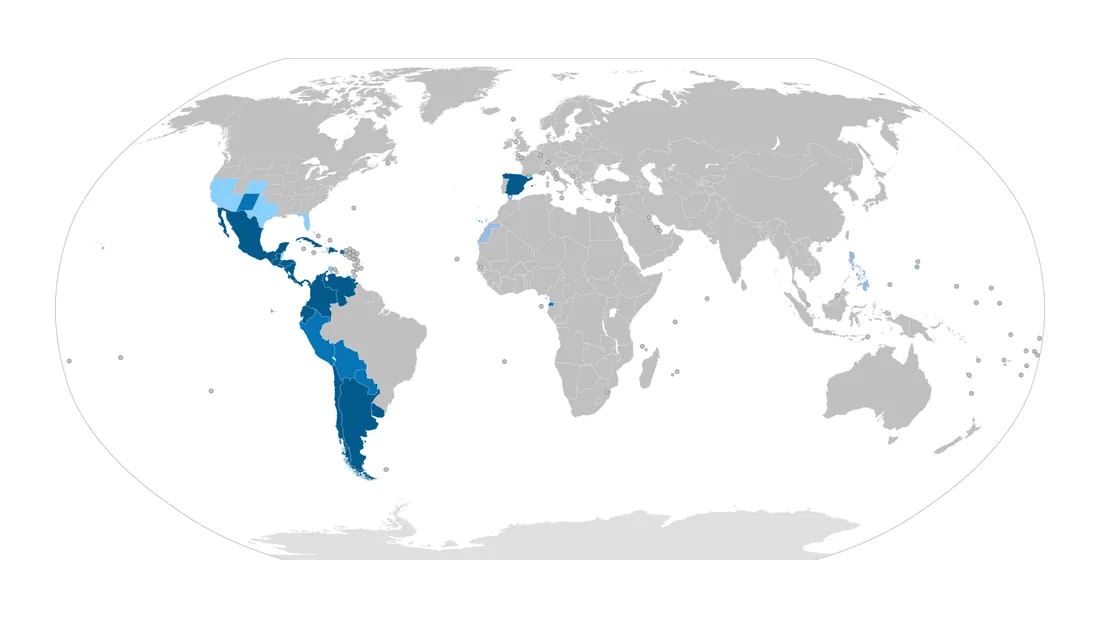
Step 7: speak from the first week
Speaking is where most self-taught learners stall, usually because they wait until they feel “ready”. You will never feel ready; start anyway. Book short sessions with an online tutor, find a language-exchange partner who wants to practise English, join local conversation groups, or simply narrate your day out loud in Spanish. Even ten minutes of real conversation a few times a week dramatically speeds up how quickly words come to you.
My advice: prepare a short script about yourself (name, where you live, what you do, why you are learning Spanish) and practise it until it flows. Every first conversation starts with those topics, and a confident opening makes the rest far less intimidating.
Step 8: write a little, and get it corrected
Writing slows you down in a useful way: you have time to choose words and check grammar. Write three to five sentences a day, a diary entry or a message about your plans, and ask a tutor or exchange partner to correct it. Keep a list of the mistakes that keep coming back, and turn each into a flashcard.
A sample daily routine (about one hour)
| Time | Activity | Purpose |
|---|---|---|
| 10 minutes | Flashcard review (spaced repetition) | Keep vocabulary fresh |
| 10 minutes | New words and phrases from what you listened to yesterday | Grow vocabulary from real content |
| 20-30 minutes | Listening: podcast, video or a TV episode | Comprehension and rhythm |
| 10 minutes | Grammar: one point, a few examples | Build accuracy gradually |
| 5-10 minutes | Speaking or writing: talk aloud, a tutor session or a short text | Active use |
- Week 1Pronunciation, greetings, numbers, your self-introduction script.
- Weeks 2-4Top 500 words and phrases, present tense, ser/estar; first tutor or exchange sessions.
- Months 2-3Top 1,000-1,500 words, near future and past tenses; daily podcasts; short conversations.
- Months 4-6Top 2,000-3,000 words; TV with Spanish subtitles; longer conversations; try a level test.
- Months 6-12Subjunctive and nuance; read articles and books; aim for an exam level such as B1 or B2.

Spain or Latin American Spanish?
| Spain | Much of Latin America | |
|---|---|---|
| “You” plural | vosotros (informal) and ustedes | ustedes for both |
| c/z sound | “th” in most regions | “s” |
| Car | coche | carro or auto |
| Computer | ordenador | computadora |
| Mobile phone | móvil | celular |
| Juice | zumo | jugo |
If you live in the US or plan to travel in the Americas, Latin American Spanish (often Mexican) is the natural choice. If you are heading to Spain, learn Castilian. Do not worry about choosing “wrong”: Spanish speakers everywhere understand both, much as British and American English speakers understand each other. If a move to Spain is part of your plan, our guides to the Spain Golden Visa and digital nomad visas in Europe cover the practical side.
Measuring progress: CEFR levels and exams
| Level | What you can do | Exam options |
|---|---|---|
| A1-A2 | Handle simple everyday situations and basic conversations | DELE A1, A2; SIELE |
| B1 | Cope with travel, describe experiences and plans | DELE B1; SIELE |
| B2 | Talk fluently with native speakers on most topics | DELE B2; SIELE |
| C1-C2 | Use Spanish flexibly for work and study, with nuance | DELE C1, C2; SIELE |

Booking an exam is a surprisingly powerful motivator. A fixed date turns “I’ll study more someday” into a plan, and passing gives you a recognised certificate for work or study.
Free and low-cost resources by type
| Need | Type of resource | How to use it |
|---|---|---|
| Vocabulary | Spaced-repetition flashcards (e.g. Anki) and frequency lists | 10-15 minutes daily; add phrases from what you hear |
| Structure | A beginner course or textbook | One unit at a time, alongside listening |
| Listening | Learner podcasts, then native podcasts and radio | Commute and chores; replay hard bits |
| Watching | YouTube, TV series and films with Spanish subtitles | Rewatch favourite episodes; pause and repeat lines |
| Reading | Graded readers, children’s books, simple news sites | Read daily; look up only key words |
| Speaking | Online tutors, language exchanges, conversation groups | Short, frequent sessions beat rare long ones |
| Feedback | Tutors or exchange partners correcting short texts | Track recurring mistakes |
Public broadcasters are a hidden gem. Spain’s RTVE and many Latin American broadcasters put news, documentaries and series online, often free to stream, which gives you unlimited authentic listening at no cost. Music helps too: look up the lyrics of songs you enjoy, learn a verse and sing along. It is one of the most painless ways to absorb rhythm, pronunciation and everyday phrases.
Common mistakes that slow learners down
- Only using one app. Gamified apps are a fine start, but on their own they rarely build conversation.
- Waiting to speak. Fluency comes from speaking, mistakes included.
- Studying grammar tables instead of using them. Learn a point, then use it in sentences the same day.
- Listening to content far above your level. If you understand almost nothing, you learn almost nothing; step down a level.
- Inconsistency. Thirty minutes every day beats three hours once a week.
- Translating everything word by word. Learn phrases as chunks.
Teachers looking for a fun way to drill vocabulary in class might also like our guide to hosting a Gimkit game, and if you enjoy word puzzles, our guide to commonly confused words is a good reminder that even native speakers trip up.
More education guides: how to host a Gimkit game.
Frequently asked questions
What is the fastest way to learn Spanish?
Study every day, learn the most frequent words with spaced repetition, listen to understandable Spanish daily and speak from the first week with a tutor or partner.
How long does it take to learn Spanish?
The US Foreign Service Institute estimates about 600-750 class hours to reach professional working proficiency. At two hours a day, that is roughly a year; conversational ability comes sooner.
Can I learn Spanish in 3 months?
You can reach a solid basic-to-intermediate level with intensive daily study (two to four hours a day), especially for travel and simple conversations. Full fluency takes longer.
Is Spanish hard to learn for English speakers?
No. The FSI ranks it among the easiest languages for English speakers, thanks to shared vocabulary, a familiar alphabet and consistent spelling.
How many words do I need to speak Spanish?
A few hundred well-chosen words get you through basic situations. The 3,000 most frequent words cover roughly 90-94% of everyday Spanish text.
Should I learn Spain or Latin American Spanish?
Choose the variety you will use most. Both are understood everywhere; differences are mainly pronunciation, some vocabulary and vosotros.
Are language apps enough to learn Spanish?
They help with vocabulary and habit, but most people also need listening practice, speaking and feedback to become conversational.
What is the hardest part of Spanish?
Many learners find ser vs estar, the two past tenses and the subjunctive the trickiest, along with understanding fast native speech.
How many people speak Spanish?
About 635 million, including roughly 520 million native speakers, according to the Instituto Cervantes 2025 yearbook.
Which Spanish exam should I take?
The DELE (Instituto Cervantes) is the best-known, with levels from A1 to C2. SIELE is an online alternative.
Final thoughts
Learning Spanish fast is about doing the right things daily: pronunciation first, high-frequency words reviewed with spaced repetition, plenty of understandable listening, early speaking and steady feedback. Give it one to two focused hours a day and you will be holding real conversations within months, with the whole Spanish-speaking world opening up as you go.
Sources: US Foreign Service Institute language learning timelines (Category I: 24-30 weeks, 600-750 class hours); Instituto Cervantes, El español en el mundo 2025 (Anuario); Mark Davies, frequency research and A Frequency Dictionary of Spanish (vocabulary coverage); Cepeda et al. (2006), distributed practice review, Psychological Bulletin; Roediger & Karpicke (2006), test-enhanced learning, Psychological Science; Krashen, comprehensible input hypothesis; Instituto Cervantes information on DELE and SIELE. Images: Wikimedia Commons, credited in each caption.