Short answer: the great psalms of praise are Psalms 8, 19, 33, 34, 47, 66, 92, 96, 98, 100, 103, 104, 113, 117, 136 and 145-150. If you read only one, read Psalm 103 (“Bless the LORD, O my soul”) for personal praise or Psalm 100 for praise with others. Psalm 150 closes the whole book in pure praise, and Psalm 145 is the only psalm whose Hebrew heading calls it “a psalm of praise”.
Below: the 20 best psalms that praise God, what each one is about and when to read it, the five kinds of praise psalm, a psalm for every occasion, and the famous hymns written from them.
The Book of Psalms is Israel’s hymnbook, and its Hebrew name, Tehillim, simply means “praises”. Yet not every psalm is a song of praise: many are laments, confessions or cries for help. This guide picks out the psalms that are praise from start to finish, explains how they work, and helps you find the right one for the moment you are in. For single verses rather than whole psalms, see our companion guide to Bible verses of praise and worship.
What makes a psalm a “psalm of praise”?
Most praise psalms follow a simple three-part pattern that is easy to spot once you know it:
- A call to praise. “O sing unto the LORD”, “Make a joyful noise”, “Praise ye the LORD”.
- The reason, usually introduced by “for”. “For the LORD is good”, “for he hath done marvellous things”. This is the heart of the psalm: praise in the Bible always has a reason.
- A renewed call or a closing burst of praise. The psalm returns to where it began, often louder.
Watch for that little word “for” as you read. It tells you exactly why the psalmist is praising, and it gives you words for your own reasons too.
| Type | What it celebrates | Examples |
|---|---|---|
| Hymns of praise | Who God is: his greatness, goodness and faithfulness | 8, 33, 100, 103, 113, 117, 145 |
| Creation psalms | God as maker of the heavens, earth and sea | 8, 19, 29, 104, 148 |
| Kingship psalms | “The LORD reigneth”: God as king over all the earth | 47, 93, 95, 96, 97, 98, 99 |
| Thanksgiving psalms | A specific rescue or answered prayer | 30, 34, 66, 92, 116, 118, 138 |
| Hallel and Hallelujah psalms | Festival praise; each Hallelujah psalm begins and ends with “Praise ye the LORD” | 113-118, 136, 146-150 |
The 20 best psalms of praise
Psalm 8: How excellent is thy name
A short night-sky psalm that starts and ends with the same line: “O LORD our Lord, how excellent is thy name in all the earth!” In between, David is amazed that the God who made the stars cares about people at all. Jesus quoted this psalm when children praised him in the temple (Matthew 21:16), and Hebrews 2 applies it to him.
Read it when: you are outside under the stars, or feeling small and overlooked.
Psalm 19: The heavens declare the glory of God
Two halves: creation preaching without words (verses 1-6), then God’s law “converting the soul” (verses 7-14). C. S. Lewis called it “the greatest poem in the Psalter and one of the greatest lyrics in the world.” It ends with a prayer many preachers still use before a sermon: “Let the words of my mouth, and the meditation of my heart, be acceptable in thy sight.”
Read it when: you want to praise God for both nature and Scripture, or before you study the Bible.
Psalm 30: Mourning into dancing
A thanksgiving psalm headed “at the dedication of the house of David”. It remembers a time of near-death and celebrates being lifted out of it, with the famous line “weeping may endure for a night, but joy cometh in the morning” (verse 5).
Read it when: you have come through illness, grief or a hard season.
Psalm 33: Sing unto him a new song
A call for the righteous to praise with skill and music, followed by reasons: God’s word made the heavens, his plans stand for ever, and his eye is on those who hope in his mercy.
Read it when: you are planning music for worship or starting something new.
Psalm 34: I will bless the LORD at all times
An acrostic (each verse begins with the next Hebrew letter) written after David escaped from Abimelech. It moves from personal praise to invitation: “O taste and see that the LORD is good.”
Read it when: you want to praise God in the middle of trouble, not only after it.
Psalm 47: O clap your hands
A loud kingship psalm with clapping, shouting and trumpets. It is traditionally read on Ascension Day because of verse 5, “God is gone up with a shout.”
Read it when: you want to celebrate God’s rule over the whole world.
Psalm 66: Make a joyful noise unto God
Starts with all the earth praising and narrows to one person’s testimony: “Come and hear, all ye that fear God, and I will declare what he hath done for my soul” (verse 16).
Read it when: you want to share a testimony of answered prayer.
Psalm 92: It is a good thing to give thanks
The only psalm headed “A Psalm or Song for the sabbath day”. It pictures the righteous flourishing “like the palm tree” and still bearing fruit in old age.
Read it when: you want a Sunday or rest-day psalm, or encouragement for later life.
Psalm 93: The LORD reigneth
Five verses on God’s throne standing firm while “the floods have lifted up their voice”. It opens a run of kingship psalms (93-99) that all celebrate God as king.
Read it when: the world feels unstable and you need to remember who is in charge.
Psalm 96: O sing unto the LORD a new song
A missionary psalm: all the earth, all the nations, even the fields and trees are called to sing. Much of it also appears in 1 Chronicles 16, in the song David appointed when the Ark came to Jerusalem.
Read it when: you are praying for your town, your nation or for missions.
Psalm 98: He hath done marvellous things
Seas roar, floods clap their hands and hills sing together. Isaac Watts based the carol “Joy to the World” (1719) on this psalm, which is why that carol is really about Christ’s reign as much as his birth.
Read it when: you want joy without reservation, especially at Christmas.
Psalm 100: Make a joyful noise unto the LORD
Five verses, seven commands (make a noise, serve, come, know, enter, be thankful, bless) and three reasons: he made us, he is good, his mercy lasts for ever. The King James heading is “A Psalm of praise”, although the Hebrew word there is todah, thanksgiving.
Read it when: you are gathering with others, or opening a service. See also our calls to worship.
Psalm 103: Bless the LORD, O my soul
Perhaps the best-loved praise psalm of all. David lists God’s “benefits” (forgiveness, healing, redemption, mercy) and pictures sins removed “as far as the east is from the west”. It inspired the hymn “Praise, My Soul, the King of Heaven” and the modern worship song “10,000 Reasons”.
Read it when: you need to remember that you are forgiven.
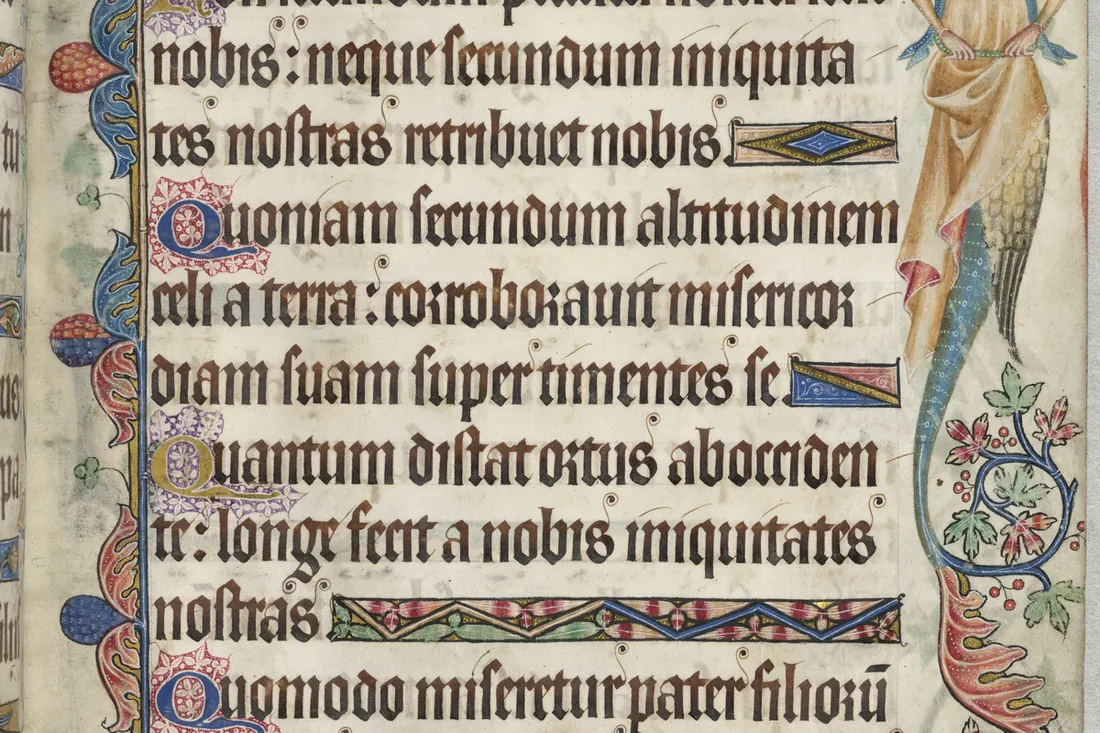
Psalm 104: O LORD, how manifold are thy works
A grand creation hymn that follows roughly the order of Genesis 1: light, sky, waters, land, plants, animals, sun and moon. It is full of detail, from wild goats on the hills to ships and sea creatures, and it inspired Robert Grant’s hymn “O Worship the King”.
Read it when: you are enjoying the natural world or caring for it.
Psalm 113: Who is like unto the LORD our God?
The first psalm of the Hallel, sung at Passover. It praises a God so high he must “humble himself” to look at heaven, yet who lifts the poor out of the dust.
Read it when: you want to praise God for caring about people others overlook.
Psalm 117: O praise the LORD, all ye nations
The shortest psalm in the Bible, just two verses, and a complete praise song in miniature: a call to all nations and two reasons (his merciful kindness and his truth). Paul quotes it in Romans 15:11.
Read it when: you need a praise you can memorise in a minute.
Psalm 136: For his mercy endureth for ever
Twenty-six verses, each answered by the same refrain. Jewish tradition calls it the Great Hallel. The fifteen-year-old John Milton turned it into the hymn “Let us with a gladsome mind” in 1623.
Read it when: you are worshipping with a group and want everyone to join in.
Psalm 145: Great is the LORD, and greatly to be praised
An alphabetical acrostic and the only psalm titled “a psalm of praise” (tehillah). In Jewish worship it is recited three times a day as part of the prayer known as Ashrei. Verse 18 is one of the Bible’s great comforts: “The LORD is nigh unto all them that call upon him.”
Read it when: you want to praise God’s character from A to Z.
Psalm 147: He healeth the broken in heart
Within two verses the psalmist moves from bandaging broken hearts to naming every star. The God who runs the universe is also the one who heals.
Read it when: you or someone you love is heartbroken.
Psalm 148: Praise ye the LORD from the heavens
A roll-call of creation: angels, sun, moon, stars, sea creatures, fire, hail, snow, mountains, trees, animals, kings, children and old people, all called to praise. The hymn “Praise the Lord! Ye Heavens, Adore Him” comes from it.
Read it when: you want to remember that praise is the purpose of everything.
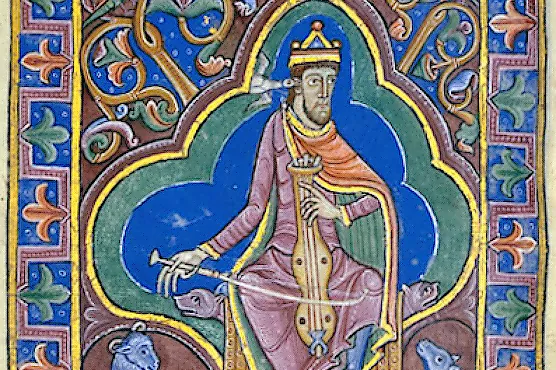
Psalms 149 and 150: the grand finale
Psalms to God for every occasion
| Occasion | Psalm | Why |
|---|---|---|
| Morning | 5, 63, 92 | Seeking God early; lovingkindness in the morning |
| Evening | 4, 134, 141 | Peace, sleep and evening prayer |
| Thanksgiving | 100, 107, 136 | Gratitude with a congregational refrain |
| Birthday or anniversary | 90, 103, 139 | Numbering our days; “fearfully and wonderfully made” |
| Recovery from illness | 30, 103, 116 | “He hath heard my voice” |
| Wedding | 67, 128, 145 | Blessing on a home and family |
| Funeral | 23, 90, 121, 103 | Comfort, eternity and God’s care |
| Christmas | 96, 98 | The King comes; source of “Joy to the World” |
| Easter | 118 | “This is the day which the LORD hath made” |
| Creation care or outdoors | 8, 19, 104, 148 | The heavens and earth declare his glory |
| New job or new start | 33, 40, 96 | “A new song” |
Famous hymns and songs based on psalms of praise
For centuries many churches sang only psalms, and some of the best-loved hymns in English are psalm paraphrases. If you know these songs, you already know these psalms.
| Psalm | Hymn or song | Origin |
|---|---|---|
| 19 | “The Heavens Are Telling” | Chorus from Haydn’s oratorio The Creation (1798) |
| 46 | “A Mighty Fortress Is Our God” | Martin Luther, around 1529 |
| 90 | “O God, Our Help in Ages Past” | Isaac Watts, 1719 |
| 98 | “Joy to the World” | Isaac Watts, 1719 |
| 100 | “All People That on Earth Do Dwell” (the Old Hundredth) | William Kethe, about 1561, to a tune from the Genevan Psalter of 1551 |
| 103 | “Praise, My Soul, the King of Heaven” | Henry Francis Lyte, 1834; sung at the wedding of Princess Elizabeth in 1947 |
| 103 | “10,000 Reasons (Bless the Lord)” | Matt Redman and Jonas Myrin, 2011 |
| 104 | “O Worship the King” | Robert Grant, 1833 |
| 136 | “Let Us with a Gladsome Mind” | John Milton, 1623, written at age 15 |
| 148 | “Praise the Lord! Ye Heavens, Adore Him” | Foundling Hospital hymn sheet, London, about 1796 |
How to pray a psalm of praise
- Read the whole psalm aloud. The Psalms are poetry and were written to be heard; most take two or three minutes.
- Find the “for”. Underline each reason the psalmist gives for praising. These are the bones of the psalm.
- Add your own reasons. After each “for”, pause and name one thing from your own life that fits.
- Pray one line back to God. Pick the verse that struck you most and say it as your own prayer.
- Repeat the refrain. If the psalm has one (“for his mercy endureth for ever”), carry it with you through the day.
A simple way to begin: read the five Hallelujah psalms (146-150) over five days, one a day. By Friday you will have ended the Book of Psalms the way its editors intended, in praise.
Frequently asked questions
Which psalm is the best psalm of praise?
There is no single answer, but Psalm 103 (“Bless the LORD, O my soul”) is the most loved for personal praise, Psalm 100 is the classic for praising together, and Psalm 150 is the Bible’s final word of praise.
What are the five praise psalms at the end of the Bible’s Book of Psalms?
Psalms 146, 147, 148, 149 and 150 are the Hallelujah psalms. Each begins and ends with “Praise ye the LORD” (Hallelu-Yah) and together they close the Psalter in praise.
Which psalm is called a psalm of praise?
In Hebrew, only Psalm 145 is headed tehillah, “a psalm of praise”. The King James Version also heads Psalm 100 “A Psalm of praise”, but the Hebrew there means a psalm of thanksgiving.
What is the shortest psalm of praise?
Psalm 117, with just two verses: “O praise the LORD, all ye nations: praise him, all ye people. For his merciful kindness is great toward us: and the truth of the LORD endureth for ever. Praise ye the LORD.”
What are the Hallel psalms?
Psalms 113 to 118 are the Hallel (“praise”), sung at Jewish festivals including Passover. Psalm 136 is known as the Great Hallel. Many scholars think Jesus and his disciples sang the Hallel after the Last Supper.
What is the difference between a psalm of praise and a psalm of thanksgiving?
A psalm of praise celebrates who God is in general (his greatness, goodness and creation). A psalm of thanksgiving thanks him for something specific he has done, such as a rescue or healing. Many psalms do both.
How many psalms are psalms of praise?
Scholars group them differently, but roughly 40 psalms are mainly hymns of praise or thanksgiving. Even lament psalms usually end with a turn to praise.
Who wrote the psalms of praise?
Seventy-three psalms carry David’s name. Others are linked to Asaph, the sons of Korah, Solomon, Moses (Psalm 90) and Heman and Ethan, and about fifty have no named author.
What psalm should I read to praise God in hard times?
Psalm 34 (“I will bless the LORD at all times”), Psalm 30 (“weeping may endure for a night, but joy cometh in the morning”) and Psalm 147 (“He healeth the broken in heart”).
Final thoughts
The Psalms do not ask us to feel happy before we praise. They give us words, and the words often bring the feelings with them. Start with Psalm 103 tomorrow morning, read it slowly, find its reasons and add your own. Then explore the rest of our Worship guides, including calls to worship for every season and the complete Bible verses of praise and worship.
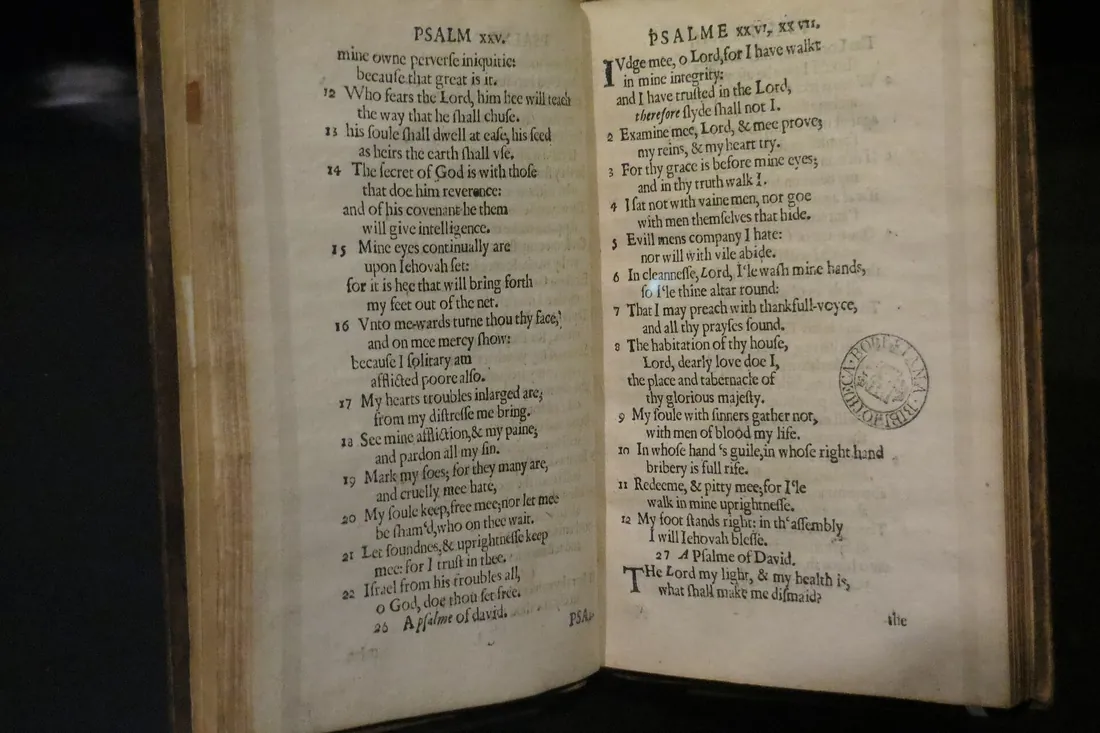
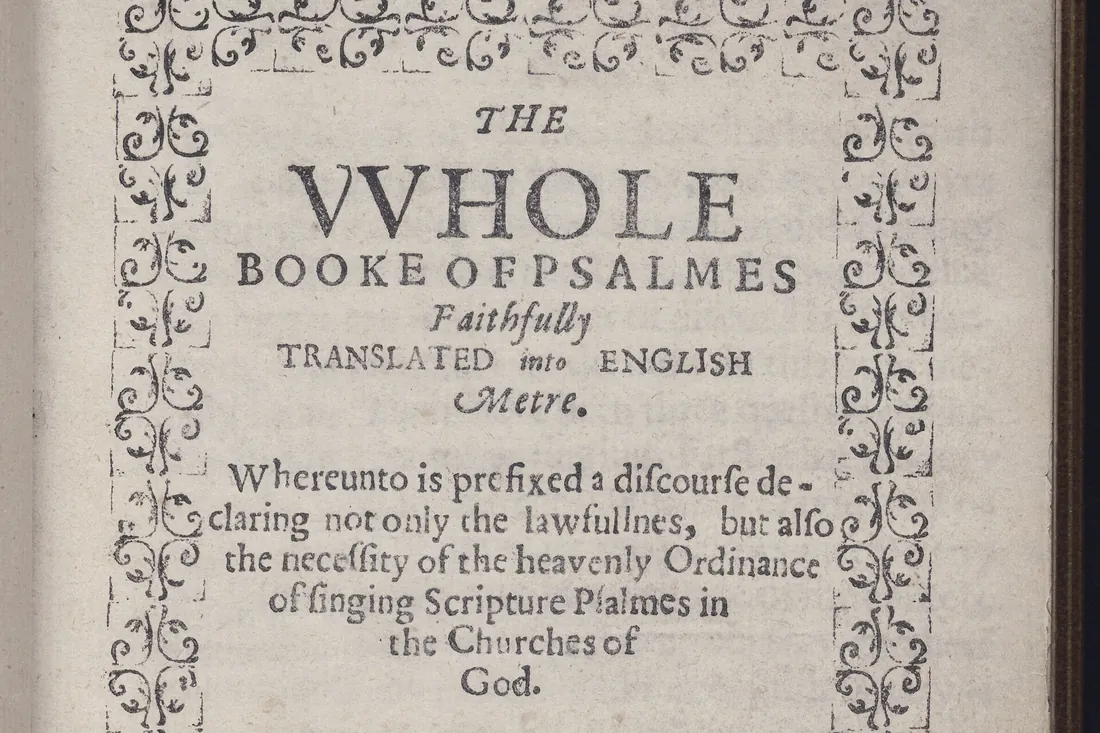
Sources: Scripture quotations from the King James Version. Psalm types follow standard Old Testament form criticism (hymns, kingship, thanksgiving). C. S. Lewis, Reflections on the Psalms (1958). Bay Psalm Book sale: Sotheby’s, New York, 26 November 2013. Hymn origins from standard hymnals. Images: Wikimedia Commons, credited in each caption.