Short answer: a call to worship is the opening of a church service: a Bible verse, read by a leader and often answered by the congregation, that invites everyone to turn their attention to God. The most-used call to worship verses are Psalm 95:6 (“O come, let us worship and bow down”), Psalm 100:4 (“Enter into his gates with thanksgiving”), Psalm 118:24 (“This is the day which the LORD hath made”), Psalm 122:1, Psalm 34:3 and Habakkuk 2:20.
Below you will find 30 verses sorted by mood and season, and 17 ready-to-use responsive calls to worship (leader and people parts) for ordinary Sundays, Advent, Christmas, Lent, Palm Sunday, Easter, Pentecost, Thanksgiving, communion, baptism and funerals. Copy them straight into your order of service.
The first words of a service set its tone. Before the songs, the notices or the sermon, a good call to worship reminds everyone in the room why they came: not to watch a performance, but to meet with God together. Here is everything a worship leader, pastor or church volunteer needs to choose one, write one or simply read one well on Sunday morning. If you want the wider picture of what the Bible says about praise, start with our guide to Bible verses of praise and worship.
What is a call to worship?
A call to worship is a short passage, almost always from Scripture, spoken at the very start of a service. It does two things. First, it reminds the congregation that God is the one inviting them; worship begins with his call, not our effort. Second, it gives the people a chance to answer, which is why so many calls to worship are written as a dialogue between a leader and the congregation.
The idea is as old as the Psalms themselves. Many psalms open with an invitation (“O come, let us sing unto the LORD”) and some were clearly written for two groups to sing to each other. Psalm 24 reads like an entrance liturgy for a procession arriving at the temple gates, with one group asking “Who is this King of glory?” and another answering.
A short history
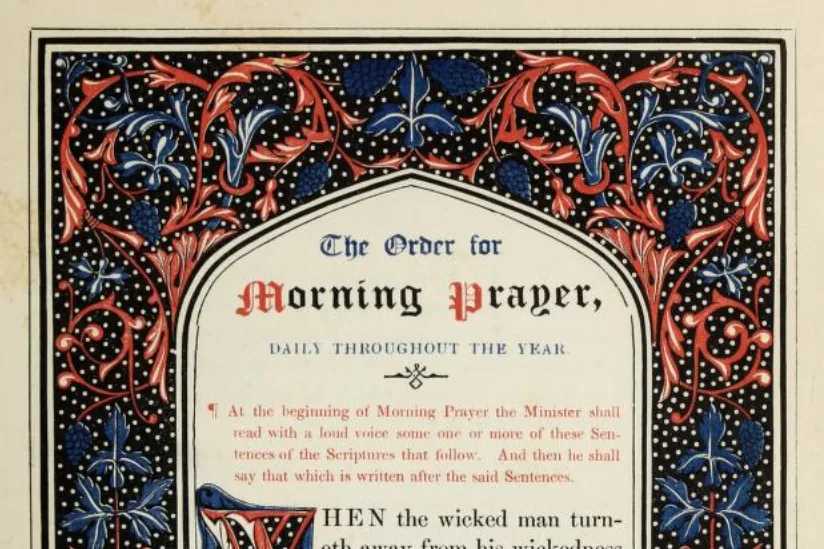
- The Venite (Psalm 95). When Archbishop Thomas Cranmer wrote the first Book of Common Prayer in 1549, he set Psalm 95, known by its Latin opening Venite, exultemus (“O come, let us sing”), near the start of Morning Prayer. Anglican, Episcopal and Methodist churches have opened with it ever since.
- The Reformed “votum”. John Calvin’s services began with Psalm 124:8: “Our help is in the name of the LORD, who made heaven and earth.” Many Presbyterian and Reformed churches still open with this verse, often followed by a greeting of grace from 1 Corinthians 1:3.
- “Lift up your hearts”. The ancient dialogue that opens the communion prayer (“Lift up your hearts.” “We lift them up unto the Lord.”) is one of the oldest surviving pieces of Christian liturgy, recorded in church orders from the early third century.
- Modern responsive readings. Today most churches print or project a short leader-and-people reading, often chosen to match the sermon or the season of the church year.
Types of call to worship
| Type | How it works | Best for |
|---|---|---|
| Scripture sentence | One person reads a single verse | Quiet, reflective or very short services |
| Responsive | Leader and congregation alternate lines | Most Sunday services; gets everyone involved |
| Unison | Everyone reads the whole passage together | Familiar psalms such as Psalm 100 |
| Sung | A choir or congregation sings a psalm or chorus | Traditional services (the Venite) and contemporary sets |
| Silence | A verse such as Habakkuk 2:20, then a pause | Lent, Good Friday, healing or memorial services |
30 of the best call to worship verses
These are the verses churches return to most. Use them as a single-sentence call, or as raw material for a responsive reading. Most come from the Psalms; our guide to the 20 best psalms of praise explains each one in context.
| Verse | Opening words (KJV) | Best for |
|---|---|---|
| Psalm 95:1 | O come, let us sing unto the LORD | Joyful Sundays |
| Psalm 95:6 | O come, let us worship and bow down | Any service |
| Psalm 100:1-2 | Make a joyful noise unto the LORD, all ye lands | Celebration |
| Psalm 100:4 | Enter into his gates with thanksgiving | Thanksgiving, communion |
| Psalm 118:24 | This is the day which the LORD hath made | Morning, Easter |
| Psalm 122:1 | I was glad when they said unto me, Let us go into the house of the LORD | Welcome, new members |
| Psalm 34:3 | O magnify the LORD with me | Unity, small groups |
| Psalm 96:1 | O sing unto the LORD a new song | New year, new season |
| Psalm 96:9 | O worship the LORD in the beauty of holiness | Reverent services |
| Psalm 105:1 | O give thanks unto the LORD; call upon his name | Testimony, mission |
| Psalm 113:3 | From the rising of the sun unto the going down of the same | Morning or evening |
| Psalm 145:3 | Great is the LORD, and greatly to be praised | Short opening sentence |
| Psalm 46:10 | Be still, and know that I am God | Quiet, anxious times |
| Psalm 5:7 | I will come into thy house in the multitude of thy mercy | Confession |
| Psalm 63:1 | O God, thou art my God; early will I seek thee | Early services |
| Psalm 67:3 | Let the people praise thee, O God | Mission Sunday |
| Psalm 84:1-2 | How amiable are thy tabernacles, O LORD of hosts! | Church anniversaries |
| Psalm 117 | O praise the LORD, all ye nations | The shortest psalm: perfect for children |
| Psalm 121:1-2 | I will lift up mine eyes unto the hills | Hard seasons |
| Psalm 124:8 | Our help is in the name of the LORD | Reformed opening (votum) |
| Psalm 133:1 | Behold, how good and how pleasant it is for brethren to dwell together in unity | Unity, joint services |
| Psalm 134:1-2 | Behold, bless ye the LORD, all ye servants of the LORD | Evening services |
| Psalm 19:1 | The heavens declare the glory of God | Creation care, outdoor services |
| Psalm 27:4 | One thing have I desired of the LORD | Retreats, prayer meetings |
| Isaiah 6:3 | Holy, holy, holy, is the LORD of hosts | Trinity Sunday |
| Isaiah 55:6 | Seek ye the LORD while he may be found | Lent, revival |
| Habakkuk 2:20 | The LORD is in his holy temple: let all the earth keep silence | Silent openings |
| Lamentations 3:22-23 | They are new every morning: great is thy faithfulness | New year, hard times |
| Matthew 11:28 | Come unto me, all ye that labour and are heavy laden | Healing, weary congregations |
| Revelation 4:8 | Holy, holy, holy, Lord God Almighty | Communion, Trinity Sunday |
Responsive calls to worship for ordinary Sundays
Each reading below takes about a minute. Leader lines are read by one person; People lines by the congregation; All by everyone. Print the People and All lines in bold if you project them.
Leader: O come, let us sing unto the LORD: let us make a joyful noise to the rock of our salvation.
People: Let us come before his presence with thanksgiving, and make a joyful noise unto him with psalms.
Leader: O come, let us worship and bow down: let us kneel before the LORD our maker.
All: For he is our God; and we are the people of his pasture, and the sheep of his hand.
Based on Psalm 95:1-2, 6-7 (KJV)
Leader: Make a joyful noise unto the LORD, all ye lands.
People: Serve the LORD with gladness: come before his presence with singing.
Leader: Enter into his gates with thanksgiving, and into his courts with praise.
All: For the LORD is good; his mercy is everlasting; and his truth endureth to all generations.
Based on Psalm 100:1-2, 4-5 (KJV)
Leader: This is the day which the LORD hath made;
People: we will rejoice and be glad in it.
Leader: It is of the LORD’S mercies that we are not consumed, because his compassions fail not.
All: They are new every morning: great is thy faithfulness.
Based on Psalm 118:24; Lamentations 3:22-23 (KJV)
Leader: The LORD is in his holy temple: let all the earth keep silence before him.
(Pause for ten to fifteen seconds of silence.)
Leader: Be still, and know that I am God:
People: I will be exalted among the heathen, I will be exalted in the earth.
Based on Habakkuk 2:20; Psalm 46:10 (KJV)
Leader: Come unto me, all ye that labour and are heavy laden, and I will give you rest.
People: But they that wait upon the LORD shall renew their strength;
Leader: they shall mount up with wings as eagles;
All: they shall run, and not be weary; and they shall walk, and not faint.
Based on Matthew 11:28; Isaiah 40:31 (KJV)
Leader: Holy, holy, holy, is the LORD of hosts:
People: the whole earth is full of his glory.
Leader: They rest not day and night, saying,
All: Holy, holy, holy, Lord God Almighty, which was, and is, and is to come.
Based on Isaiah 6:3; Revelation 4:8 (KJV)
Leader: O sing unto the LORD a new song: sing unto the LORD, all the earth.
People: Declare his glory among the heathen, his wonders among all people.
Leader: Let the people praise thee, O God; let all the people praise thee.
All: O let the nations be glad and sing for joy.
Based on Psalm 96:1, 3; Psalm 67:3-4 (KJV)
Leader: Behold, how good and how pleasant it is for brethren to dwell together in unity!
People: I was glad when they said unto me, Let us go into the house of the LORD.
All: O magnify the LORD with me, and let us exalt his name together.
Based on Psalm 133:1; Psalm 122:1; Psalm 34:3 (KJV)
Leader: Our help is in the name of the LORD,
People: who made heaven and earth.
Leader: Grace be unto you, and peace, from God our Father, and from the Lord Jesus Christ.
Based on Psalm 124:8; 1 Corinthians 1:3 (KJV)
Traditionally the congregation answers the greeting with a sung or spoken “Amen”.
Calls to worship for the seasons of the church year
| Season | Next date | Key verses |
|---|---|---|
| Advent Waiting, preparing | Begins Sunday 29 November 2026 | Isaiah 40:3; Isaiah 9:2 |
| Christmas God with us | Friday 25 December 2026 | Luke 2:10-11, 14; John 1:14 |
| Lent Repentance, return | Ash Wednesday, 10 February 2027 | Joel 2:12-13; Psalm 51:10 |
| Palm Sunday The King arrives | Sunday 21 March 2027 | Matthew 21:9; Psalm 118:26 |
| Easter Resurrection | Sunday 28 March 2027 | Matthew 28:6; Luke 24:34 |
| Pentecost The Holy Spirit | Sunday 16 May 2027 | Acts 2:1-2; Joel 2:28 |
| Thanksgiving (US) Gratitude | Thursday 25 November 2027 | Psalm 136:1-3; Psalm 105:1 |
Leader: The voice of him that crieth in the wilderness,
People: Prepare ye the way of the LORD, make straight in the desert a highway for our God.
Leader: The people that walked in darkness have seen a great light:
All: they that dwell in the land of the shadow of death, upon them hath the light shined.
Based on Isaiah 40:3; Isaiah 9:2 (KJV)
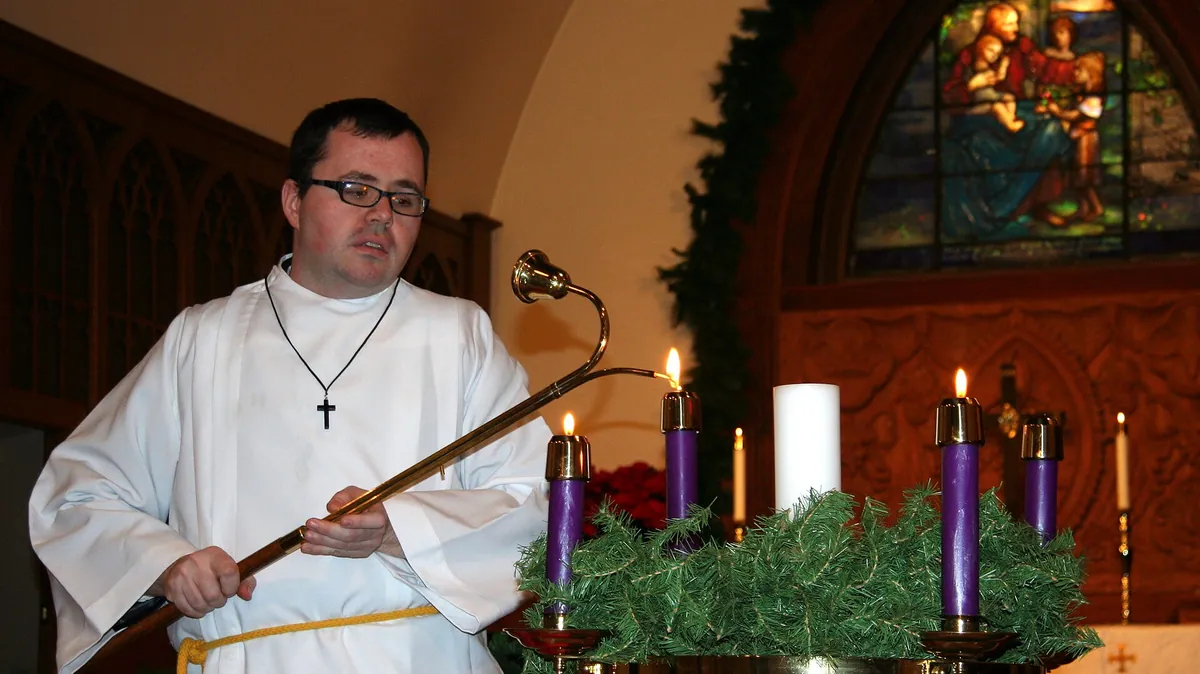
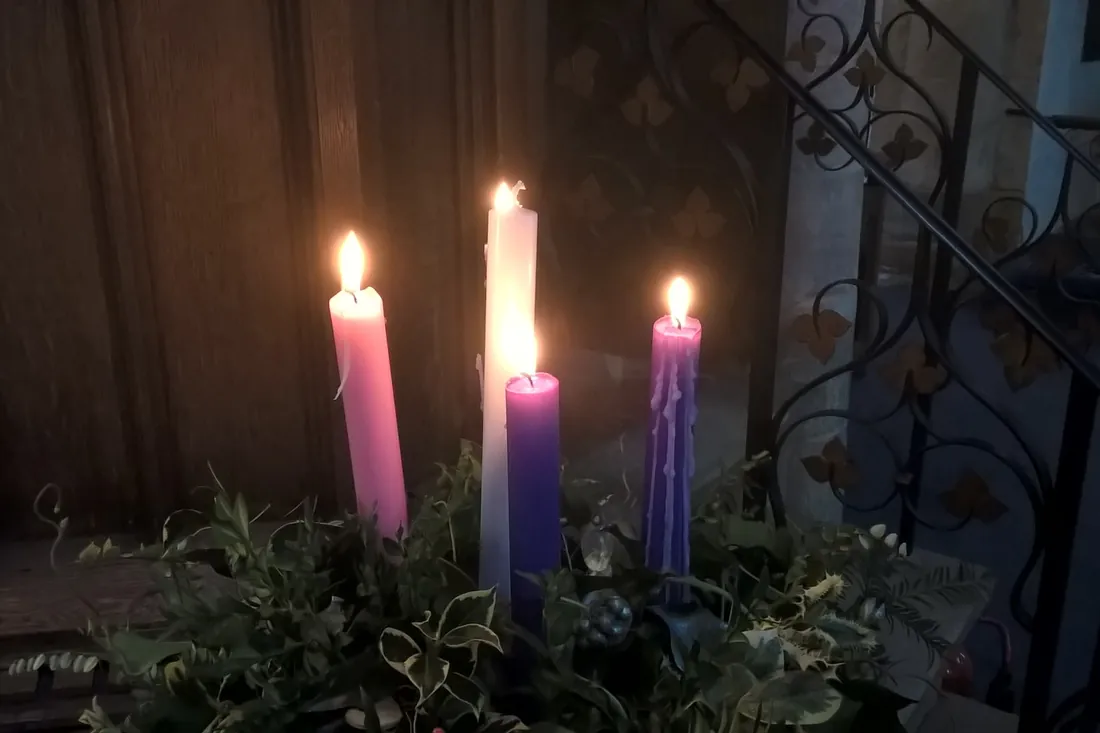
Many churches light the Advent wreath straight after this reading.
Leader: Fear not: for, behold, I bring you good tidings of great joy, which shall be to all people.
People: For unto you is born this day in the city of David a Saviour, which is Christ the Lord.
Leader: And the Word was made flesh, and dwelt among us,
All: Glory to God in the highest, and on earth peace, good will toward men.
Based on Luke 2:10-11, 14; John 1:14 (KJV)
Leader: Therefore also now, saith the LORD, turn ye even to me with all your heart,
People: And rend your heart, and not your garments, and turn unto the LORD your God:
Leader: for he is gracious and merciful, slow to anger, and of great kindness,
All: Create in me a clean heart, O God; and renew a right spirit within me.
Based on Joel 2:12-13; Psalm 51:10 (KJV)
Leader: Lift up your heads, O ye gates; and be ye lift up, ye everlasting doors; and the King of glory shall come in.
People: Hosanna to the Son of David:
Leader: Blessed is he that cometh in the name of the Lord;
All: Hosanna in the highest.
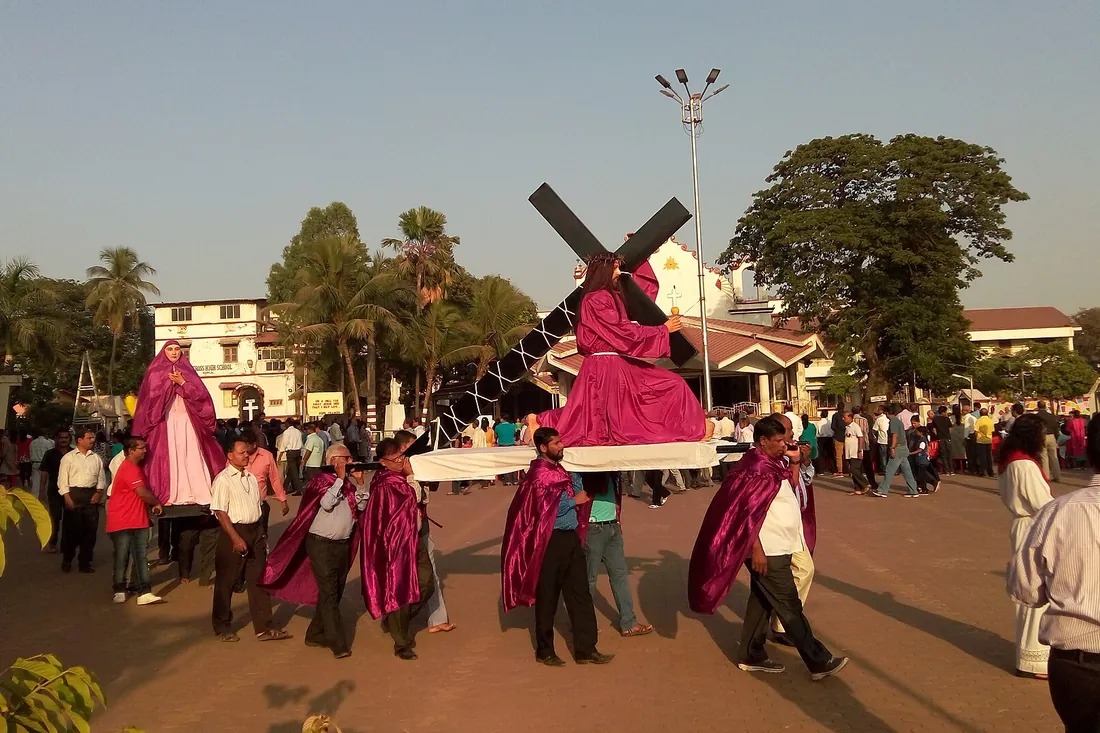
Based on Psalm 24:7; Matthew 21:9 (KJV)
Leader: He is not here: for he is risen, as he said.
People: The Lord is risen indeed,
Leader: O death, where is thy sting? O grave, where is thy victory?
All: But thanks be to God, which giveth us the victory through our Lord Jesus Christ.
Based on Matthew 28:6; Luke 24:34; 1 Corinthians 15:55, 57 (KJV)
Many churches use the traditional greeting “The Lord is risen! He is risen indeed!”, which comes from Luke 24:34.
Leader: And when the day of Pentecost was fully come, they were all with one accord in one place.
People: And suddenly there came a sound from heaven as of a rushing mighty wind,
Leader: I will pour out my spirit upon all flesh;
All: your sons and your daughters shall prophesy, your old men shall dream dreams, your young men shall see visions.
Based on Acts 2:1-2; Joel 2:28 (KJV)
Leader: O give thanks unto the LORD; for he is good:
People: for his mercy endureth for ever.
Leader: O give thanks unto the God of gods:
People: for his mercy endureth for ever.
Leader: O give thanks to the Lord of lords:
All: for his mercy endureth for ever.
Based on Psalm 136:1-3 (KJV)
Psalm 136 was written to be sung this way: the refrain repeats in all 26 verses.
Calls to worship for communion, baptism and funerals
Leader: O taste and see that the LORD is good:
People: blessed is the man that trusteth in him.
Leader: For as often as ye eat this bread, and drink this cup,
All: ye do shew the Lord’s death till he come.
Based on Psalm 34:8; 1 Corinthians 11:26 (KJV)
For a baptism
For a funeral or memorial service
Funerals call for gentleness. A single voice reading slowly is usually better than a responsive reading. These verses are the most widely used:
How to write your own call to worship
- Start with the sermon or the season. If the sermon is on Psalm 23, open with a line from it. The call to worship should point to where the service is going.
- Choose one passage, or two that rhyme. Psalms work best because they were written to be prayed aloud. Pair an Old Testament line with a New Testament one for festivals.
- Split it at natural pauses. Break at colons and semicolons. Give the congregation the lines that say “we” or “our”, so they speak as a people.
- End together. Finish with an “All” line, ideally the most memorable sentence in the passage.
- Keep it to four to six lines. About a minute. Longer than that and it becomes a reading, not a call.
- Do not paraphrase Scripture and call it Scripture. If you adapt the words, say “adapted from”. Our readings above use the exact KJV text so you can cite them plainly.
Tips for leading it well
- Wait until the room is quiet. Starting over chatter tells people the words do not matter.
- Read your lines more slowly than feels natural; congregations need time to find their place.
- Put the People lines in bold on the screen or in the bulletin.
- Follow the call with something that answers it: a hymn of praise or an opening prayer.
- Vary it. Using the same call every week has value in liturgical churches, but most congregations benefit from matching it to the day.
Frequently asked questions
What is a call to worship in a church service?
A call to worship is the opening sentence or short reading of a service, usually from the Psalms, that invites the congregation to turn their attention to God. It is often responsive, with a leader and the congregation reading alternate lines.
What is the best Bible verse for a call to worship?
Psalm 95:6, “O come, let us worship and bow down: let us kneel before the LORD our maker,” is the most widely used. Psalm 100:4, Psalm 118:24 and Psalm 122:1 are close behind.
How long should a call to worship be?
Around one minute: four to six short lines, or a single verse for a quiet service. Anything much longer starts to feel like a Scripture reading rather than an invitation.
Who reads the call to worship?
Usually a pastor, worship leader or lay reader. In responsive versions the congregation reads the People lines. Some churches invite a different member, including children or young people, to lead it each week.
What is the difference between a call to worship and an invocation?
A call to worship is addressed to the people, inviting them to worship God. An invocation is a prayer addressed to God, asking for his presence and help. Many services use both: the call to worship first, then an opening prayer or invocation.
What is the Venite?
The Venite is Psalm 95, named after its first word in Latin (“Venite, exultemus Domino”, O come, let us sing unto the Lord). The Book of Common Prayer of 1549 set it near the start of Morning Prayer, and it has been a call to worship in Anglican churches ever since.
Can a call to worship be sung?
Yes. Traditional churches sing the Venite or another psalm, and contemporary churches often open with a short sung chorus based on a psalm, such as Psalm 118:24 (“This is the day which the LORD hath made”).
What is a good call to worship for Easter Sunday?
Matthew 28:6, “He is not here: for he is risen, as he said,” followed by the traditional response “The Lord is risen indeed” from Luke 24:34. Our Easter reading above adds 1 Corinthians 15:55-57.
What is a call to worship for Thanksgiving?
Psalm 136:1-3 read responsively, with the congregation answering “for his mercy endureth for ever”, or Psalm 100:4, “Enter into his gates with thanksgiving, and into his courts with praise.”
Is a call to worship biblical?
The practice comes straight from Scripture. Many psalms open with an invitation to worship (Psalms 95, 96, 100 and 105), and Psalm 24 and Psalm 136 were written for call-and-response use.
Final thoughts
A call to worship takes less than a minute, but it shapes everything that follows. Choose words that point people to God rather than to the service, give the congregation a voice, and read them as if they matter, because they do. For more verses to build your services around, see our complete guide to Bible verses of praise and worship, and browse every guide in our Worship section.
Sources: Scripture quotations from the King James Version (Authorized Version). History of the Venite: the Book of Common Prayer (1549). Reformed votum: Calvin’s Genevan liturgy, La Forme des Prières (1542). Church calendar dates computed for the Western calendar, 2026-27. Images: Wikimedia Commons, credited in each caption.