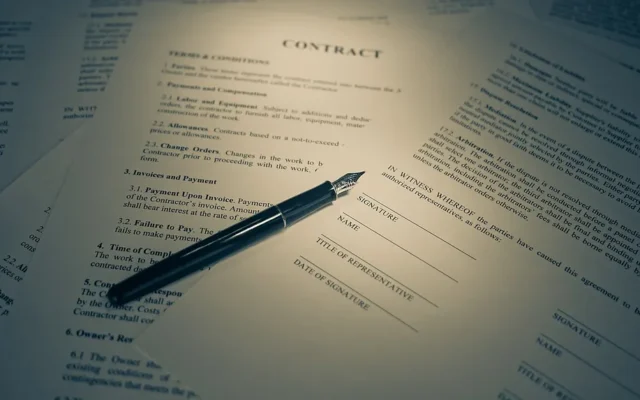
Short answer: verbiage (pronounced VUR-bee-ij, three syllables) means too many words: wordy, padded language that says little. It is also used, more neutrally, to mean wording, as in “the verbiage of the contract”. “Verbage” is a misspelling; the word has an i because it comes from French verbiage.
Because its main meaning is critical, calling someone’s writing “verbiage” is not a compliment. If you just mean the words used, “wording” is usually the safer choice.
Verbiage definition
| Sense | Meaning | Example |
|---|---|---|
| 1. Wordiness (main sense, critical) | An excess of words; language that is padded, vague or longer than it needs to be. | “Cut the verbiage and tell me what happened.” |
| 2. Wording (neutral, common in business and law) | The particular words used to express something. | “Can legal check the verbiage on the refund policy?” |
Sense 1 is the traditional one, and it is still the one most readers hear first. Sense 2 is widespread in American offices (“send me the verbiage for the email”), but some editors and style guides dislike it precisely because the word carries a whiff of disapproval. If you ask a colleague to “fix the verbiage”, they may hear “your writing is waffle”.
Verbiage or verbage: which spelling is correct?
Verbiage is correct. “Verbage” is a very common misspelling, and it comes from two places:
- Pronunciation. Many people say the word in two syllables, “VUR-bij”, so they spell it the way they say it. The dictionary pronunciation has three: VUR-bee-ij.
- False analogy with “verb”. Verbiage is about words, so “verb + -age” (like “garbage” or “package”) looks logical. But the word was borrowed whole from French.
Where does the word verbiage come from?
English borrowed verbiage from French in the 1700s. In French it meant idle talk or chatter, and it was formed from an old verb meaning “to chatter” or “to warble”. Its resemblance to the Latin verbum (“word”), the root of verb and verbal, helped push its meaning towards “lots of words”. From the start it was disapproving: verbiage was talk without substance.
The word is used less than it once was. In English books its frequency fell by roughly a third between 1950 and 2019, perhaps because “wordiness”, “jargon” and “waffle” do the same job in plainer English.
Verbiage vs verbosity, jargon and other near-synonyms
| Word | What it describes | Example |
|---|---|---|
| verbiage | The words themselves: padding and wordiness | “Strip out the verbiage.” |
| verbosity | The habit or quality of using too many words | “His verbosity lost the audience.” |
| wordiness | Plain-English equivalent of both | “Edit for wordiness.” |
| jargon | Specialist terms outsiders cannot follow | “Medical jargon confused the patient.” |
| prolixity | Formal: tedious length | “The prolixity of the report.” |
| waffle (British) | Vague, rambling talk or writing | “Less waffle, more facts.” |
| legalese | Dense legal wording | “The contract is full of legalese.” |
Verbiage is often confused with verbal and verbose too. Verbose is the adjective for a person or text that uses too many words; verbal means relating to words or speech. For more pairs like these, see our guide to commonly confused words.
How to cut verbiage from your writing
Most verbiage comes from a few habits. Here is how to spot and fix them:
| Wordy | Concise | Habit |
|---|---|---|
| at this point in time | now | Padding phrases |
| due to the fact that | because | Padding phrases |
| in order to | to | Padding phrases |
| make a decision | decide | Hidden verbs (nominalisations) |
| conduct an investigation into | investigate | Hidden verbs |
| basic fundamentals | fundamentals | Redundancy |
| completely unanimous | unanimous | Redundancy |
| it is important to note that | (delete it) | Throat-clearing |
| very unique | unique | Empty intensifiers |
| the report was written by the team | the team wrote the report | Passive voice |
- Read it aloud. Anywhere you run out of breath or lose the thread, there is verbiage.
- Find the real verb. Turn “give consideration to” into “consider”.
- Delete the warm-up. Sentences beginning “It should be noted that” usually start better at the next word.
- Cut doubled words. “Each and every”, “first and foremost”, “null and void” (outside legal documents).
- Aim for one idea per sentence. Long sentences invite padding.
Examples of verbiage in sentences
- The report was 40 pages of verbiage with two pages of actual findings. (critical)
- Political speeches are often criticised as empty verbiage. (critical)
- Please update the verbiage on the checkout page to match the new returns policy. (neutral, business)
- The lawyer reviewed the verbiage of the settlement before signing. (neutral, legal)
- Behind the marketing verbiage, the product is a basic phone. (critical)
Should you use “verbiage” to mean wording?
It is understood, and it is common in American business writing, so it is not wrong. But it carries risk: a reader who knows the traditional meaning may hear criticism you did not intend. A simple rule:
- Talking about wordy writing? “Verbiage” is perfect.
- Talking about the words in a document? Prefer “wording”, “language”, “text” or “copy”.
Frequently asked questions
What does verbiage mean?
Verbiage means an excess of words: wordy, padded language. It is also used more neutrally to mean the wording of something, as in “the verbiage of a contract”.
Is it verbiage or verbage?
Verbiage is correct. Verbage is a common misspelling caused by pronouncing the word in two syllables. In books, verbiage appears about 270 times more often.
How do you pronounce verbiage?
VUR-bee-ij, with three syllables and the stress on the first. Many people say “VUR-bij”, which is why the misspelling “verbage” is common.
Is verbiage a negative word?
Traditionally, yes: it implies too many words or empty language. In American business usage it is often used neutrally to mean wording, but some readers still hear it as a criticism.
What is a synonym for verbiage?
Wordiness, verbosity, padding, prolixity and (in British English) waffle. For the neutral sense, use wording, language or phrasing.
What is the difference between verbiage and verbose?
Verbiage is a noun for the wordy language itself; verbose is an adjective describing a person or text that uses too many words.
Where does the word verbiage come from?
From French verbiage, meaning idle chatter, borrowed into English in the 1700s. Its similarity to Latin verbum (“word”) shaped its English meaning.
Can I say “legal verbiage”?
Yes. “Legal verbiage” is a common phrase for the wording of legal documents, often with a hint that it is dense or wordy.
Final thoughts
Spell it verbiage, say all three syllables, and use it when you mean wordiness. When you just mean the words on a page, “wording” will never be misread. For more spelling traps like this one, see envision vs invision, recurring vs reoccurring and our full guide to commonly confused words.
Sources: Usage figures from the Google Books Ngram Viewer (English 2019 corpus). Etymology: Wiktionary and standard dictionaries. Constitution drafting history: US National Archives. Images: Wikimedia Commons, credited in each caption.