
Short answer: FWIW stands for “for what it’s worth.” People use it to offer an opinion, a fact or a piece of advice while signalling that it may or may not be useful, as in “FWIW, I thought your presentation was great” or “The café opens at 8, FWIW.” It sounds modest and low-pressure: here is something, take it or leave it.
The phrase itself is old (recorded by 1872), and the abbreviation grew up online: the earliest known example is a Usenet post from 1986. It is fine in texts, chats and casual work messages, but best spelled out, or left out, in formal writing.
I will be honest with you: FWIW is one of those abbreviations that looks simple but carries a surprising amount of tone. Used well, it makes advice sound generous and unpushy. Used carelessly, it can sound passive-aggressive, as if you are saying “not that you’ll listen.” This guide explains exactly what FWIW means, how to use it naturally, when to avoid it, where it came from, and the related abbreviations you will see beside it.

What does FWIW mean?
FWIW is short for “for what it’s worth.” The phrase introduces information the speaker thinks might help but does not want to push. It quietly says: “I’m not sure how much this matters to you, but here it is.” That built-in modesty is why it is so popular in online conversation, where people often chip in with opinions to strangers.
| Sense | What it signals | Example |
|---|---|---|
| Humble offer (most common) | This might help; no pressure | “FWIW, the 9:15 train is usually quieter.” |
| Reassurance | I want to support you | “FWIW, I think you made the right call.” |
| Extra context | A side fact you might want | “FWIW, the report was updated yesterday.” |
| Mild disagreement | Softening a different view | “FWIW, I’d keep the original title.” |
| Dismissive (less common) | This probably won’t change anything | “I told them, for what it’s worth.” |
Notice how the same four letters can be warm or slightly weary. In the first four examples, FWIW offers help. In the last, “for what it’s worth” hints that the effort was probably wasted. Online, the helpful sense is far more common.
Why we soften what we say
FWIW belongs to a group of words and phrases that linguists call hedges: expressions such as “I think”, “maybe”, “sort of” and “just” that soften a statement. Hedging is not a sign of weak writing; it is a social tool. In their influential 1987 book on politeness, the linguists Penelope Brown and Stephen Levinson described how speakers protect each other’s “face”, their sense of autonomy and self-image. Unasked-for advice can feel like a small intrusion, so we cushion it. FWIW does that cushioning in four letters: it hands the decision back to the reader.
That matters even more in text than in speech. Face to face, a smile or a shrug tells people you are offering, not ordering. In a message, those cues vanish, and a bare “Use the other supplier” can read as bossy. “FWIW, the other supplier was faster for us” carries the same information with the friendly tone restored. That is why softeners such as FWIW, IMO and “just a thought” thrive in chat apps, forums and social media.
My advice: think of FWIW as tone, not decoration. Use it when you genuinely want to offer something optional, and leave it out when you need to be clear and direct, for example with safety information or a firm deadline. “FWIW, the fire exit is blocked” undersells a problem that needs action.
How to use FWIW in a sentence
FWIW usually goes at the start of a sentence, followed by a comma, but it can also come at the end. Both are correct; the start puts the modesty first, the end adds it as an afterthought.
| Position | Example | Effect |
|---|---|---|
| Start | “FWIW, I’ve had good luck with that brand.” | Frames the whole sentence as a gentle suggestion |
| End | “I’ve had good luck with that brand, FWIW.” | Adds a casual afterthought |
| Middle | “The hotel, FWIW, has free parking.” | Slips in a side note |
| Alone, as a reply | “FWIW.” (after sharing a link) | Very casual; can seem curt |
FWIW in different settings
| Setting | Natural example |
|---|---|
| Text to a friend | “fwiw I thought the second dress looked better” |
| Group chat | “FWIW the restaurant closes at 10 on Sundays” |
| Online forum or review | “FWIW, I had the same error and updating the driver fixed it.” |
| Social media reply | “FWIW, the original quote is from 1925, not 1950.” |
| Casual work chat | “FWIW, the client preferred option B on our last call.” |
| Feedback to a colleague | “For what it’s worth, I thought your slides were really clear.” |
Is FWIW polite? A tone guide
FWIW is generally polite because it lowers the pressure on the reader. But tone is fragile in text, and a few situations can tip it the wrong way.
| Sounds friendly when… | Can sound passive-aggressive when… |
|---|---|
| You are offering optional help or information | You are repeating advice someone already ignored |
| You add something positive: “FWIW, I loved it” | It follows a criticism: “FWIW, that was obvious” |
| The rest of the message is warm | The message is short, cold or in all capitals |
| You genuinely don’t mind if they ignore it | You clearly do mind: “FWIW, I did warn you” |
My advice: if you are disagreeing with someone, put something constructive after FWIW, not a jab. “FWIW, I’d try the other supplier; they were faster for us” is helpful. “FWIW, I would never have done it that way” lands as a put-down, however casual the abbreviation looks.
Is FWIW professional?
It depends on the channel and the relationship. Abbreviations are widely used in workplace chat tools and quick internal emails between colleagues who know each other. They are a poor fit for formal documents, emails to clients or senior people you have not worked with, job applications and anything that will be printed or kept on record.
| Situation | Use FWIW? | Better alternative |
|---|---|---|
| Team chat with colleagues | Usually fine | — |
| Quick internal email to a peer | Often fine | “For what it’s worth” in full |
| Email to a client or new contact | Avoid | “You may find it useful that…” |
| Message to a senior manager you rarely work with | Avoid | “One thing that may help…” |
| Report, proposal or formal letter | No | “It is worth noting that…” |
| Job application or CV | No | Leave it out |

Where does FWIW come from?
The phrase “for what it’s worth” is much older than the internet. The etymology reference Etymonline dates the colloquial phrase to at least 1872. Its literal sense is about value: you offer something “for what it’s worth”, whatever its real value turns out to be. Over time the phrase became a standard way to introduce a modest opinion.
It got a cultural boost in 1966, when Stephen Stills wrote “For What It’s Worth” for Buffalo Springfield. The song, with its famous line “There’s something happening here”, became one of the defining protest songs of the era, though the phrase in the title predates it by nearly a century.
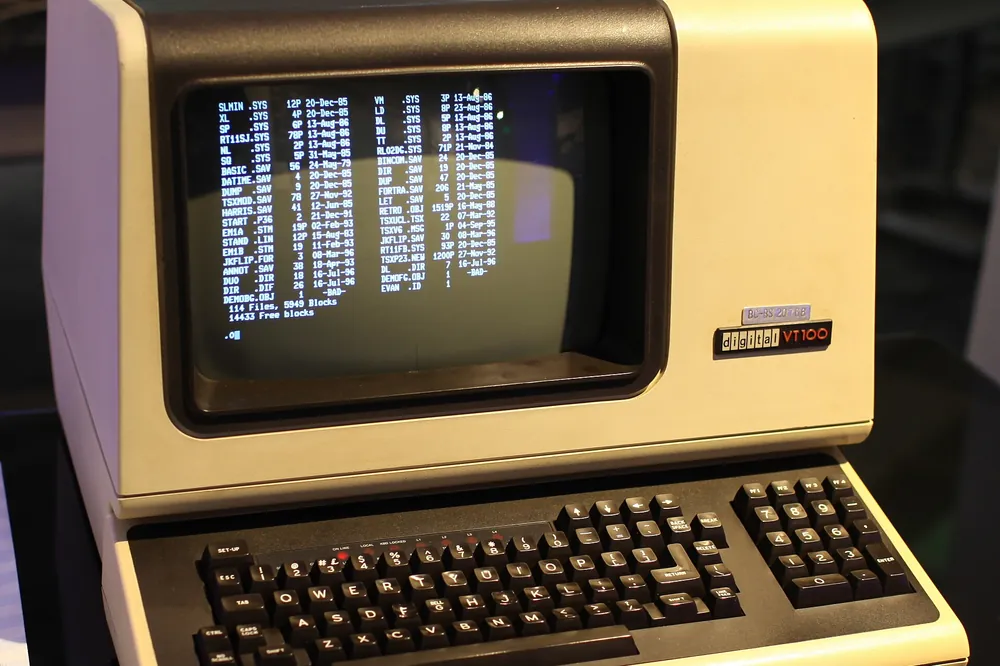
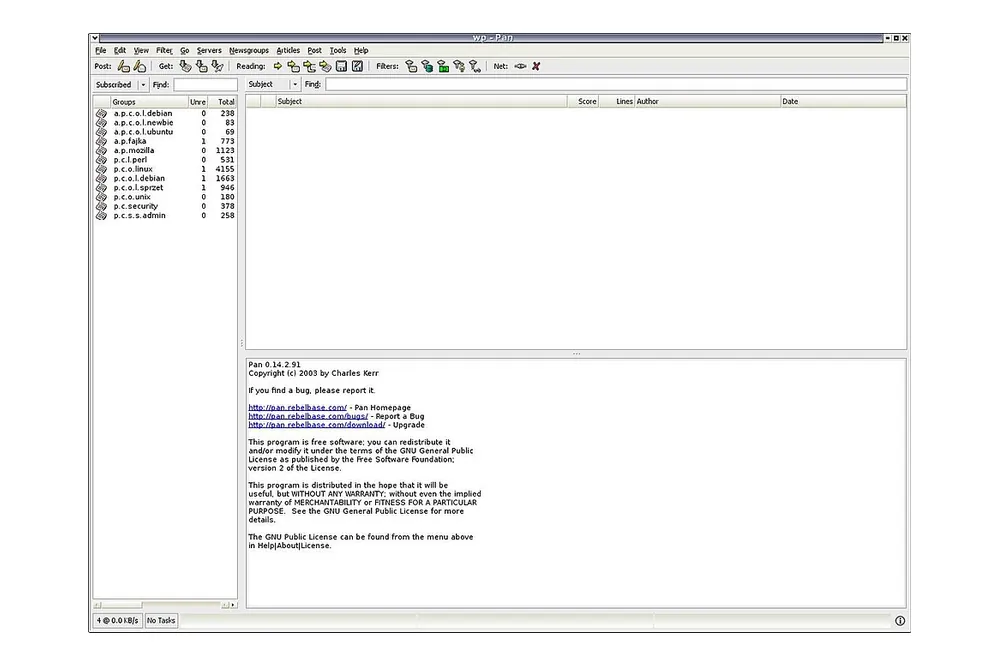
The abbreviation belongs to the early internet. On Usenet, the worldwide discussion system that pre-dated the web, people typed short codes to save effort and soften tone. Word historians have found “FWIW” in a Usenet post in the net.unix group dated 27 August 1986, and it appears in a list of online slang from July 1989. The Oxford English Dictionary’s earliest printed citation, as reported by language researchers, is from The Guardian in 1991, by which time the abbreviation was clearly spreading beyond computer circles.
- By 1872“For what it’s worth” recorded as a colloquial phrase (Etymonline).
- 1966Stephen Stills writes “For What It’s Worth” for Buffalo Springfield.
- 1986Earliest known “FWIW” in a Usenet post (net.unix group).
- 1989FWIW appears in a list of online abbreviations and emoticons.
- 1991Earliest OED citation in print, from The Guardian.
- 2000s-todaySpreads through email, forums, texting, social media and workplace chat.
How common is FWIW?
Because FWIW lives mostly in informal digital writing, it shows up only lightly in published books, but the trend is clear. In the Google Books English corpus it is essentially absent before 1990, then rises sharply as internet language spills into print.
Books only show the tip of the iceberg. In chat apps, forums and social media, FWIW is everyday shorthand, one of a family of “softener” abbreviations that help people share opinions without sounding bossy.
The full phrase tells a different story. In the same book corpus, “for what it is worth” was most frequent in the late nineteenth and early twentieth centuries and has declined since, while the casual contraction and the abbreviation have taken over in everyday digital writing. The idea is as popular as ever; it has simply moved from the printed page to the chat window.
FWIW vs similar abbreviations
| Abbreviation | Meaning | How it differs from FWIW |
|---|---|---|
| FYI | For your information | Neutral and direct: “you should know this” |
| IMO / IMHO | In my opinion / in my humble (or honest) opinion | Flags an opinion rather than a helpful extra |
| TBH | To be honest | Signals frankness, sometimes bluntness |
| AFAIK | As far as I know | Admits the limits of your knowledge |
| IIRC | If I recall correctly | Admits you may be misremembering |
| YMMV | Your mileage may vary | Your experience might be different |
| NGL | Not gonna lie | Casual honesty, often about feelings |
| JSYK | Just so you know | Close to FYI, slightly more casual |
| TBF | To be fair | Adds a balancing point |
The closest relatives are FYI and IMO. FYI is more matter-of-fact: “FYI, the meeting moved to 3pm” implies you need to know. FWIW is softer: “FWIW, the meeting room upstairs is quieter” implies you might like to know. IMO marks a personal opinion; FWIW often marks a fact or tip as well.
How to reply to FWIW
There is no special reply; respond to the content. If the tip helped, say thanks. If you disagree, you can be equally gentle.
| They said | Natural reply |
|---|---|
| “FWIW, I loved your talk.” | “Thank you, that means a lot!” |
| “FWIW, the café opens at 8.” | “Good to know, thanks!” |
| “FWIW, I’d choose the cheaper one.” | “Thanks, I’m leaning that way too.” or “Fair point, though I need the extra storage.” |
| “FWIW, the article is from 2019.” | “Ah, I missed that, thanks for flagging.” |
Alternatives to FWIW
Sometimes FWIW is not quite right: too casual for the audience, or simply overused in your own messages. These alternatives keep the same modest tone.
| Tone | Alternative | Example |
|---|---|---|
| Casual | Just so you know | “Just so you know, the shop shuts early today.” |
| Casual | If it helps | “If it helps, I used the blue template.” |
| Casual | For whatever it’s worth | “For whatever it’s worth, I think you were right.” |
| Neutral | In case it’s useful | “In case it’s useful, here’s last year’s report.” |
| Neutral | One thing that may help | “One thing that may help is booking the earlier slot.” |
| Formal | It may be worth noting that | “It may be worth noting that prices rise in January.” |
| Formal | You may find it helpful to know | “You may find it helpful to know that the form is also online.” |
A grammar note: it’s, not its
When you spell the phrase out, it is “for what it’s worth”, with an apostrophe, because it’s is short for it is: “for what it is worth.” Writing “for what its worth” is a very common slip, since its without an apostrophe is the possessive (“the dog wagged its tail”). The abbreviation neatly sidesteps the problem, but if you write the full phrase in an email, the apostrophe matters, especially in professional messages where small errors stand out.
FWIW example sentences
Here are more examples across everyday situations, so you can get a feel for how naturally it fits.
Giving advice or tips
- “FWIW, booking on a Tuesday was cheaper for me.”
- “FWIW, the free version does everything I need.”
- “Bring a jumper, FWIW. The venue gets cold.”
- “FWIW, I’d ask for that in writing.”
Offering support or praise
- “FWIW, I think you handled that really well.”
- “For what it’s worth, your essay made me laugh out loud.”
- “FWIW, everyone struggles with the first month.”
Adding context or correcting gently
- “FWIW, that photo is from 2015, not this year.”
- “The deadline was moved to Friday, FWIW.”
- “FWIW, I think that quote is often misattributed; worth checking the source.”
Sharing an opinion without pushing
- “FWIW, I preferred the first draft.”
- “FWIW, I’d go with the smaller size.”
- “Not a big deal, but FWIW, the font is hard to read on mobile.”
In every example, try removing FWIW and read the sentence again. It still makes sense, but it sounds a little more insistent. That small softening is exactly what the abbreviation is for.
Common mistakes with FWIW
- Using it to soften an insult. “FWIW, that was a bad idea” is still rude.
- Overusing it. Starting every message with FWIW makes you sound unsure of everything.
- Using it with people who may not know it. Older relatives or international readers may not recognise the abbreviation; spell it out.
- Using it in formal writing. Reports, applications and client emails call for full words.
- Confusing it with FYI. FYI says “you need this”; FWIW says “you might like this”.
Abbreviations are just one part of the wider puzzle of English usage. If you like this kind of thing, see our guides to commonly confused words, what “verbiage” really means and envision vs invision.
More text slang explained: what IGHT means.
Frequently asked questions
What does FWIW mean?
It stands for “for what it’s worth” and introduces an opinion, fact or tip that might help, without pressure.
What does FWIW mean in a text?
The same: “for what it’s worth”. It usually softens advice or adds a helpful side note, for example “fwiw I liked the blue one”.
Is FWIW rude?
Usually not; it is meant to be modest. It can sound passive-aggressive if attached to criticism or to advice someone already ignored.
Can I use FWIW in a work email?
In quick internal messages to colleagues, often yes. With clients, senior people or in formal writing, spell it out or rephrase.
Where does FWIW go in a sentence?
Most often at the start, followed by a comma, but it can also go at the end or in the middle as a side note.
What is the difference between FWIW and FYI?
FYI means “for your information” and implies you should know something. FWIW is softer: you might find it useful.
When did people start using FWIW?
The phrase dates to at least 1872. The earliest known online “FWIW” is a 1986 Usenet post, and the OED’s earliest printed citation is from 1991.
Is the Buffalo Springfield song where the phrase comes from?
No. Stephen Stills’s 1966 song “For What It’s Worth” borrowed a phrase that was already about a century old.
Should FWIW be capitalised?
Either FWIW or fwiw is fine in casual writing; capitals are more common in emails and forums.
How do I respond to FWIW?
Respond to what they said: thank them if it helped, or politely share your own view.
Final thoughts
FWIW means “for what it’s worth”: a modest way to share an opinion or a helpful fact without pushing it. Use it freely in texts, chats and casual work messages, keep what follows constructive, and switch to the full phrase, or a more formal alternative, whenever the audience calls for it.
Sources: Dictionary.com entry for FWIW; Etymonline, entry for “worth” (phrase by 1872); American Dialect Society mailing list discussion of early citations (1989 slang list; OED earliest citation, The Guardian, 1991); word-history research on Usenet slang (net.unix post, 27 August 1986); Google Books Ngram Viewer, English corpus; Buffalo Springfield, “For What It’s Worth” (written by Stephen Stills, 1966). Images: Wikimedia Commons, credited in each caption.