
Short answer: Erin Brockovich (née Pattee, born 22 June 1960 in Lawrence, Kansas) is an American legal clerk, consumer advocate and environmental activist. Working for lawyer Ed Masry, she helped build the case against Pacific Gas & Electric (PG&E) over hexavalent chromium contamination of groundwater in Hinkley, California. In 1996 PG&E settled for $333 million, then the largest settlement in a direct-action lawsuit in US history.
Her story became the 2000 film Erin Brockovich, which won Julia Roberts the Academy Award for Best Actress. Now 66, Brockovich remains a prominent campaigner on water pollution, chemical safety and, most recently, the impact of AI data centres.
I will be honest with you: most people know Erin Brockovich through Julia Roberts: the sharp tongue, the bold outfits and the boxes of water samples. The real story is just as compelling: a single mother with no legal training who talked her way into a job at a small law firm and uncovered one of the most notorious pollution cases in American history. It is also more complicated than the film, with later cases that went less well. Here is the full, checked account.

Erin Brockovich: quick facts
| Details | |
|---|---|
| Birth name | Erin Pattee |
| Born | 22 June 1960, Lawrence, Kansas |
| Age | 66 (as of November 2026) |
| Parents | Frank Pattee (industrial engineer) and Betty Jo O’Neal (journalist) |
| Education | Lawrence High School; Kansas State University; associate degree, Wade College, Dallas |
| Known for | The Hinkley case against PG&E (settled 1996) |
| Occupations | Legal clerk, consumer advocate, environmental activist, author, TV host |
| Children | Three: Matthew and Katie (with Shawn Brown), Elizabeth (with Steven Brockovich) |
| Books | Take It from Me (2001); Superman’s Not Coming (2020) |
Early life in Kansas
Erin Pattee grew up in Lawrence, Kansas, the daughter of Frank Pattee, an industrial engineer and former football player, and Betty Jo O’Neal, a journalist. She has two brothers and a sister. After Lawrence High School, she attended Kansas State University and later earned an associate degree in applied arts from Wade College in Dallas. She has spoken openly about having dyslexia.

As the film depicts, by the early 1990s she was a divorced mother of three in Southern California, struggling to find work. After a car accident, she hired lawyer Ed Masry; when the case was lost, she persuaded him to give her a job as a file clerk at his firm, Masry & Vititoe.
The Hinkley case
While organising files on a property case, Brockovich noticed medical records mixed in with real-estate documents. That curiosity led her to Hinkley, a small desert town in San Bernardino County, where residents were reporting a striking range of illnesses.
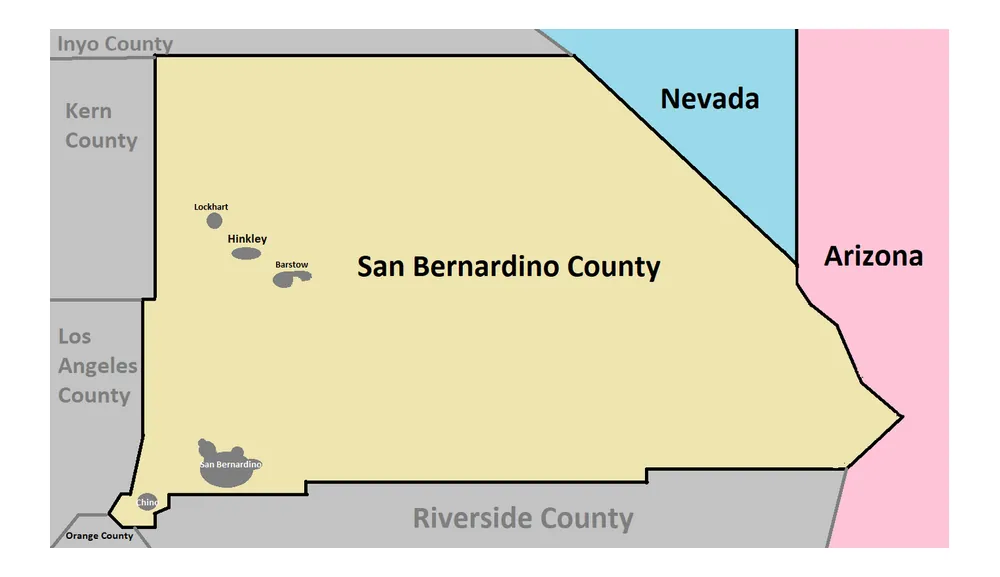
The source of concern was PG&E’s Hinkley compressor station, built in 1952 as part of a natural-gas pipeline to the San Francisco Bay Area. Between 1952 and 1966, PG&E used hexavalent chromium, also called chromium 6, in its cooling towers to prevent corrosion. Wastewater was discharged into unlined ponds, and some seeped into the groundwater, affecting an area of about two square miles near the plant.
Brockovich spent months driving out to Hinkley, earning residents’ trust and gathering evidence and signatures. The case, Anderson, et al. v. Pacific Gas & Electric, alleged that chromium 6 in the drinking water had harmed the town’s health.
| Hinkley case facts | |
|---|---|
| Defendant | Pacific Gas & Electric Company (PG&E) |
| Contaminant | Hexavalent chromium (chromium 6) |
| Source | Cooling tower wastewater at the Hinkley compressor station, 1952-1966 |
| Area affected | About 2 square miles of groundwater near the plant |
| Settlement | $333 million (1996) |
| Significance | Then the largest settlement in a direct-action lawsuit in US history |
| Law firm’s share | $133.6 million |
| Brockovich’s bonus | $2.5 million |
What is hexavalent chromium?
Chromium is a metal found naturally in rocks and soil. One form, hexavalent chromium, is produced mainly by industrial processes such as metal plating, leather tanning and, historically, anti-corrosion treatments. It is classified as a human carcinogen when inhaled, and there are ongoing scientific and regulatory debates about the health risks of drinking it in water and what limits should apply. California adopted a specific drinking-water limit for chromium 6, and the case helped put the chemical on the public agenda nationwide.

The film: Erin Brockovich (2000)
Steven Soderbergh’s Erin Brockovich, starring Julia Roberts and Albert Finney as Ed Masry, turned the story into a box office hit. The film was nominated for five Academy Awards, including Best Picture, Best Director, Best Supporting Actor and Best Original Screenplay, and Roberts won the Oscar for Best Actress. The real Brockovich appears briefly as a waitress named Julia.
Like most “based on a true story” films, it simplified events and compressed time, but its core, an untrained outsider standing up to a powerful utility, is true. The film made Brockovich a household name and gave her a platform she has used ever since.
Film versus reality
| In the film | In real life |
|---|---|
| Brockovich finds the case almost single-handedly | She was central, but a team of lawyers, experts and other firms built the case |
| Events unfold over a short period | The work took years, from 1993 to the 1996 settlement |
| Her job title is vague | She worked as a file clerk and researcher, not a qualified lawyer |
| Ed Masry is a reluctant, gruff ally | Masry was a real Thousand Oaks lawyer who backed her and the case |
| A dramatic $333 million moment | The settlement amount is accurate |
Ed Masry, played by Albert Finney, later served as mayor of Thousand Oaks, California, and continued to work with Brockovich until his death in 2005.
- 1952PG&E’s Hinkley compressor station is built.
- 1952-1966Chromium 6 used in its cooling towers.
- Early 1990sBrockovich begins working for Ed Masry.
- 1993Brockovich takes up the Hinkley residents’ cause.
- 1996PG&E settles for $333 million.
- 2000The film Erin Brockovich; Julia Roberts wins the Oscar.
- 2006Kettleman Hills case settles for $335 million.
- 2023Brockovich advises residents after the East Palestine derailment.
- 2026Launches a crowdsourced map of AI data centres.
Later cases: wins and setbacks
Brockovich continued working with Masry on pollution cases. A suit involving PG&E’s Kettleman Hills compressor station, on the same pipeline as Hinkley and with about 1,200 plaintiffs, settled for $335 million in 2006. Another accused the Whitman Corporation of chromium contamination in Willits, California.
Not every case succeeded. In 2003, she and Masry sued the Beverly Hills Unified School District, alleging that oil wells on a school campus were linked to cancer cases among former students. Testing and epidemiological studies did not find a substantial link, a judge granted summary judgment against the plaintiffs, and the district was later reimbursed $450,000 in legal costs. In 2012, she became involved in cases of students in LeRoy, New York, with unexplained tics; doctors concluded the cause was mass psychogenic illness, and repeated testing found no environmental cause.
| Case | Year | Outcome |
|---|---|---|
| Hinkley (PG&E) | 1996 | Settled for $333 million |
| Kettleman Hills (PG&E) | 2006 | Settled for $335 million |
| Her own home (toxic mould) | 2003 | Settlements including $430,000 |
| Beverly Hills schools (oil wells) | 2003-2007 | Summary judgment against plaintiffs; district reimbursed costs |
| LeRoy, New York (student tics) | 2012 | No environmental cause found; doctors diagnosed mass psychogenic illness |
| Aliso Canyon gas leak | 2016 | Involved in potential litigation |
My advice, when reading about any campaigner, is to look at the whole record. Brockovich’s biggest wins changed laws and lives; some later cases show how hard it is to prove that a particular pollutant caused particular illnesses. Both are part of her story.
Campaigning today
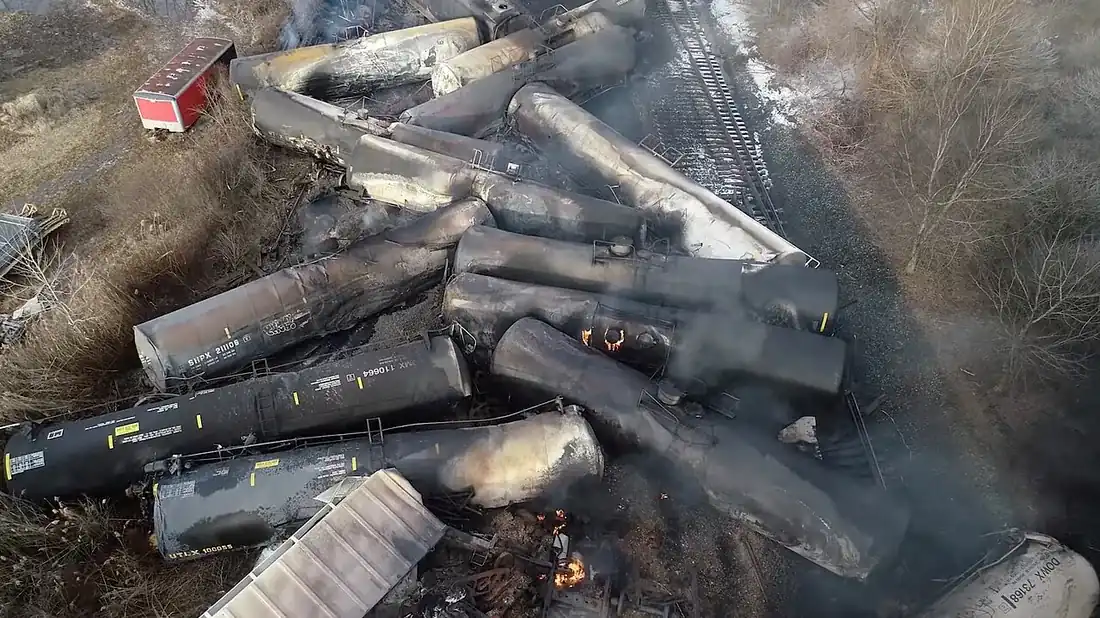
In 2023, within hours of the Norfolk Southern train derailment and chemical fire in East Palestine, Ohio, residents began calling Brockovich for help. She travelled there, spoke at town hall meetings and warned about possible groundwater contamination, using the disaster to argue that the US has failed for decades to invest in safer infrastructure and tighter regulation.
She has also written about PFAS, the “forever chemicals” found in many products, and their possible effects on fertility, and argued in a 2024 New York Times guest essay that a Supreme Court ruling limiting regulatory agencies’ powers could weaken public-health protections. In February 2026 she spoke out against plans to sink the SS United States as an artificial reef, citing the zinc chromate and chromium on the ship.
PFAS: the “forever chemicals”
PFAS (per- and polyfluoroalkyl substances) are a large family of man-made chemicals used since the mid-20th century in non-stick cookware, waterproof clothing, food packaging and firefighting foams. They break down extremely slowly, which is why they are nicknamed “forever chemicals”, and they have been found in water, soil and people’s blood around the world. Research has linked some PFAS to health effects, and regulators in the US, UK and EU have been moving to limit them in drinking water and products. Brockovich has made PFAS one of her main causes, arguing that action is moving too slowly.
AI data centres
In April 2026 she launched “Brockovich AI Data Center Reporting”, a crowdsourced map of proposed and operating data centres and their reported effects on communities, from water use to noise and power. It received nearly 9,700 submissions from all 50 states and 12 other countries within five months, and earned her a place on The Independent’s Climate 100 list in 2026.
What happened to Hinkley?
The settlement did not end Hinkley’s troubles. Groundwater clean-up continued for years under orders from California water regulators, and monitoring later showed the chromium plume extended further than once thought. PG&E bought many homes in the area, and the small town’s population fell sharply as residents moved away. Hinkley remains a reminder that industrial pollution can shape a community for generations, long after a court case is over.
Lessons for communities
Brockovich’s career offers practical lessons for anyone worried about pollution where they live:
- Write things down: record symptoms, smells, dates and changes in water colour or taste.
- Talk to neighbours: patterns across a community carry more weight than a single complaint.
- Request records: water-quality reports and permits are often public; ask your water supplier or regulator.
- Get independent testing if you have concerns about a private well or supply.
- Contact regulators: in the US, state environmental agencies and the EPA; in the UK, the Environment Agency and Drinking Water Inspectorate.
- Seek advice from environmental groups or lawyers if you suspect serious contamination.
These steps mirror what Brockovich did in Hinkley: listen carefully, gather evidence and keep asking questions until you get answers.
Media, books and consulting
Brockovich has hosted the TV series Challenge America with Erin Brockovich on ABC and Final Justice on Zone Reality, appeared in the 2012 water documentary Last Call at the Oasis, and inspired the 2021 ABC drama Rebel, created by Krista Vernoff and loosely based on her life. She is president of Brockovich Research & Consulting and has worked as a consultant for law firms including Weitz & Luxenberg in New York and Shine Lawyers in Australia.
Her books are Take It from Me: Life’s a Struggle But You Can Win (2001) and Superman’s Not Coming (2020), which argues that ordinary people must take action on water safety rather than waiting for governments to save them. She has received honorary degrees from Lewis & Clark Law School and Loyola Marymount University.
Ten facts about Erin Brockovich
- Her birth name is Erin Pattee.
- She grew up in Lawrence, Kansas.
- She has dyslexia.
- She got her job at Ed Masry’s firm after he represented her in a car-accident case.
- She has no law degree and never practised as a lawyer.
- The Hinkley settlement was $333 million, and her bonus was $2.5 million.
- She bought her Agoura Hills home with that bonus.
- She has a cameo in the 2000 film as a waitress named Julia.
- The ABC drama Rebel (2021) was loosely based on her life.
- In 2026 she was named to The Independent’s Climate 100 list.
Personal life
Brockovich has three children: Matthew and Katie, with her first husband, Shawn Brown, and Elizabeth, with her second husband, Steven Brockovich, whose surname she kept. Her third husband was actor and country music DJ Eric L. Ellis. She lives in Agoura Hills, California, in a house she bought in 1996 with her bonus from the Hinkley settlement.
Why she still matters
Brockovich showed that persistence, curiosity and the ability to listen to ordinary people can take on even the largest corporations. Her name has become shorthand for anyone who refuses to accept official reassurances about pollution. Whether or not you agree with every campaign she has joined, her influence on how Americans think about drinking water and corporate accountability is hard to overstate.
More checked profiles in our Entertainment section include Helen Hunt and Joan Lunden.
More profiles: Emmy Rossum, Hailey Bieber, Lisa Ann Walter, Gavin Casalegno, Rachel Griffiths, Jessica Tarlov, Joan Lunden, Helen Hunt, Bryce Dallas Howard, Josh Gates.
Frequently asked questions
Who is Erin Brockovich?
An American legal clerk and environmental activist who helped win a $333 million settlement from PG&E over chromium-6 pollution in Hinkley, California.
How old is Erin Brockovich?
She was born on 22 June 1960, so she is 66 (as of November 2026).
Is the movie Erin Brockovich a true story?
Yes, it is based on her real work on the Hinkley case, though like most films it simplifies events.
How much money did Erin Brockovich get?
She received a $2.5 million bonus from the 1996 settlement, of which her law firm received $133.6 million.
What was the Hinkley case about?
PG&E’s compressor station leaked hexavalent chromium into groundwater; residents sued, and PG&E settled for $333 million in 1996.
Did Julia Roberts win an Oscar for Erin Brockovich?
Yes, she won the Academy Award for Best Actress for the 2000 film.
Is Erin Brockovich a lawyer?
No. She worked as a legal clerk and researcher and has never qualified as a lawyer.
What is hexavalent chromium?
An industrial form of the metal chromium, classed as a human carcinogen when inhaled; its risks in drinking water are subject to regulation and debate.
What is Erin Brockovich doing now?
Campaigning on water pollution, PFAS and the impact of AI data centres, and consulting for law firms.
Where is Erin Brockovich from?
Lawrence, Kansas.
Final thoughts
Erin Brockovich turned a file-clerk job into one of the most famous environmental cases in history, and a Hollywood film turned her into a symbol. Three decades on, she is still asking awkward questions about what is in our water, our soil and our air. Her record includes both triumphs and setbacks, but her central message, that ordinary people can and should hold the powerful to account, has never changed.
Sources: Erin Brockovich’s published biography and career record; settlement records for Anderson v. Pacific Gas & Electric (1996) and the Kettleman Hills case (2006); reporting on the Beverly Hills and LeRoy cases; Academy Award records (2001 ceremony); her books Take It from Me (2001) and Superman’s Not Coming (2020); The New York Times guest essay (2024); The Independent Climate 100 (2026). Images: Wikimedia Commons, credited in each caption.